
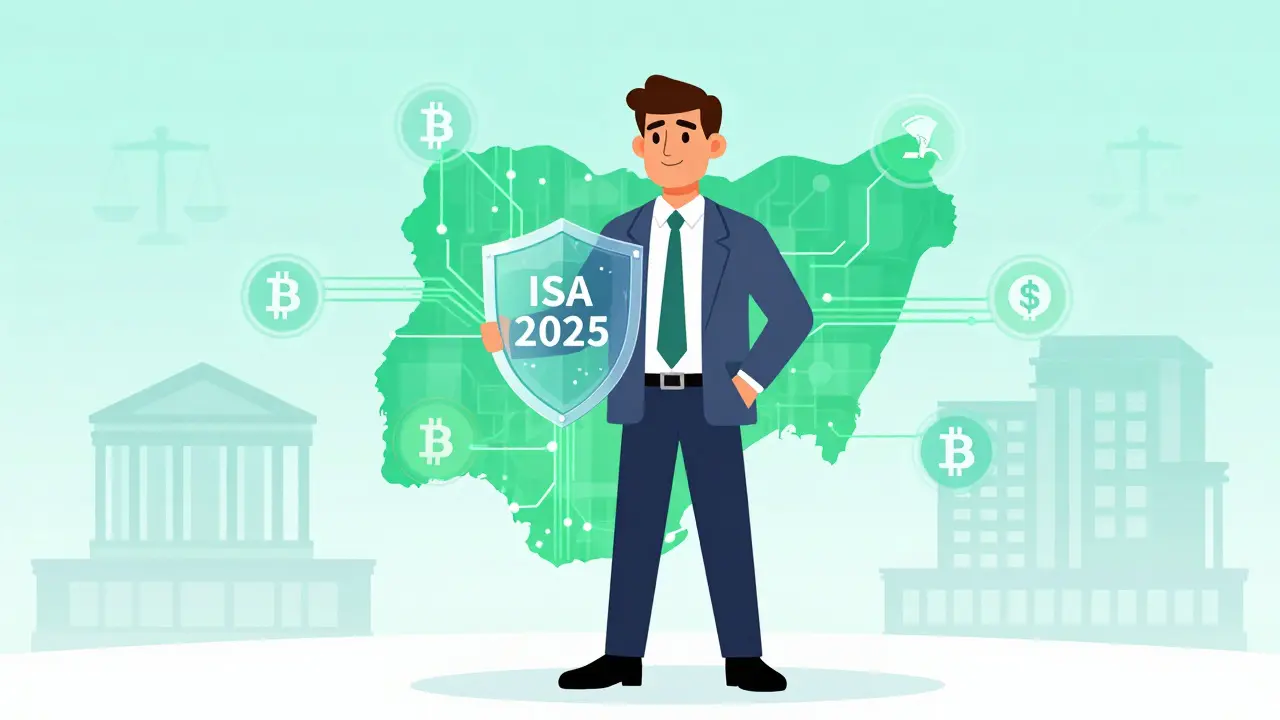
You might have heard conflicting stories about using cryptocurrency in Nigeria. One day, it seems like the government is banning everything; the next, you see news about new laws protecting investors. If you are trying to send money, run a business, or simply save value in Bitcoin or USDT, this confusion can be stressful. The short answer is yes, crypto payments are allowed in Nigeria as of 2026, but they operate under strict rules that didn't exist before.
The landscape changed dramatically with the passage of the Investments and Securities Act (ISA) 2025. This law moved digital assets out of the legal gray area and into a regulated framework. However, just because it is legal doesn't mean you can use it anywhere without consequence. You need to understand who regulates what, how taxes work starting in 2026, and which platforms are actually safe to use.
How the Law Changed in 2025
For years, Nigeria’s stance on crypto was shaky. The Central Bank of Nigeria (CBN) restricted banks from dealing with crypto companies, forcing users to rely on risky peer-to-peer (P2P) methods. That changed in March 2025 when President Bola Ahmed Tinubu signed the ISA 2025 into law. This legislation officially recognized cryptocurrencies as securities.
This shift is huge. It means digital assets are no longer ignored by the government; they are treated like stocks or bonds. The Securities and Exchange Commission (SEC) became the primary regulator for these assets. Before this act, there was no clear rulebook. Now, there is a legal structure that protects investors while allowing innovation. The key takeaway here is that owning crypto is not illegal, but operating a business around it requires a license.
The ISA 2025 also clarified that crypto is not legal tender. You cannot pay your federal taxes or official government fees directly in Bitcoin. The Nigerian Naira remains the only legal currency for those specific obligations. However, for private transactions between individuals or businesses, crypto is a valid payment method if both parties agree.
Who Regulates Crypto in Nigeria?
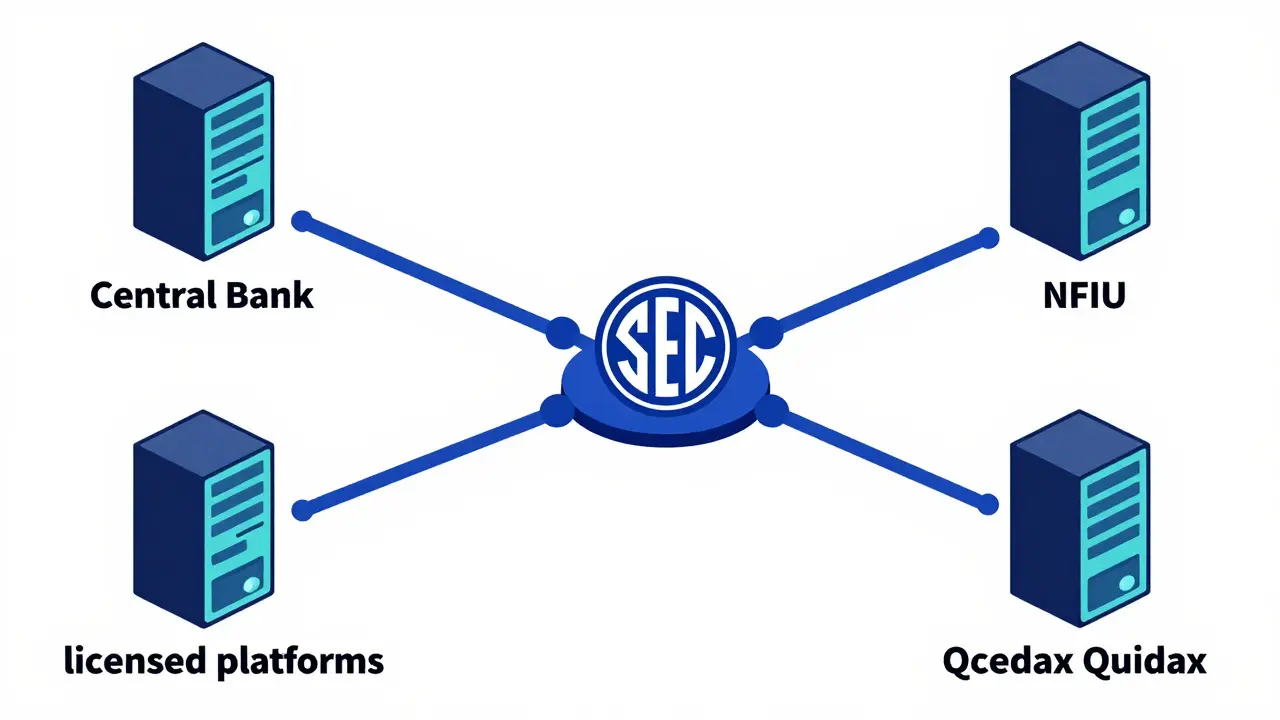
Nigeria uses a multi-agency approach to oversee the crypto market. Understanding who does what helps you navigate compliance issues. Here is how the responsibilities are split:
- Securities and Exchange Commission (SEC): They are the main boss for digital assets. They issue licenses to exchanges and Virtual Asset Service Providers (VASPs). If a platform wants to operate legally in Nigeria, it must register with the SEC.
- Central Bank of Nigeria (CBN): The CBN controls monetary policy and banking. In December 2023, they issued new VASP Guidelines that allowed banks to serve licensed crypto firms. This was a major reversal from their previous ban. Now, banks can hold accounts for SEC-licensed exchanges, making deposits and withdrawals smoother.
- Nigerian Financial Intelligence Unit (NFIU): This body focuses on anti-money laundering (AML) and counter-terrorism financing (CFT). They ensure that crypto platforms are not being used to move dirty money.
- Economic and Financial Crimes Commission (EFCC): The EFCC handles enforcement. They investigate fraud, Ponzi schemes, and other financial crimes involving crypto.
This coordination means that if you use a licensed platform, you are protected by a unified oversight system. The SEC works closely with the CBN and EFCC to shut down illegal operations while supporting legitimate ones.
Licensing and Safe Platforms
Not all crypto apps are created equal. Under the ISA 2025, any company offering crypto trading, custody, or payment services must get a license from the SEC. Operating without one carries heavy penalties, including fines of ₦10 million ($6,693) for the first month and ₦1 million ($669) for every subsequent month. The SEC can also revoke licenses and shut down non-compliant operators.
As of mid-2026, several major Nigerian platforms have secured their licenses. These include Quidax and Busha. Using these platforms offers significant advantages. Because they are licensed, they can partner with local banks. This means you can often deposit Naira directly via bank transfer rather than relying solely on P2P traders, which reduces the risk of scams.
International platforms face a choice: apply for a Nigerian license or exit the market. Some global giants may choose not to pursue the expensive licensing process, which could limit your options for accessing certain coins or features. Always check if an exchange holds a valid SEC license before depositing funds. If they don’t, you are operating outside the protective umbrella of Nigerian law.
| Feature | Licensed Platform (e.g., Quidax, Busha) | Unlicensed/International Platform |
|---|---|---|
| Bank Integration | Direct Naira deposits/withdrawals allowed | Often blocked by banks; relies on P2P |
| Regulatory Oversight | Monitored by SEC and NFIU | No local regulatory protection |
| Fraud Protection | Higher security standards required | Variable; higher risk of scams |
| Tax Reporting | Assists with compliant reporting | User responsible for all tracking |
| Availability | Optimized for Nigerian users | May restrict Nigerian IP addresses |
Crypto Taxes Starting January 2026
If you hold crypto, you need to pay attention to the Nigerian Tax Administration Act (NTAA) 2025. Signed into law in June 2025, this act introduced a clear tax regime for digital assets effective January 1, 2026. For many Nigerians, this is the biggest change coming in 2026.
Here is how the taxation works:
- Holding Crypto: Simply owning Bitcoin or Ethereum is not taxable. You do not pay tax just because your portfolio goes up in value.
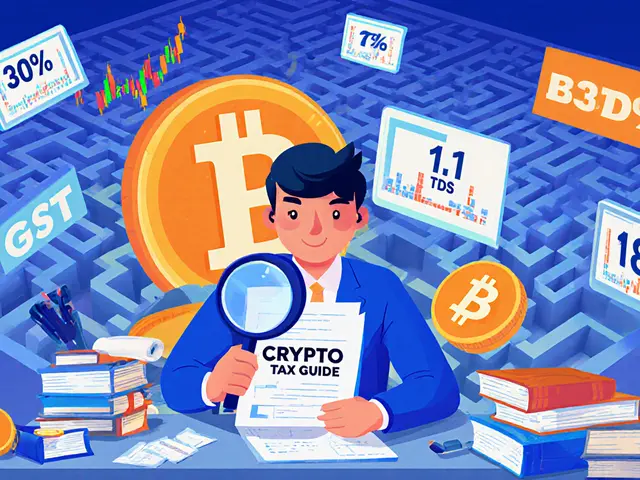
- Capital Gains: Tax applies when you sell crypto for a profit. This is considered a taxable event. Individuals pay personal income tax on these profits, with a sliding scale capped at 25%.
- Corporate Rates: Companies earning between ₦25 million and ₦100 million annually pay 20% corporate income tax on crypto profits. Those earning over ₦100 million pay 30%.
- VAT on Fees: All companies charging transaction fees must add 7.5% Value Added Tax (VAT) to those fees.
This system is designed to be progressive. It ensures that casual traders aren't crushed by bureaucracy, while large entities contribute fairly. However, it means you must keep records of your buys and sells. Ignorance of the tax law is not a valid defense. The Federal Inland Revenue Service (FIRS) will likely collaborate with licensed exchanges to track high-volume transactions.
Practical Risks and Scams
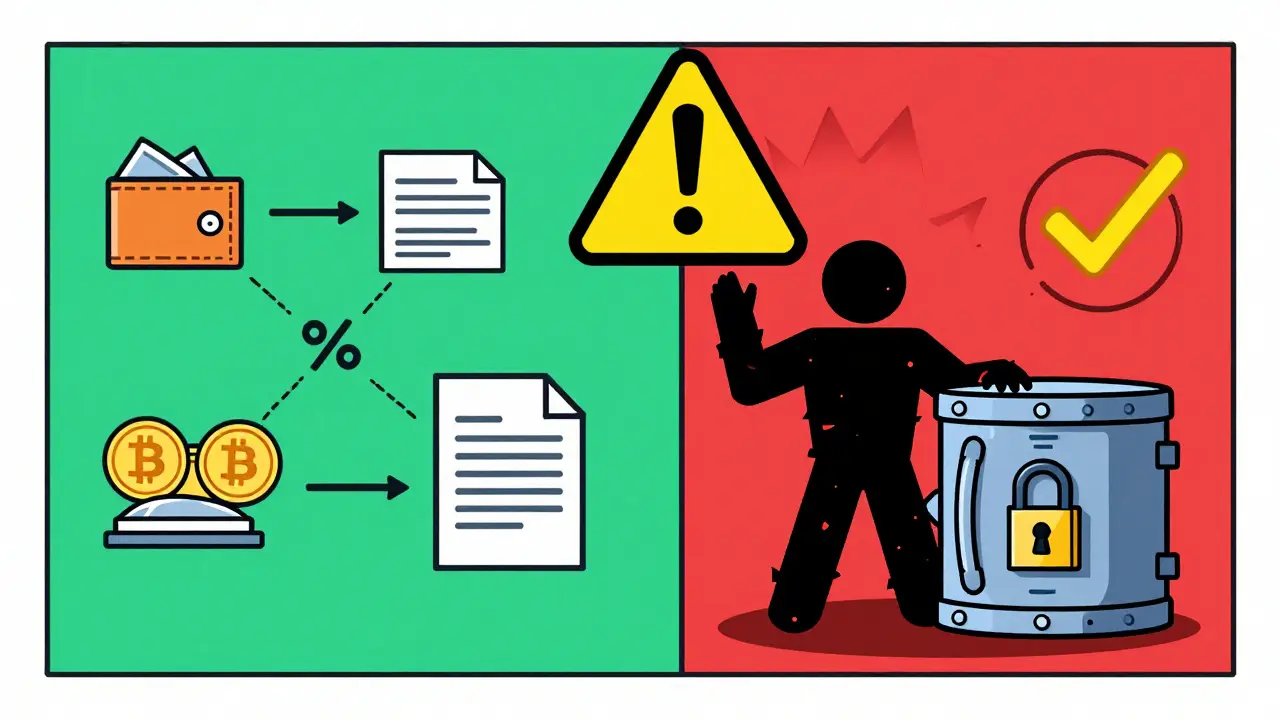
While the legal framework has improved, risks remain. The ISA 2025 explicitly prohibits Ponzi schemes and gives regulators tools to access telecom records for investigations. Despite this, fraudsters still operate. Common scams include fake investment platforms promising guaranteed returns, phishing sites mimicking legitimate exchanges, and fraudulent P2P traders who disappear after receiving Naira.
To stay safe, stick to SEC-licensed platforms. Avoid anyone promising fixed daily returns-this is a classic sign of a Ponzi scheme. When using P2P trading, always use the platform's escrow service. Never release crypto until you confirm the money is in your bank account, not just in a screenshot. Remember, once crypto leaves your wallet, it is nearly impossible to recover.
Future Outlook for 2026 and Beyond
The future of crypto payments in Nigeria looks cautiously optimistic. The clarity provided by the ISA 2025 and NTAA 2025 encourages more businesses to adopt crypto for cross-border payments and savings. With $92.1 billion in crypto value flowing through Nigeria between July 2024 and June 2025, the demand is undeniable.
Expect more banks to integrate with licensed exchanges, making crypto easier to use for everyday transactions. However, regulators will continue to tighten enforcement against non-compliant actors. The goal is a mature market where innovation thrives within safety boundaries. For users, this means fewer restrictions on legitimate activity but stricter accountability for taxes and compliance.
Is it illegal to own Bitcoin in Nigeria?
No, owning Bitcoin or other cryptocurrencies is not illegal in Nigeria. The Investments and Securities Act (ISA) 2025 recognizes digital assets as securities. While they are not legal tender for government payments, private ownership and trading are permitted under regulation.
Can I use crypto to pay for goods and services?
Yes, you can use crypto for private transactions if both the buyer and seller agree. However, businesses cannot force customers to pay in crypto, and it cannot be used for official government fees or taxes, which must be paid in Naira.
Which crypto exchanges are licensed in Nigeria?
Platforms like Quidax and Busha have obtained licenses from the Securities and Exchange Commission (SEC). Using licensed exchanges allows for direct bank integration and offers greater consumer protection compared to unlicensed international platforms.
Do I have to pay tax on my crypto profits?
Yes, starting January 1, 2026, profits from selling crypto are taxable under the Nigerian Tax Administration Act (NTAA) 2025. Individuals pay personal income tax on gains, capped at 25%. Holding crypto without selling is not taxed.
Can banks block my crypto transactions?
Banks can no longer blanket-ban crypto services. Since December 2023, the CBN allows banks to serve SEC-licensed crypto firms. However, banks may still flag suspicious transactions that violate anti-money laundering rules.
 Finance