
Imagine building an AI model without ever exposing the raw data it trains on. That is the core promise of Zero1 Labs, a project that blends artificial intelligence with blockchain technology to solve one of the biggest bottlenecks in modern computing: privacy. The project’s native token, DEAI, launched in 2024 as an ERC-20 token on the Ethereum network. It serves as the fuel for a new ecosystem where data remains encrypted during processing, thanks to a specialized technology called Fully Homomorphic Encryption (FHE). For investors and tech enthusiasts alike, understanding what makes this specific coin different from the hundreds of other "AI metaverse" or "decentralized AI" tokens requires looking past the hype at the underlying architecture.
The landscape of AI cryptocurrencies has exploded, but most projects focus on creating marketplaces for algorithms or decentralized compute power. Zero1 Labs takes a different route. It focuses specifically on the security layer. If you have wondered why your smart contract interactions feel slow, or why data privacy is such a pain point in enterprise AI adoption, DEAI is positioned to address those exact friction points. This guide breaks down the technology, the tokenomics, and the real-world utility so you can decide if this emerging asset fits your portfolio or just adds noise to your watchlist.
What is Zero1 Labs and How Does It Work?
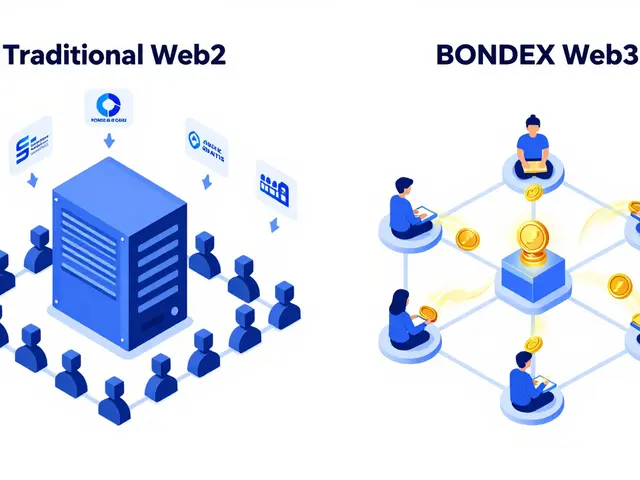
Zero1 Labs is a community-driven platform that aims to democratize access to vetted AI cryptocurrency projects by leveraging decentralized autonomous systems. Unlike traditional centralized AI companies that hoard data, Zero1 Labs operates on a hybrid architecture. This setup combines standard blockchain transactions with advanced machine learning models. The heart of the system is not just the blockchain itself, but how it interacts with encrypted data.
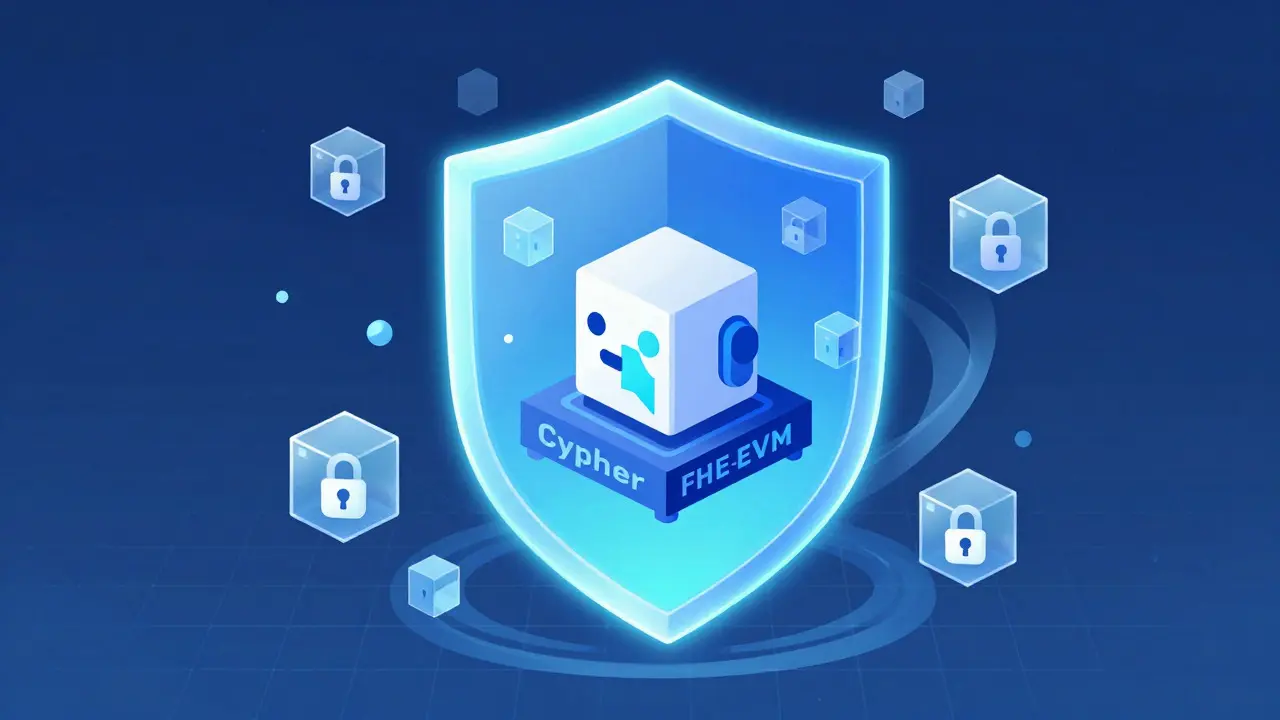
At the center of this operation is Cypher, the project's flagship component. Cypher is described as an FHE-EVM, or Fully Homomorphic Encryption Ethereum Virtual Machine. To put that in plain English, it allows computers to perform calculations on data while that data is still locked in an encrypted state. Normally, to process data, you must decrypt it, which creates a window of vulnerability. Cypher closes that window. This means developers can run complex AI models on user data without the platform ever seeing the actual information. This is particularly relevant now that regulations like the EU's AI Act are mandating stricter data governance standards for commercial applications.
The technical stack is layered to handle these demands efficiently:
- Layer 1 Blockchain: Handles secure transactions and basic data storage using a proof-of-stake consensus mechanism to keep energy costs low.
- AI Layer: Integrates machine learning models directly into the protocol logic.
- Smart Contract Layer: Automates agreements between users and AI providers.
- Interoperability Protocols: Allow communication with other blockchains, a feature planned for full rollout in late 2026.
- Governance Module: Enables the community to vote on major protocol upgrades and parameter changes.
Understanding the DEAI Token Utility
Holding a crypto coin is only useful if there is something to spend it on. In the case of DEAI, the token acts as the primary economic engine for the Zero1 Labs ecosystem. It is not just a speculative asset; it has functional roles within the platform's engagement mechanisms.
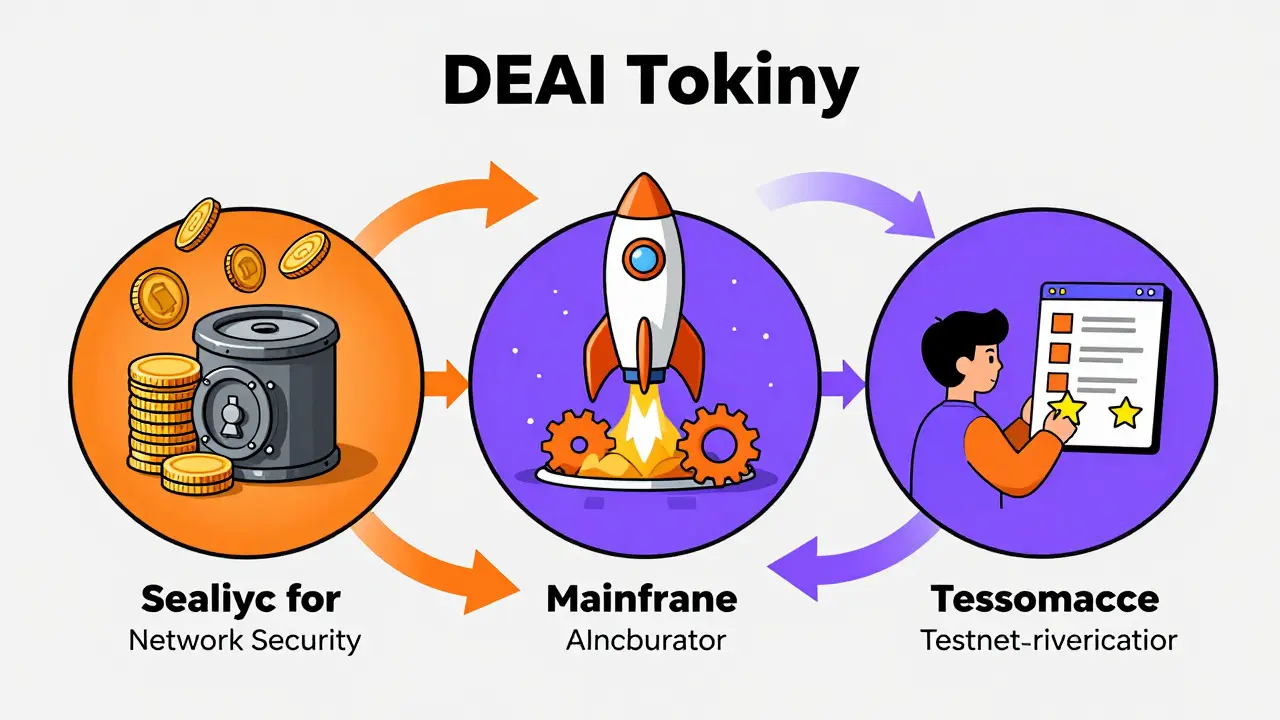
First, DEAI is used for staking. Users can lock their tokens to help secure the network and earn rewards. Second, it powers the "Mainframe," an AI incubator program. This program vets and accelerates promising AI projects, allowing them to launch faster. Developers pay fees in DEAI to access this incubation support, creating direct demand for the token. Third, the token is integral to the community's point-earning systems. By participating in incentivized testnets or completing on-chain tasks, users earn points that can often be converted or used alongside DEAI holdings.
The supply structure is capped at a maximum of 1 billion DEAI tokens. As of late 2025, approximately 97.55 million tokens were in circulation. This relatively low circulating supply compared to the total cap suggests that inflation will be a factor over the coming years as more tokens unlock. Investors need to monitor these vesting schedules closely, as large unlocks can create selling pressure if the buy-side demand does not match up.
Technical Deep Dive: The FHE Advantage
Why does the distinction of using Fully Homomorphic Encryption matter? Because current AI development is hitting a wall regarding data privacy. Companies want to use vast datasets to train better models, but they face legal risks and customer trust issues when moving that data to third-party servers. FHE solves this by enabling computation on ciphertexts.
However, FHE is computationally expensive. Traditional methods are too slow for real-time applications. Zero1 Labs claims its Cypher chain optimizes this process specifically for Large Language Models (LLMs). While the technology is promising, it is still in the testnet phase. The mainnet launch for Cypher is scheduled for Q1 2026. Until then, the "privacy" claim is theoretical rather than proven at scale. Security researchers, including those at CertiK, have noted that while FHE is a frontier technology, current implementations face significant performance limitations. The success of DEAI hinges on whether Zero1 Labs can overcome this computational overhead without sacrificing transaction speed.
If they succeed, DEAI could become critical infrastructure for enterprise AI applications that require absolute data sovereignty. If they fail, the project may struggle to differentiate itself from cheaper, less private alternatives.
Market Position and Competitive Landscape
The AI blockchain sector is crowded. To understand where DEAI stands, it helps to compare it with established players like Fetch.ai (FET), SingularityNET (AGIX), and Ocean Protocol (OCEAN).
| Feature | Zero1 Labs (DEAI) | Fetch.ai (FET) | SingularityNET (AGIX) |
|---|---|---|---|
| Primary Focus | FHE-based AI Privacy | Decentralized Machine Learning Agents | AI Marketplace Infrastructure |
| Key Technology | Cypher Chain (FHE-EVM) | Autonomous Economic Agents | Neuro Web / AI Exchange |
| Exchange Listings | ~8 Exchanges | ~47 Exchanges | ~32 Exchanges |
| 24h Volume (Nov 2025) | $37K - $1.8M (varies by source) | $15.2M | $8.5M |
| Main Status | Testnet Phase | Live Mainnet | Live Mainnet |
The table highlights a clear disparity in maturity. Fetch.ai and SingularityNET have live mainnets and high liquidity. DEAI, being newer, suffers from lower liquidity, which can lead to significant slippage for large trades. However, DEAI occupies a unique niche. While its competitors focus on *where* AI runs (decentralized nodes) or *how* AI is bought/sold (marketplaces), Zero1 Labs focuses on *how* AI processes data securely. This specialization is its strongest competitive moat, provided the technology works as advertised.
Roadmap and Future Developments
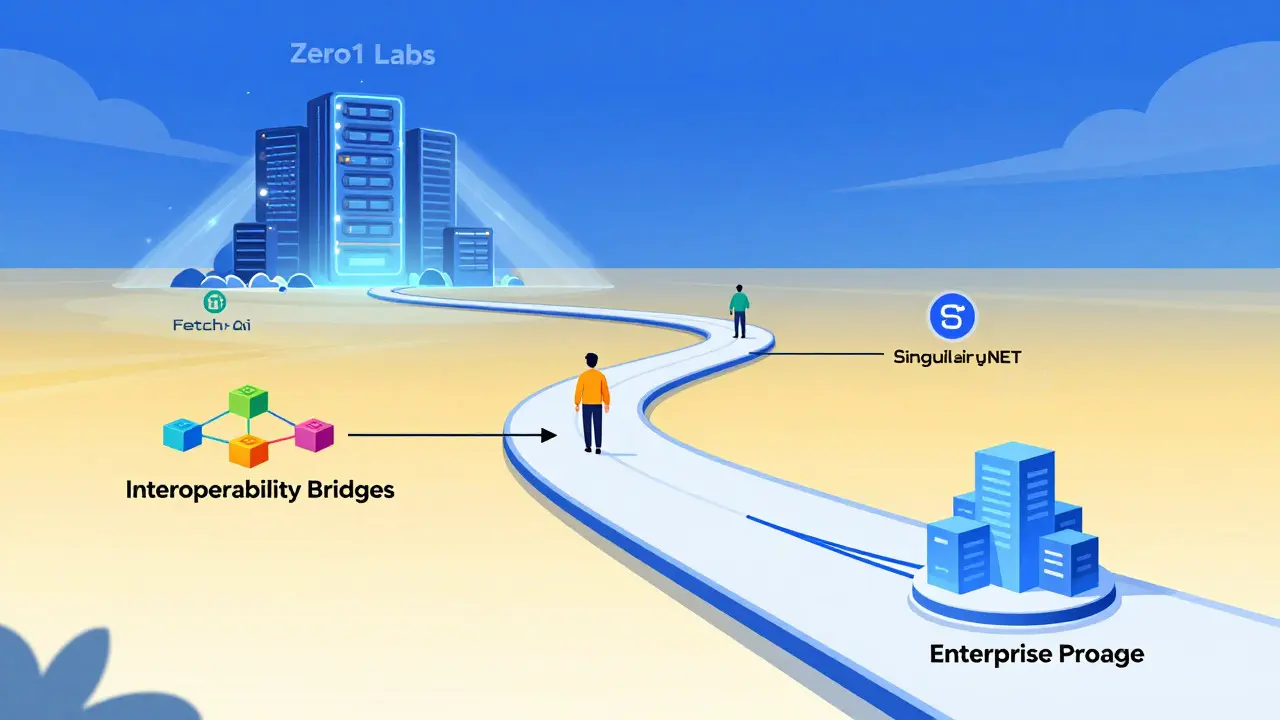
The path forward for Zero1 Labs is structured in distinct phases. The immediate goal is the successful launch of the Cypher mainnet in Q1 2026. This event will likely serve as the primary catalyst for price action and user adoption. Following that, Phase 2 involves implementing cross-chain interoperability in Q3 2026, allowing DEAI assets to move seamlessly between different blockchain networks. Finally, enterprise API integration is targeted for Q1 2027, which would open the door for non-crypto businesses to utilize the FHE capabilities without needing deep blockchain expertise.
Recent partnerships announced in late 2025 with three AI research labs aim to develop FHE-optimized machine learning models. These collaborations are crucial because they validate the technical feasibility of the project outside of the internal team. If these labs successfully deploy models on the Cypher testnet, it will provide concrete proof of concept that can sway skeptical institutional investors.
How to Get Started with DEAI
If you are interested in exploring the Zero1 Labs ecosystem, the entry barrier is moderate. You do not need to be a developer to participate in the early stages, but you should be comfortable with basic Web3 concepts.
- Create a Wallet: Since DEAI is an ERC-20 token, you need an Ethereum-compatible wallet like MetaMask or Rabby. Ensure you have some ETH for gas fees.
- Connect to z1labs.ai: Visit the official platform and connect your wallet. This typically takes 15-20 minutes for beginners to set up correctly.
- Participate in AIcademy: Complete the quiz system and on-chain tasks to earn initial points. This is a low-risk way to engage with the community and learn the interface.
- Buy DEAI: Once you are familiar with the platform, you can purchase DEAI on supported exchanges. Be mindful of liquidity; smaller exchanges may offer tighter spreads than larger ones, but check the volume first.
- Engage with Community: Join the Telegram and Discord channels, which host around 45,000 combined members. Active participation here often provides early insights into upcoming features and airdrops.
For advanced users, staking DEAI offers additional yield opportunities, but it requires a deeper understanding of the risks associated with locking assets in a pre-mainnet environment.
Risks and Considerations
No investment is without risk, and DEAI carries specific challenges due to its technological ambition and market position. First, the anonymous team structure raises questions about long-term accountability. While common in crypto, it can deter conservative investors who prefer known founders. Second, the technical execution of FHE is unproven at scale. If the Cypher chain struggles with performance, the value proposition weakens significantly. Third, liquidity remains a concern. With daily volumes ranging from tens of thousands to under two million dollars depending on the exchange, entering or exiting large positions can be difficult without impacting the price.
Finally, regulatory scrutiny on AI and privacy technologies is increasing. While FHE aligns well with privacy laws, any change in regulation could impact how the platform operates. Keeping an eye on compliance updates, especially regarding the EU AI Act, is essential for long-term holders.
Is DEAI a good investment in 2026?
DEAI is a high-risk, high-reward asset. Its potential depends entirely on the successful launch of the Cypher mainnet in Q1 2026. If the FHE technology proves efficient, it could capture significant market share in the AI privacy sector. However, if performance lags, it may struggle against established competitors like Fetch.ai. Diversification is key when holding such emerging tokens.
Where can I buy DEAI coins?
DEAI is currently listed on approximately eight exchanges, including Gate.com and others tracked by CoinLore. Due to limited listings, you may need to use a decentralized exchange (DEX) like Uniswap if your preferred centralized exchange does not list it. Always check the trading pair availability before executing a trade.
What is the difference between Zero1 Labs and other AI cryptos?
The primary difference is the focus on Fully Homomorphic Encryption (FHE). While many AI cryptos focus on decentralizing compute or creating marketplaces, Zero1 Labs focuses on data privacy during computation. This allows AI models to run on encrypted data, addressing a specific regulatory and security gap that other projects have not yet solved comprehensively.
When is the Cypher mainnet launching?
According to the project roadmap, the Cypher mainnet is scheduled to launch in Q1 2026. This is a critical milestone for the project, as it will transition the technology from testnet experimentation to real-world application. Monitor official announcements for any date changes.
Does DEAI have a fixed supply limit?
Yes, the total maximum supply of DEAI is capped at 1 billion tokens. As of late 2025, roughly 97.55 million tokens were in circulation. The remaining tokens will be released according to the project's vesting schedule, which impacts future inflation rates.
 Finance