
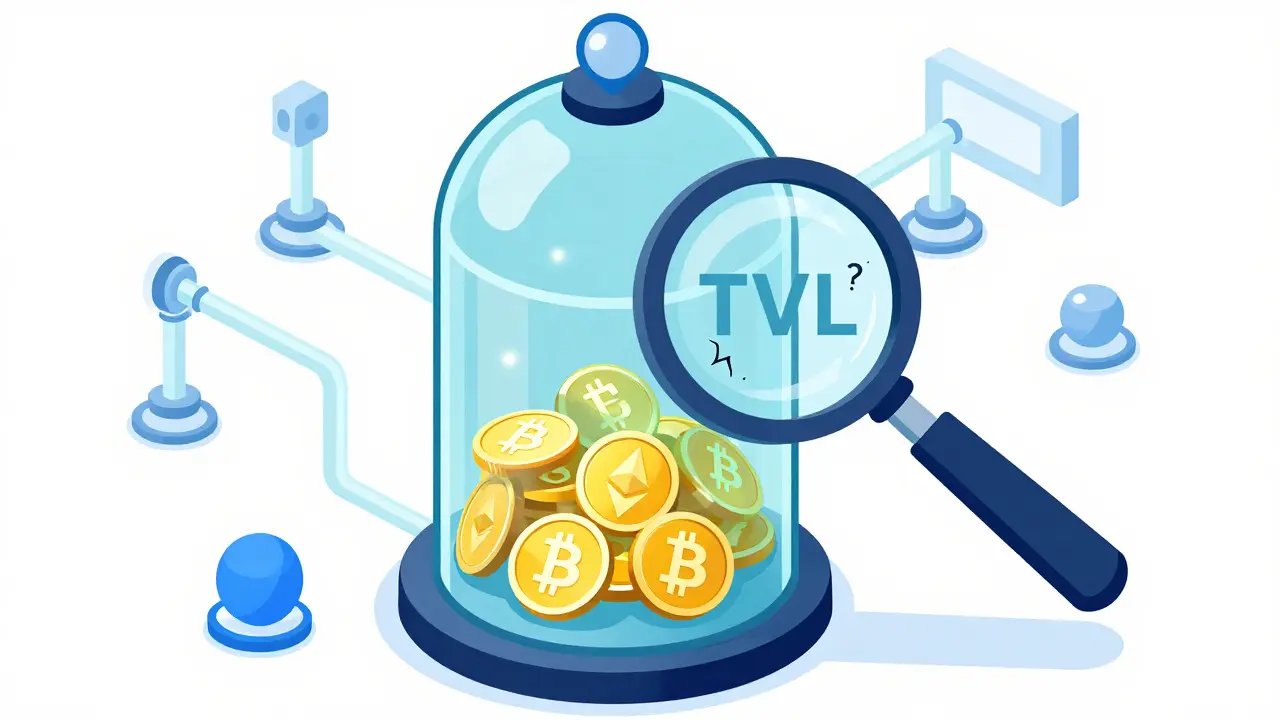
You’ve probably seen those big green charts on DeFi dashboards. They show billions of dollars moving in and out of protocols like Aave or Uniswap. That number is called Total Value Locked (TVL), and it’s supposed to tell you how successful a decentralized finance project is. But does it? If you’re investing time or money into crypto, relying on TVL alone is like judging a restaurant’s quality just by looking at its square footage. It gives you a sense of scale, sure, but it doesn’t tell you if the food is good or if people are actually coming back.
In this guide, we’ll break down exactly what TVL is, how it’s calculated, why it matters, and-crucially-where it fails us. By the end, you’ll know how to spot a healthy protocol versus one that’s just inflating its numbers with cheap tricks.
What Exactly Is TVL?
Total Value Locked is the total dollar value of assets deposited into a DeFi protocol’s smart contracts. Think of it as the digital equivalent of Assets Under Management (AUM) in traditional banking. When you deposit Ethereum into a lending platform or provide liquidity to a trading pool, that money becomes part of the protocol’s TVL.
The metric emerged during the 2020 DeFi summer when platforms needed a way to show users how much capital was flowing through their systems. Today, it’s the first number most investors check. For context, Ethereum alone hosts over $96 billion in TVL, making it the backbone of the industry. But understanding the number requires knowing what’s inside it.
TVL isn’t just one type of asset. It includes:
- Cryptocurrencies: Native tokens like ETH, BTC, or SOL.
- Stablecoins: USD-pegged tokens like USDC or DAI, which make up a huge chunk of TVL because they don’t fluctuate wildly in price.
- Liquid Staking Tokens: Tokens representing staked assets, like stETH, which allow users to earn staking rewards while still using their capital elsewhere.
- Tokenized Real-World Assets (RWA): Emerging categories like tokenized treasury bills or real estate, which are slowly entering DeFi protocols.
Because these assets change price every second, TVL is a dynamic snapshot. If Bitcoin crashes, the TVL of any protocol holding BTC drops instantly, even if no one withdrew their funds. This volatility means TVL reflects both user behavior and market conditions.
How Is TVL Calculated?
The math behind TVL is straightforward, but the execution depends on accurate data feeds. The basic formula is:
TVL = (Quantity of Asset 1 × Price of Asset 1) + (Quantity of Asset 2 × Price of Asset 2) + ...
Let’s say a protocol holds 10,000 ETH. If ETH is priced at $2,500, that portion contributes $25 million to the TVL. Now add 50 million USDC (priced at $1 each), and you’ve got another $50 million. Total TVL: $75 million.
This calculation happens in real-time across blockchains. Data aggregators like DefiLlama pull this information directly from smart contract addresses, ensuring transparency. Unlike traditional banks that report quarterly, DeFi offers live visibility. You can see exactly where your money sits and how much trust others are placing in the same protocol.
Why TVL Matters for Protocol Success
High TVL generally signals three things: adoption, liquidity, and trust. Here’s why each matters.
1. Adoption and Network Effects
When more people lock up their assets, it creates a network effect. Lending protocols need borrowers and lenders; trading pools need deep liquidity to prevent slippage. A high TVL suggests that users find the protocol useful enough to commit their capital. It’s a vote of confidence.
2. Liquidity Depth
In decentralized exchanges (DEXs), TVL represents the available pool for trades. Higher TVL means larger orders can be executed without significantly moving the price. For traders, this reduces costs. For protocols, deeper liquidity attracts more volume, creating a virtuous cycle.
3. Trust and Security Perception
Users won’t deposit millions into a protocol they suspect might be hacked or poorly governed. Sustained high TVL often correlates with strong security audits, transparent governance, and a track record of reliability. Conversely, sudden drops in TVL can signal panic withdrawals after bad news or exploits.
The Dark Side: Why TVL Can Be Misleading
Here’s the catch: TVL can be gamed. Just because a protocol has high TVL doesn’t mean it’s profitable, sustainable, or safe. Smart actors have found ways to inflate these numbers artificially.
Yield Farming Incentives
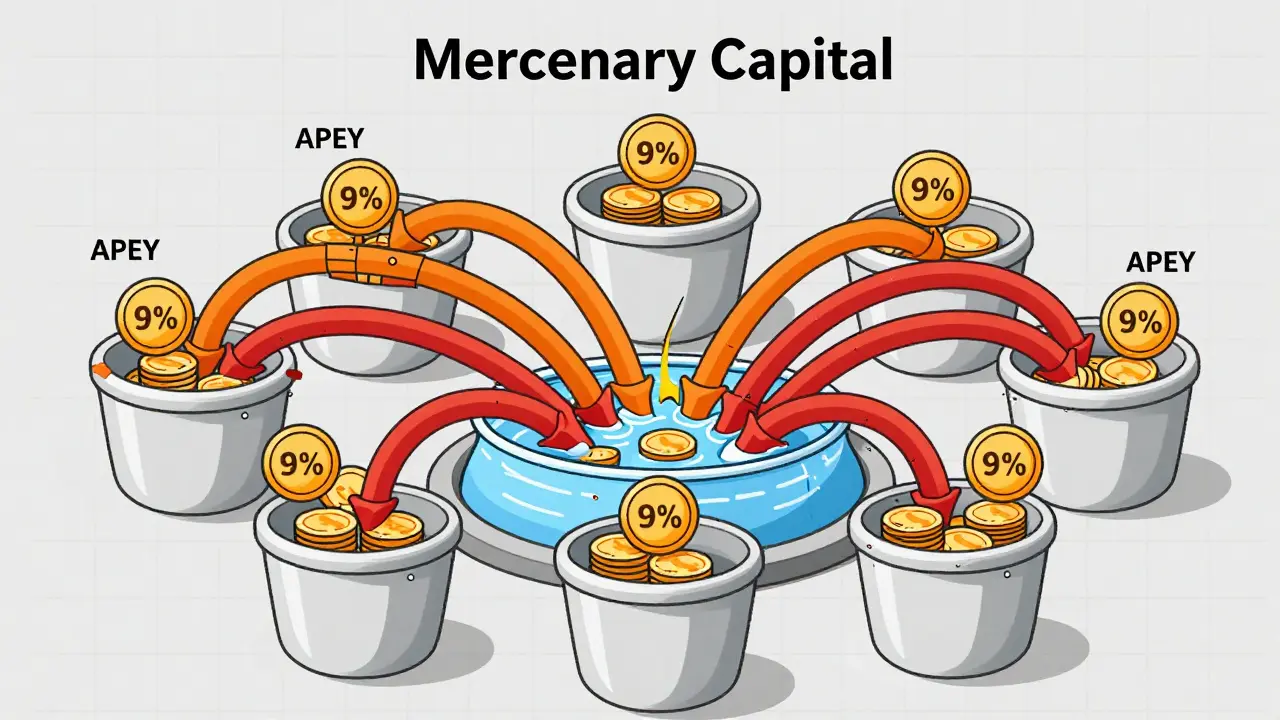
Some protocols lure users by offering excessive yields paid in their native tokens. Users deposit assets not because they believe in the product, but to farm free tokens. Once the incentives dry up, the TVL evaporates overnight. This is known as “mercenary capital”-money that moves wherever the highest yield is, regardless of long-term value.
Double Counting
In complex DeFi ecosystems, assets can be counted multiple times. For example, if you deposit ETH into a lending protocol and use the borrowed stablecoins to provide liquidity in another pool, that same underlying ETH might contribute to the TVL of two different protocols. Aggregators try to correct for this, but discrepancies remain.
Price Volatility Distortion
If a protocol holds mostly volatile assets like altcoins, its TVL will swing dramatically with market sentiment. A protocol could be fundamentally sound, but if the coins it holds crash, its TVL plummets. This makes TVL a noisy indicator of actual utility.
Beyond TVL: Metrics That Tell the Real Story
To truly assess a DeFi protocol’s success, you need to look beyond TVL. Combine it with these key metrics for a clearer picture.
| Metric | What It Measures | Why It Matters |
|---|---|---|
| TVL | Total value locked in smart contracts | Shows scale, adoption, and liquidity depth |
| Protocol Revenue | Fees generated from transactions | Indicates sustainability and profitability |
| Active Users | Unique addresses interacting daily/monthly | Reflects genuine engagement vs. passive deposits |
| APY Stability | Consistency of returns over time | High, unstable APYs often signal risk or inflation |
| Impermanent Loss Risk | Potential loss for liquidity providers | High risk may deter serious providers despite high TVL |
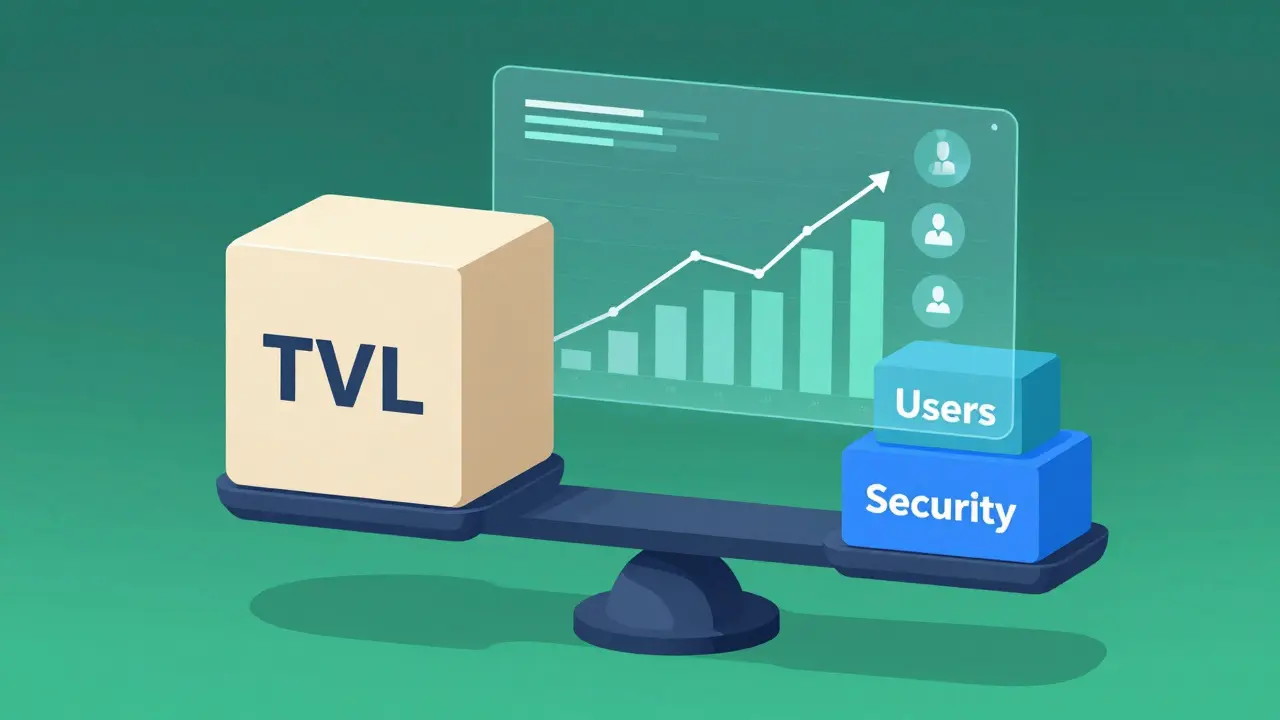
Protocol Revenue is perhaps the most important companion to TVL. A protocol with $1 billion in TVL but zero fees is burning cash to keep users happy. Look for platforms that generate revenue from trading fees, interest spreads, or subscription models. Sustainable protocols reinvest these earnings into development, security, or buybacks.
Active Users reveal whether the TVL is driven by a few large whales or many small participants. High unique address counts suggest broad adoption. Tools like Nansen or Dune Analytics can help you track user behavior patterns, such as retention rates and new vs. returning users.
APY Stability tells you about the source of returns. If a protocol offers 50% APY backed by real transaction fees, that’s impressive. If it offers 500% APY funded by printing new tokens, that’s a red flag. Stable, moderate yields usually indicate healthier economics.
How to Analyze TVL Like a Pro
Don’t just glance at the number. Dig deeper. Here’s a practical checklist for evaluating any DeFi protocol:
- Check the Composition: What % of TVL is in stablecoins vs. volatile assets? High stablecoin ratios often mean lower risk and higher utility.
- Compare Peers: How does the protocol’s TVL compare to competitors in the same niche? A lending protocol should be compared to other lending platforms, not DEXs.
- Look at Trends: Is TVL growing steadily or spiking suddenly? Steady growth suggests organic adoption. Spikes often correlate with marketing campaigns or incentive programs.
- Verify Revenue:** Does the protocol publish fee data? Cross-reference TVL with revenue per dollar locked. Low revenue-to-TVL ratios may indicate inefficiency.
- Assess Governance: Who controls the protocol? Transparent, decentralized governance reduces the risk of rug pulls or unilateral changes.
For example, if you’re comparing Compound and a newer competitor, look at their fee structures. Compound generates revenue from interest rate spreads. If the new competitor has higher TVL but no clear revenue model, ask yourself: who pays for the infrastructure?
The Future of TVL Measurement
As DeFi matures, TVL will evolve. We’re seeing the rise of cross-chain protocols that operate across Ethereum, Solana, Arbitrum, and more. This makes single-chain TVL less meaningful. Future analytics tools will likely offer aggregated, cross-chain views to give a holistic picture of a protocol’s reach.
We’re also seeing the integration of off-chain data. User sentiment, social media activity, and developer commit frequency are being combined with on-chain metrics to create composite health scores. These scores aim to answer not just “how much money is here?” but “is this protocol worth my attention?”
Additionally, the inclusion of tokenized real-world assets (RWAs) will change how TVL is perceived. As institutions enter DeFi with tokenized bonds or commodities, TVL will reflect not just speculative crypto activity but also traditional financial stability. This could make TVL an even more robust indicator of overall ecosystem health.
Final Thoughts
TVL is a powerful tool, but it’s not a crystal ball. It shows you the size of the pond, not the health of the fish. Use it as a starting point, not the final word. Combine it with revenue data, user activity, and qualitative assessments of security and governance. In the fast-moving world of DeFi, critical thinking is your best defense against hype.
Is high TVL always a sign of a good DeFi protocol?
No. High TVL can be inflated by temporary incentives, double counting, or whale concentrations. Always check revenue generation, user retention, and fee structures to confirm sustainability.
How often does TVL change?
TVL updates in real-time as assets are deposited, withdrawn, or change in market price. However, significant shifts usually occur over hours or days, not seconds.
What is the difference between TVL and Market Cap?
Market cap measures the total value of a protocol’s circulating tokens, reflecting investor sentiment. TVL measures the actual assets locked in the protocol, reflecting usage and trust. TVL is generally considered a more grounded metric of economic activity.
Can TVL be manipulated?
Yes. Protocols can incentivize deposits with unsustainable yields, leading to artificial TVL spikes. Additionally, complex DeFi strategies can lead to double-counting of assets across multiple protocols.
Which metrics should I pair with TVL for better analysis?
Pair TVL with protocol revenue, active user counts, APY stability, and impermanent loss risk. These metrics provide a fuller picture of a protocol’s health, sustainability, and user engagement.
Does TVL include all types of assets?
TVL typically includes cryptocurrencies, stablecoins, liquid staking tokens, and increasingly, tokenized real-world assets. The exact composition varies by protocol and aggregator methodology.
How do I find reliable TVL data?
Use reputable aggregators like DefiLlama, which pull data directly from blockchain smart contracts. Avoid self-reported TVL figures from protocol websites, as they may lack transparency or correction for double counting.
What does a sudden drop in TVL mean?
A sudden drop can indicate user panic due to security concerns, exploit events, or withdrawal of incentive-driven capital. It warrants immediate investigation into protocol news and security status.
 Finance