

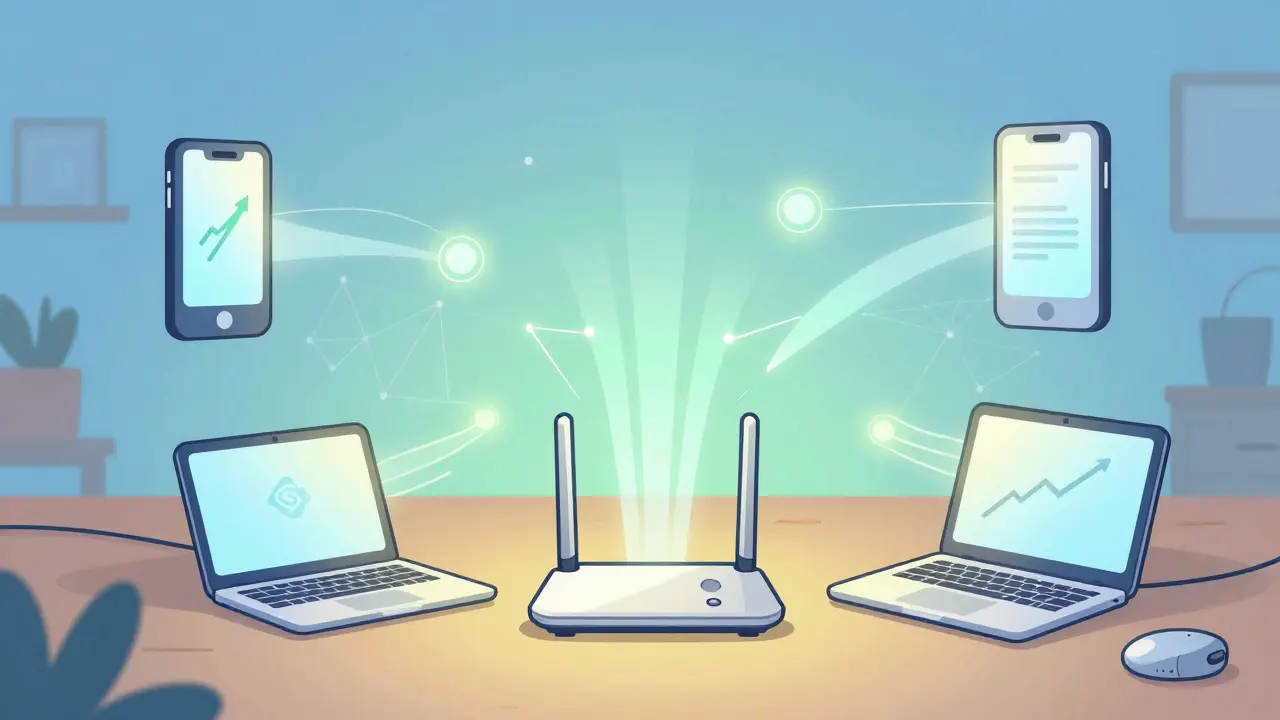
Imagine your internet connection isn't just costing you money every month, but actually earning you cash. That sounds like a dream, right? Well, Packet (PKT) is trying to turn that idea into reality. It's not another token promising the moon; it's a blockchain built around a very physical resource: bandwidth. Most people know about Bitcoin, but few understand how Bandwidth-Hard Proof-of-Work changes the game entirely.
If you've ever sat down to research crypto, you know the buzzwords-mining, hashing, block rewards. With Packet, those terms mean something slightly different. Instead of just burning electricity to solve math problems, miners on this network have to move real data across the globe. It creates a digital marketplace where unused internet speed becomes valuable currency.
The Core Idea: Monetizing Your Connection
To get why PKT exists, you have to look at who currently controls the internet. Today, a handful of massive corporations, known as Internet Service Providers (ISPs), decide how fast you get online and how much you pay. They hold all the cards. Packet (PKT) aims to break this monopoly. It does this by treating bandwidth like oil-if you have it, you can sell it.
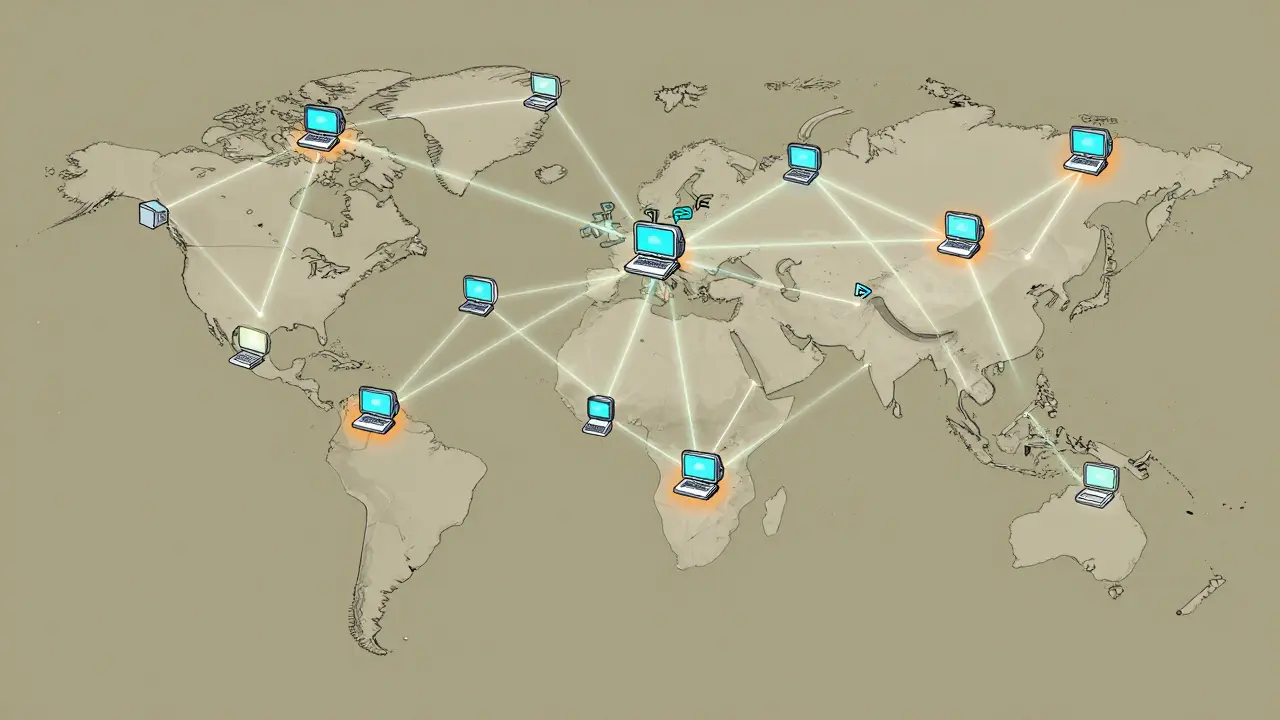
The logic is simple. In any house, there's always unused internet capacity sitting idle when you're sleeping or away. PKT creates a system called the PKT Network where devices (called Edge Points) can share this extra space. When someone needs to transfer data securely across the world, instead of going through a centralized server farm, the network routes it through a mesh of personal connections.
This turns passive consumers into active providers. You stop paying for internet access and start getting paid to host it. Of course, this requires trust. That's where the blockchain comes in, acting as the referee to ensure everyone gets paid fairly and data remains private.
Bandwidth-Hard Proof-of-Work Explained
You've heard of Proof-of-Work before. Bitcoin uses it. But traditional mining relies almost entirely on raw processing power (CPU/GPU). The more energy you burn calculating hashes, the higher your reward. Packet takes a different approach called PacketCrypt.
In the Bitcoin model, the miner doesn't actually move useful data; they just do calculations to secure the ledger. In Packet, doing the calculation isn't enough. You have to prove you transmitted the result. This is the "bandwidth-hard" part. Miners aren't just clicking numbers; they are physically moving packets of data across the public internet.
Why does this matter? It ties the blockchain's security directly to the health of the internet itself. If the global internet network expands and improves, the PKT mining network gets stronger. It incentivizes people in developing regions with cheap hardware but limited connectivity to join the network, effectively creating a peer-to-peer ISP infrastructure layer.
Two Ways to Mine: Announcements vs. Blocks
Mining on Packet isn't a one-size-fits-all job. There are two distinct roles, and each serves a different purpose. Understanding this distinction helps clarify how regular people can participate versus institutional players.
- Announcement Mining: This is where individual users come in. Anyone with a home computer, phone, or server can run this. You download the software, and it generates small messages (about 1KB). Your device broadcasts these "announcements" to mining pools. Think of it as sending postcards across the network. You aren't solving complex equations here; you are filling the airwaves with traffic. Every time a block is won, these announcers get paid proportionally based on their bandwidth contribution. It happens roughly every 60 seconds.
- Block Mining: This is heavy lifting. It requires serious networking gear and experience. These miners collect billions of the tiny announcement messages generated by regular users. Their job is to bundle these up and solve a memory-hard algorithm to finalize the block. If they win, they get a large chunk of PKT, plus the transaction fees from the announcers.
Most retail users will never touch block mining. They will stick to announcement mining, turning their routers into little earners. It's low overhead compared to the expensive ASIC farms you see for other cryptocurrencies.
How the Economy Works: Tokenomics and Supply
Every crypto project lives or dies by its economy. You need to know if the coin is inflationary, scarce, or sustainable over time. Here is the breakdown for Packet.
The maximum supply of PKT is capped at 6 billion coins. This is fixed; you won't see infinite printing later on. As of recent data, about 3.5 billion had already been mined, meaning the network is well into its maturity phase. This scarcity creates a floor for value, assuming demand holds steady.
A unique feature of PKT economics is the Network Steward. This is an address elected democratically by the community, not a CEO or company. Every 90 days, 20% of the block winnings are routed to this wallet. The steward uses these funds to develop open-source tools, upgrade infrastructure, or fund grants. Any money left over after funding projects is burned-destroyed permanently. This mechanism ensures that development costs don't deplete the treasury and keeps inflation in check.
When you look at circulating supply, you're seeing the remaining coins available in wallets. The network mines 10% of the remaining supply annually, mimicking the halving cycles seen in other major coins to balance discovery rates.
Beyond Currency: Building a Decentralized ISP
Holding PKT isn't just about betting on the price. The coin fuels a broader ecosystem of tools designed to replace centralized services.
| Feature | Standard Cryptocurrencies | Packet (PKT) |
|---|---|---|
| Consensus | Compute-heavy PoW | Bandwidth-Hard PoW |
| Utility | Store of value / Payments | Bandwidth monetization |
| Governance | Foundation or Devs | Network Steward (Community) |
| Speed | Variable (often slow) | 60-second block time |
For instance, consider CJ DNS. This is a privacy tool running on the PKT backend. It allows users to resolve domain names without a central authority tracking them. By integrating privacy layers directly into the OS level, the network protects user identity regardless of who is providing the bandwidth.
Then there is the Lightning Network. While originally associated with Bitcoin, PKT has integrated similar functionality. This allows for near-instant transactions. Why? Because micro-transactions are essential for a bandwidth marketplace. You might pay pennies for 10MB of data transfer. The payment has to settle faster than the data is transferred. Lightning integration handles this volume seamlessly.
TokenStrike and Asset Trading
We mentioned bandwidth leases earlier. How do we trade them digitally? Enter TokenStrike.
This is a token standard similar to Ethereum's ERC-20, but designed specifically for the PKT blockchain. It allows developers to issue tokens that represent assets, bandwidth contracts, or even physical goods. PKT Cash serves as the base currency for these trades. So, if you want to lease out your bandwidth to a neighbor, you could tokenize that service agreement using TokenStrike standards, ensuring smart contracts enforce the deal automatically.
This opens doors beyond just internet sharing. Imagine a farmer selling local grain via a blockchain contract paid in PKT, or a remote worker purchasing dedicated bandwidth lines from a pool of global Edge Points. The infrastructure is being built to support a global barter system underpinned by code rather than banks.
Current Market Reality and Risks
No discussion of crypto is complete without addressing financial reality. As of early 2026, Packet remains a niche but growing asset. It operates on a decentralized premise, which means there is no customer support hotline if things go wrong. You are your own bank.
Looking at the charts, PKT trades at a modest price point compared to giants like Bitcoin or Ethereum. Recent data suggests prices hovering around fractions of a cent per coin, with a relatively low market capitalization in millions of USD. Volatility is inherent to this stage of development.
If you are considering buying, you need to understand the risks. The main hurdle is adoption. The technology works in theory, but convincing millions of people to install node software globally is a massive challenge. Competition exists from other "decentralized internet" projects. Success depends on whether the incentive model is strong enough to drive growth organically.
However, the upside case is compelling. If PKT achieves its goal of becoming the default routing layer for the internet, demand for the token would skyrocket simply as a necessity for accessing the network. It's a bet on the decentralization of the web itself.
Practical Steps to Get Started
Curious if you can actually earn from this? Here is the workflow for a typical participant.
- Setup Hardware: You need a PC or a Raspberry Pi. It doesn't need to be high-end. Even smartphones can participate in announcement mining.
- Download Client: Grab the official PacketCrypt client from the repository. Ensure you verify signatures to avoid malware.
- Connect Wallet: Generate a secure wallet address to receive earnings. Do not keep your life savings on an exchange; self-custody is the norm here.
- Start Broadcasting: Turn on the software. Let it run in the background. Watch as your bandwidth usage slowly converts into small PKT increments.
Remember, your internet bill stays the same, so earnings are truly marginal revenue. But in developing economies where data costs are high, this income stream could subsidize access significantly.
Is Packet (PKT) a legitimate cryptocurrency?
Yes, Packet is a legitimate, open-source blockchain project. It has a verifiable blockchain, active mining network, and a clearly defined consensus protocol called PacketCrypt. Unlike scams, it has no pre-mine and operates transparently on GitHub.
Can I mine PKT on my mobile phone?
Yes, the software supports mobile devices for announcement mining. However, it consumes data, so ensure you have an unlimited plan or Wi-Fi to avoid losing money on your carrier's data charges.
Where can I buy Packet (PKT)?
PKT is listed on various independent exchanges that specialize in altcoins. Always check for security reviews before depositing funds into an exchange platform.
What happens if the internet goes down?
Mining pauses immediately. Since the Proof-of-Work requires transmitting data packets over the live internet, mining stops the moment your connection is severed. There is no offline mining capability.
Does PKT offer staking rewards?
No, PKT is not a staking coin. It relies on Proof-of-Work mechanics (both CPU and bandwidth based) rather than Proof-of-Stake. Rewards are earned exclusively through the mining process described in the article.
As we navigate toward a more distributed web, projects like Packet are testing the boundaries of what infrastructure looks like. Whether you become a miner or just a holder, understanding the mechanics gives you an edge in spotting trends. The shift from centralized servers to neighborhood nodes is subtle, but PKT is pushing it forward daily.
 Finance

Ashley Stump
April 1, 2026 AT 20:41This whole thing smells like a pump and dump scheme waiting to collapse.
Liam Robertson
April 3, 2026 AT 12:42It actually makes sense to use what you already pay for instead of letting big companies profit from our own connections.
Callis MacEwan
April 5, 2026 AT 04:52The underlying consensus mechanism relies heavily on latency rather than pure computational hash rate alone which shifts the entire economic security model away from traditional ASIC farming. Bandwidth-hard proof of work fundamentally changes the incentive structure for network participants who hold hardware capable of routing traffic efficiently. Most people fail to understand the distinction between announcement miners and block miners when evaluating the overall supply dynamics of the chain. You cannot simply buy a rig and expect passive income without understanding the packet transmission overhead involved in the verification process. Network topology plays a massive role in determining reward distribution efficiency across the global mesh infrastructure we are discussing here. Security against Sybil attacks becomes harder when the barrier to entry involves physical infrastructure access rather than just cheap electricity costs in remote locations. We need to analyze the mempool congestion rates during peak usage hours to see if transaction throughput remains stable under stress. The implementation of the Network Steward wallet introduces a unique governance layer that avoids centralization of funds in a corporate treasury. Burn mechanisms tied to leftover stewardship budgets ensure deflationary pressure remains consistent despite inflationary mining rewards. Smart contract capabilities via TokenStrike add utility beyond simple value transfer which attracts developers building decentralized applications on the platform. Adoption hurdles remain significant given the complexity of installing client software on home routers without voiding warranties or breaking service contracts. Interoperability with existing internet protocols is seamless theoretically but requires rigorous testing to prevent routing loops or malicious data injection by bad actors. Privacy layers integrated into the DNS resolution process help protect user identity from tracking by commercial entities scanning traffic patterns. Energy consumption is lower per unit of security generated compared to Bitcoin mining farms that consume megawatts for negligible data movement. Regulatory scrutiny will likely intensify once the token gains traction among retail investors seeking yield generation tools. Ultimately the success of this project hinges on widespread deployment of edge nodes rather than speculative trading volume on exchanges.
Disha Patil
April 5, 2026 AT 12:04I just feel so nervous putting my internet at risk because what if my connection goes down during the process?
Alex Kuzmenko
April 6, 2026 AT 14:58I think its cool but dont know how to start mineing properly withouth getting scamed.
Elizabeth Akers
April 8, 2026 AT 06:30just turned it on lets see what happens next week
Alex Lo
April 8, 2026 AT 16:45You guys really need to stop thinking so much and just join the revolution before it gets too late for everybody. My brother tried it last month and he said his wifi bill was barely covered by the earnings he made back. Its crazy how nobody talks about the privacy benefits enough when you look at the main selling points. People keep asking me about the returns and i tell them to look at the long term graph instead of daily charts. The tech stack is solid if you read the docs on the github repo linked in the original post somewhere. Dont worry about the bugs because the devs patch things super quick when issues get reported publicly. You cant miss out on this because eventually the ISPs are going to notice and try to throttle these connections. Ive installed three nodes on my servers and they run quietly in the background without using my laptop battery much. Trust the math here folks because the protocol is open source and anyone can audit the code themselves for free. Stop listening to the haters on twitter who are just jealous they didnt buy in at the presale stage earlier. Theres alot of noise in the market right now but this is actual utility not just another meme coin with a dog face. Keep broadcasting and keep learning because the more we grow the better the network gets for us all.
Lisa Walton
April 9, 2026 AT 08:53Oh great another coin promising free money while your router burns.
Katrina Tate
April 10, 2026 AT 12:52The market will correct itself regardless of hype cycles surrounding early adoption phases.
Zackary Hogeboom
April 12, 2026 AT 09:52Anyone else trying the setup tonight sounds awesome
Michael Nadeau
April 12, 2026 AT 12:57We are witnessing the shift of power from ISPs back to individuals slowly over the next decade.
Ronald Siggy
April 13, 2026 AT 21:09Stop waiting and install the software right now
Jay Starr
April 14, 2026 AT 08:37It feels like a gamble but the potential upside is scary high