
Blockchain speed has always been a bottleneck. You want the security of Ethereum, but you don’t want to wait ten minutes for a transaction or pay $50 in gas fees. That is exactly why MON, the native token of the Monad network, exists. It is not just another speculative asset; it is the fuel for a high-performance Layer 1 blockchain designed to handle thousands of transactions per second while keeping full compatibility with existing Ethereum tools.
If you are looking at your portfolio and wondering if MON is worth your attention, you need to understand what it actually does. Unlike many tokens that serve only as governance votes or store-of-value assets, MON is deeply integrated into the technical operation of the Monad ecosystem. It pays for transactions, secures the network through staking, and drives the economic incentives for developers building on this new infrastructure.
The Core Problem: Why Monad Exists
To understand MON, you first have to understand the problem it solves. The Ethereum mainnet is secure and decentralized, but it is slow. Historically, it processes about 12 to 15 transactions per second (TPS). When demand spikes, congestion occurs, and fees skyrocket. Developers had two choices: build on slower, cheaper networks that lacked Ethereum’s massive developer community, or use Layer 2 solutions that added complexity.
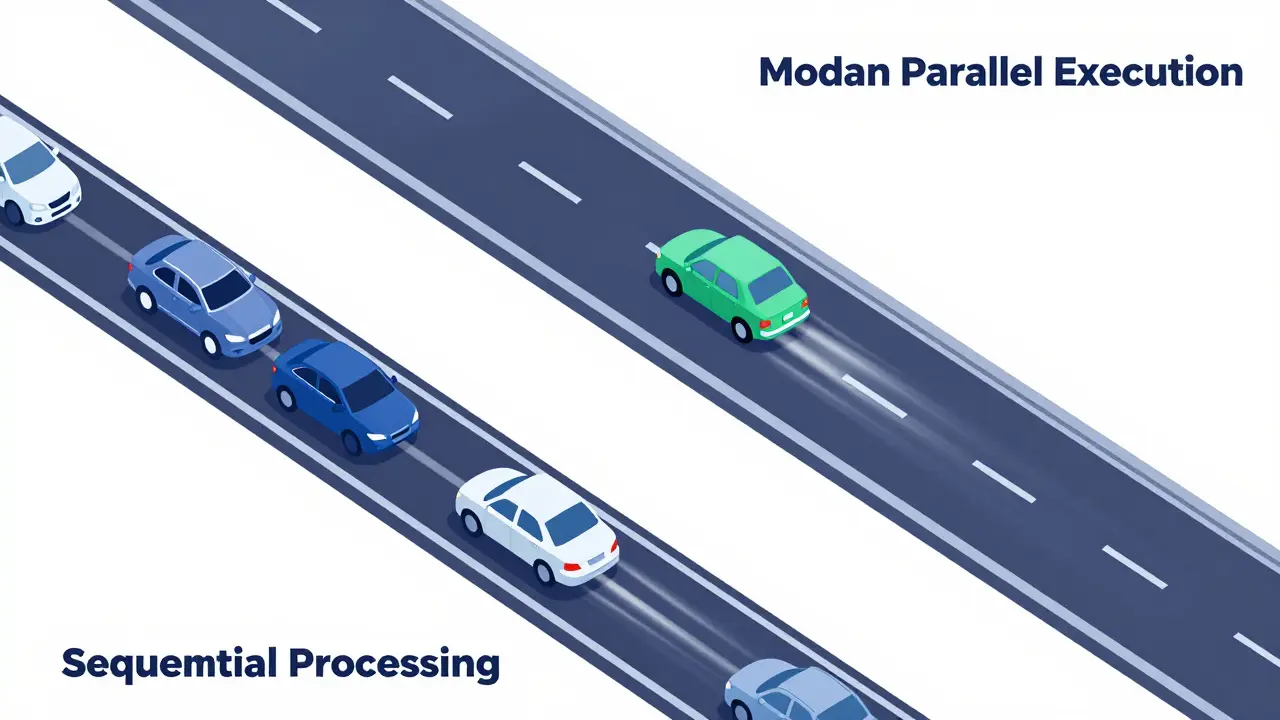
Monad takes a different approach. It is an independent Layer 1 blockchain that uses a parallelized execution model. Instead of processing transactions one after another (sequentially), Monad processes them simultaneously. This architectural shift allows the network to target up to 10,000 TPS. That is hundreds of times faster than Ethereum’s base layer.
Crucially, Monad remains fully EVM-compatible. This means developers can write smart contracts in Solidity-the same language used on Ethereum-and deploy them on Monad without rewriting code from scratch. They get the speed of a new chain with the tooling familiarity of the old one. MON is the currency that makes this ecosystem function.
Tokenomics: Supply and Distribution
Understanding how a token is distributed tells you a lot about its potential inflation and long-term value stability. The total supply of MON is fixed at 100 billion tokens. However, not all of these tokens are circulating right now. As of May 2026, approximately 11.83 billion MON tokens are in public circulation, representing roughly 11.8% of the total supply.
The distribution structure is designed to balance early investor returns with long-term ecosystem growth. Here is how the 100 billion tokens are allocated:
- Ecosystem Development: 38.5% - This is the largest slice, reserved for funding grants, partnerships, and attracting developers to build on Monad.
- Development Team: 27% - Allocated to the core team building the technology, likely subject to vesting schedules to prevent immediate dumping.
- Early Investors: 19.7% - Funding provided by venture capital firms and angel investors who backed the project before launch.
- Public Sales: 7.5% - Tokens sold directly to retail investors during initial offerings.
- Community Airdrops: 3.3% - Distributed to early community members and testers to encourage decentralization.
This heavy allocation to ecosystem development suggests that the Monad team plans to aggressively incentivize usage. If more apps and users join the network, the demand for MON to pay transaction fees should theoretically rise. However, the remaining ~88% of tokens will unlock over time, which could create selling pressure if demand does not keep pace with supply increases.
Utility: What Can You Do With MON?
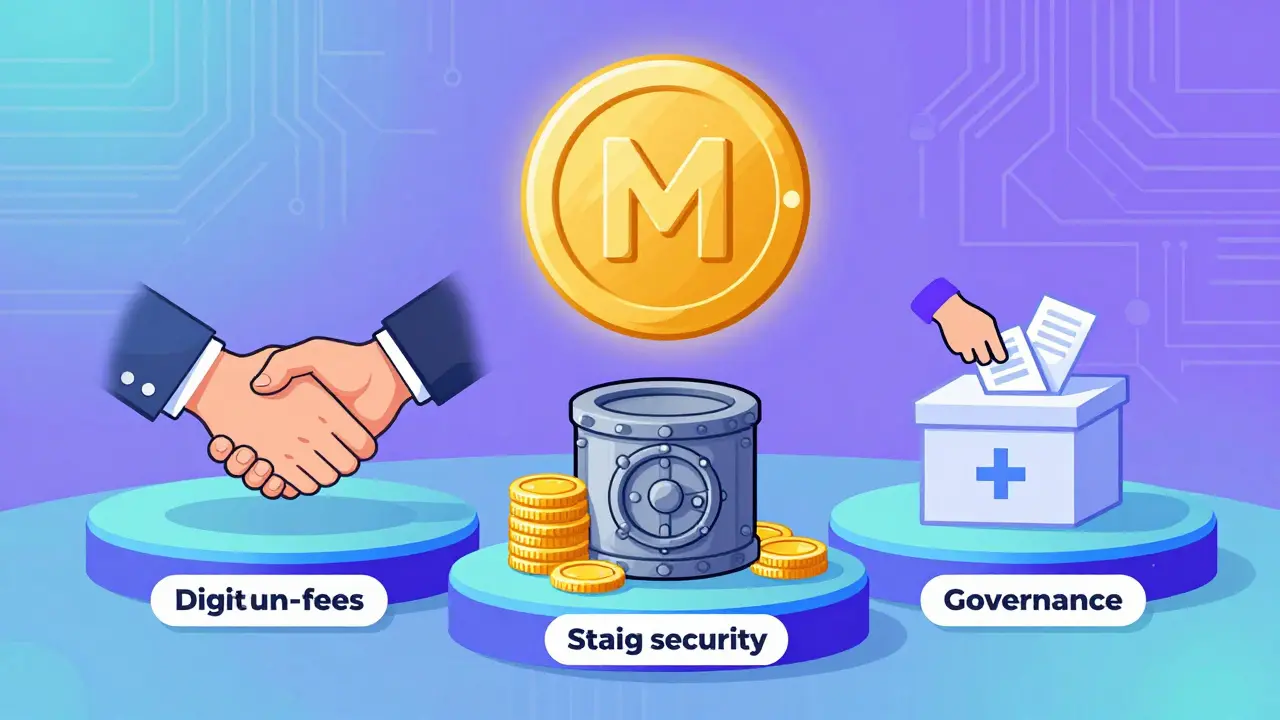
A token’s price is often driven by speculation, but its long-term survival depends on utility. MON has three primary functions within the Monad network.
1. Transaction Fees
Every time you send money, swap tokens, or interact with a smart contract on Monad, you must pay a fee. These fees are denominated in MON. Because Monad aims for high throughput, individual fees may be low in absolute terms, but the volume of transactions could drive significant aggregate demand for the token. Users need to hold MON in their wallets to operate on the network.
2. Staking and Security
Monad operates on a Proof-of-Stake (PoS) consensus mechanism. To secure the network, validators stake MON tokens. In return, they earn rewards from transaction fees and potentially new token emissions. Regular holders can also delegate their MON to validators, earning a share of the rewards without running complex node infrastructure. This creates a yield-bearing asset for holders, providing an incentive to hold rather than sell.
3. Governance
As a decentralized protocol, decisions about upgrades, parameter changes, and fund allocations are made by the community. MON holders can vote on proposals. While specific voting thresholds vary by proposal type, holding MON gives you a say in the future direction of the network. This aligns the interests of token holders with the health of the ecosystem.
Market Performance and Valuation (May 2026)
As of mid-2026, MON trades around $0.0316 USD. With a circulating supply of 11.83 billion tokens, the market capitalization sits at approximately $370 million. This places Monad in the mid-tier category among cryptocurrency projects-significant enough to indicate strong institutional interest, but still far below top-tier giants like Ethereum or Solana.
The 24-hour trading volume is relatively modest at around $40,000, suggesting that liquidity is still developing compared to major exchanges. However, listings on reputable platforms like Gemini Exchange provide a level of trust and accessibility for mainstream investors. Price volatility is expected, as is common with newer Layer 1 tokens, especially as more supply unlocks and market sentiment shifts based on adoption metrics.
| Metric | Value |
|---|---|
| Current Price | $0.0316 USD |
| Market Cap | $370.7 Million |
| Circulating Supply | 11.83 Billion MON |
| Total Supply | 100 Billion MON |
| Target TPS | 10,000 |
| EVM Compatible | Yes |
How Monad Compares to Competitors
You might ask, "Why not just use Solana or Avalanche?" Both are high-performance chains, but they differ significantly in architecture and developer experience.
Solana uses a unique runtime environment that requires developers to learn Rust and adapt to its specific constraints. While fast, it is not EVM-compatible. Avalanche offers subnets and good performance, but its ecosystem is fragmented across multiple chains. Monad’s advantage lies in its promise of seamless migration. If you already have a DeFi app on Ethereum, you can port it to Monad with minimal code changes. This lowers the barrier to entry for the vast majority of Web3 developers who know Solidity.
Compared to other EVM-compatible L1s like Polygon or Fantom, Monad’s claim to fame is raw speed via parallelization. Most EVM chains process transactions sequentially, limiting their theoretical maximum throughput. By breaking this constraint, Monad aims to offer Ethereum-like compatibility with Solana-like speeds.

Risks and Considerations
No investment is without risk. Here are the key factors to watch regarding MON:
- Token Unlock Pressure: With nearly 90% of tokens yet to circulate, future unlocks could dilute price if demand doesn’t grow proportionally. Always check the vesting schedule for team and investor tokens.
- Execution Risk: Claiming 10,000 TPS is ambitious. Real-world performance under load may differ from theoretical benchmarks. Monitor network uptime and actual transaction success rates.
- Competition: The Layer 1 space is crowded. New entrants like Sei and Sui also compete for developer mindshare. Monad must continuously deliver updates and attract active users to stay relevant.
- Liquidity Depth: Lower trading volumes mean larger orders can move the price significantly. Be cautious when entering or exiting large positions.
Who Should Pay Attention to MON?
If you are a developer tired of Ethereum gas fees but unwilling to leave the Solidity ecosystem, Monad offers a compelling testing ground. If you are an investor seeking exposure to high-performance Layer 1 narratives beyond the established leaders, MON provides a mid-cap opportunity with clear utility drivers. For casual users, waiting until the ecosystem matures with user-friendly dApps might be wise before interacting directly with the protocol.
The success of MON ultimately hinges on adoption. Technology alone isn’t enough; real people need to use the network for trading, gaming, or social applications. Keep an eye on developer activity metrics and total value locked (TVL) in Monad-based protocols as leading indicators of the token’s long-term health.
Is MON coin a good investment in 2026?
Whether MON is a "good" investment depends on your risk tolerance and belief in the Monad network's ability to capture market share. It offers high upside potential due to its innovative parallelized EVM architecture, but carries risks related to token unlock inflation and intense competition from other Layer 1 blockchains. Always conduct your own research and consider dollar-cost averaging rather than lump-sum investing.
Can I use MON on Ethereum wallets?
Yes, because Monad is EVM-compatible, most standard Ethereum wallets like MetaMask, Trust Wallet, and Rabby Wallet support MON tokens. You simply need to add the Monad network RPC details to your wallet to interact with the chain directly, though MON tokens themselves can often be bridged or swapped on multi-chain aggregators.
What is the difference between MON and ETH?
ETH is the native token of Ethereum, a slower but highly secure and decentralized network. MON is the native token of Monad, a newer Layer 1 designed for extreme speed (up to 10,000 TPS) using parallel execution. While both are EVM-compatible, MON aims to offer lower fees and higher throughput for applications that require scalability, whereas ETH focuses on maximum security and decentralization.
How do I earn MON through staking?
You can earn MON by staking your tokens with a validator on the Monad network. Validators secure the blockchain and process transactions. As a delegator, you lock up your MON tokens and receive a portion of the rewards earned by the validator, minus their commission. This process helps secure the network while generating passive income for holders.
When will more MON tokens be released?
The release schedule depends on the vesting periods set for the development team, investors, and ecosystem funds. Since only about 11.8% of the total supply is currently circulating, significant amounts will unlock over time according to the official tokenomics roadmap. Investors should monitor official Monad announcements for specific dates regarding linear or cliff vestings.
 Finance