

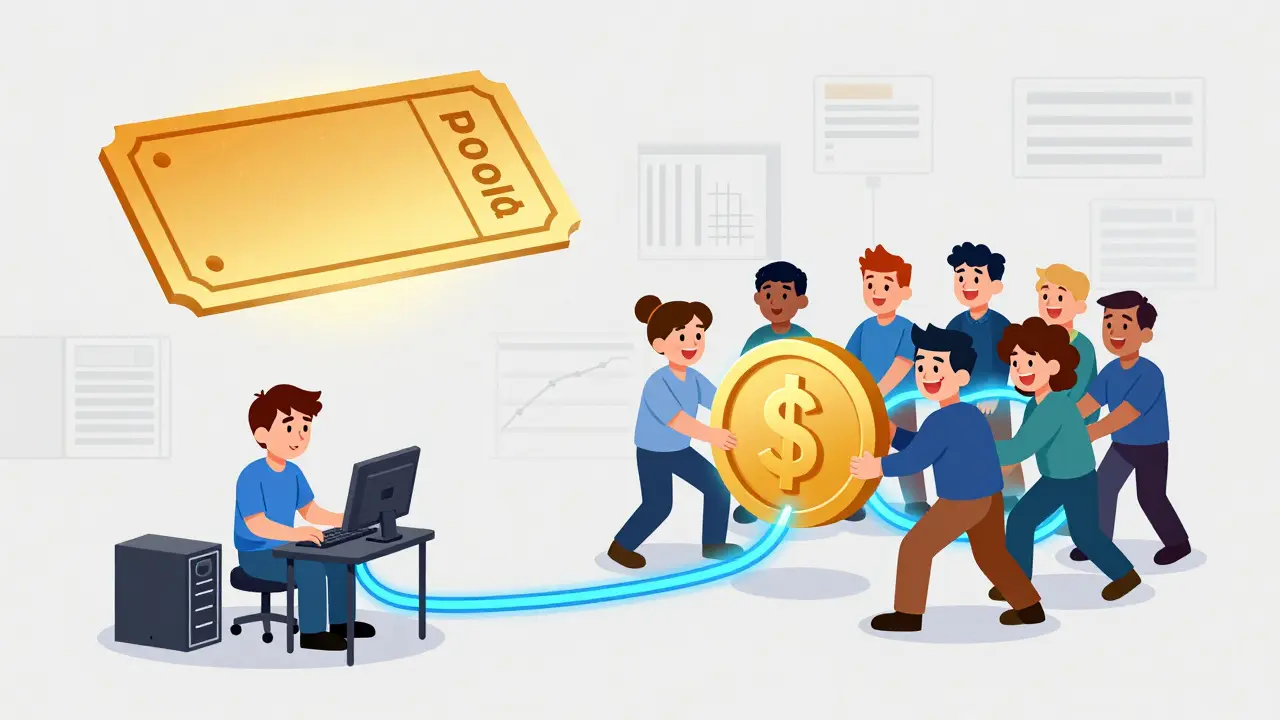
Imagine trying to win a massive lottery where the ticket costs a few cents, but the jackpot is millions of dollars. If you buy one ticket a week, you might eventually win, but you could also go your entire life without a single payout. For a solo crypto miner, this is exactly what it feels like. To secure a block and earn a reward, you need a massive amount of computing power. If you're just one person with a couple of rigs, the odds of you solving that cryptographic puzzle alone are astronomically low.
This is where Cryptocurrency Mining Pools is a collaborative system where miners combine their computational power (hashrate) to increase their chances of finding a block and earning rewards. By teaming up, miners turn a high-risk gamble into a steady, predictable stream of income. Instead of waiting years for a single lucky strike, you get paid small amounts daily based on how much work your hardware actually did.
How Mining Pools Actually Work
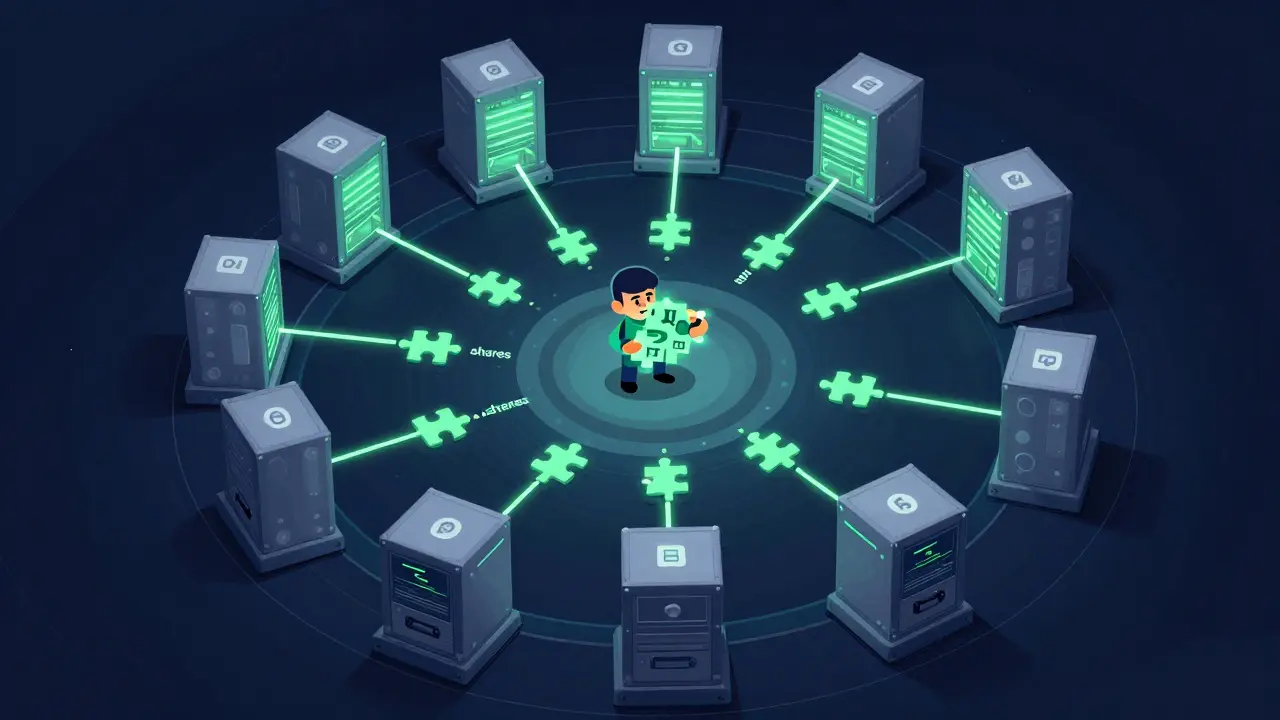
At its core, a mining pool is like a digital cooperative. Instead of every miner guessing random numbers (nonces) in total isolation, a pool operator coordinates the effort. The operator assigns each participant a specific range of nonces to test. This ensures that the pool isn't wasting energy by having ten different people guess the same number.
When a miner finds a "share"-which is essentially a piece of the puzzle that is almost solved-they submit it to the pool. While a share isn't a full block, it proves to the operator that the miner is actually contributing processing power. Once the pool collectively finds the winning solution, the block reward (which is currently 3.125 BTC for Bitcoin) plus the transaction fees are sent to the operator, who then distributes them to the participants.
Most modern pools use the Stratum Protocol is a communication protocol designed to reduce the bandwidth required between miners and pool servers. Introduced in 2012, it cut bandwidth needs by about 90%, making it possible for miners to connect from anywhere in the world without lagging their connection.
Solo Mining vs. Pool Mining: The Reality Check
Choosing between solo mining and joining a pool usually comes down to your appetite for risk and the size of your hardware setup. For most people, cryptocurrency mining pools are the only viable option. Let's look at the numbers.
If you have a mining rig with 100 TH/s of hashrate, the statistical reality of solo mining is brutal. Based on current network difficulty, you might only find a block once every 3.5 years. You could go five years without a penny, or you could get lucky in the first hour. In a pool, that same 100 TH/s earns you a daily payout. You won't hit the "jackpot" all at once, but you'll have a consistent budget to pay your electricity bills.
| Feature | Solo Mining | Mining Pool |
|---|---|---|
| Payout Consistency | Highly Volatile (All or Nothing) | Predictable / Daily |
| Reward Amount | Full Block Reward (100%) | Proportional Share (Minus Fees) |
| Risk Level | Extreme | Low |
| Technical Setup | Requires full node management | Simple software configuration |
The Cost of Convenience: Fees and Payout Models
Pool operators don't run these massive servers for free. They typically charge a fee ranging from 1% to 4% of your earnings. However, not all pools pay out the same way. Depending on the pool you choose, your paycheck will be calculated differently.
- Proportional Payouts: This is the most common method. If you contribute 1% of the pool's total hashrate, you get 1% of the reward. It's simple and fair over the long term.
- Score-Based Systems: Some pools, like Slush Pool, weight recent contributions more heavily. This rewards miners who stay online and consistent, rather than those who jump in and out.
- PPS (Pay Per Share): The pool pays you a fixed rate for every valid share you submit, regardless of whether the pool actually finds a block. This removes the "luck" factor entirely but usually comes with higher fees.
When picking a pool, keep an eye on the minimum payout threshold. Most pools won't send money to your wallet until you've earned a certain amount, often between 0.001 and 0.01 BTC. If your rig is very small, it might take weeks to hit that threshold.
The Giants of the Industry: Who Controls the Hashrate?
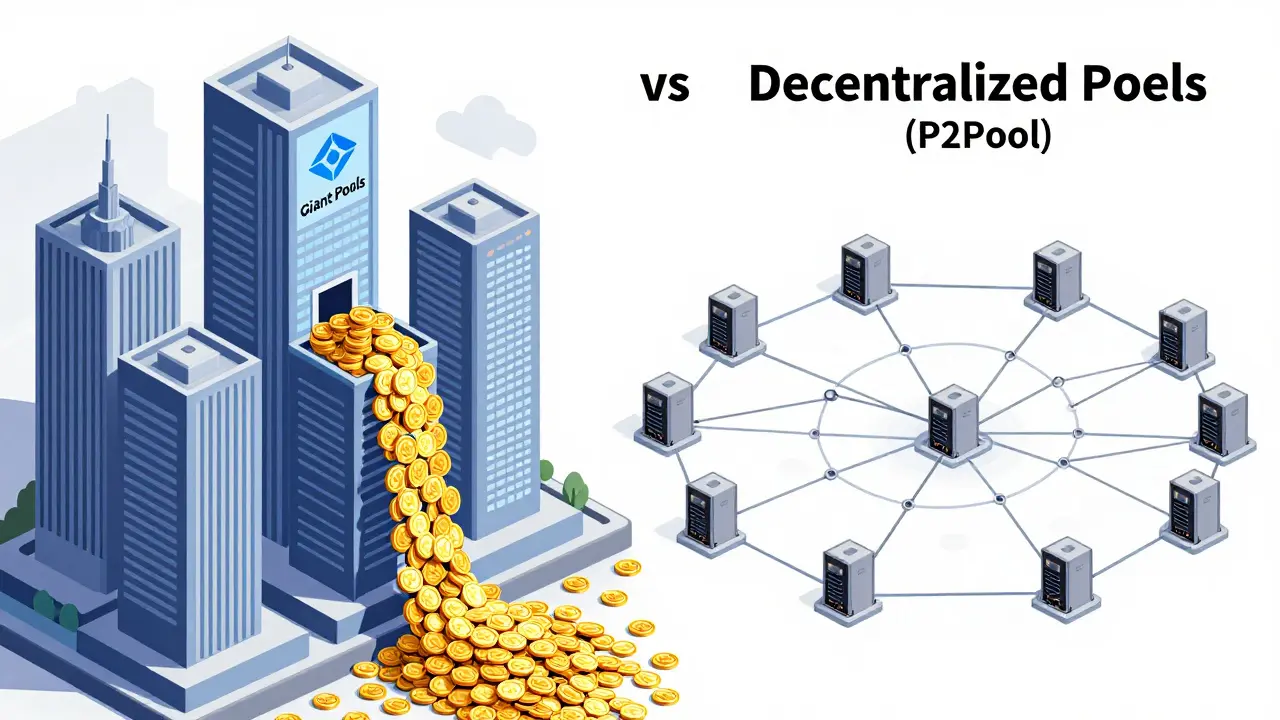
The mining landscape has shifted from a wild west of thousands of small players to a concentrated industry dominated by a few giants. Currently, a handful of pools control the majority of the network's power. Foundry USA is a leading US-based mining pool that commands a significant portion of the global Bitcoin hashrate, focusing largely on institutional clients. It is often locked in a battle for dominance with AntPool is a massive mining pool operated by Bitmain that provides high-efficiency mining services and automatic currency conversion.
Other major players include F2Pool and Viabtc. While this consolidation makes the network more efficient, it introduces a conceptual risk: centralization. If three or four pools control 65% of the hashrate, they theoretically have the power to manipulate which transactions get included in a block. While economic incentives usually stop this from happening, it's a point of contention for decentralization purists.
Common Pitfalls and Technical Hurdles
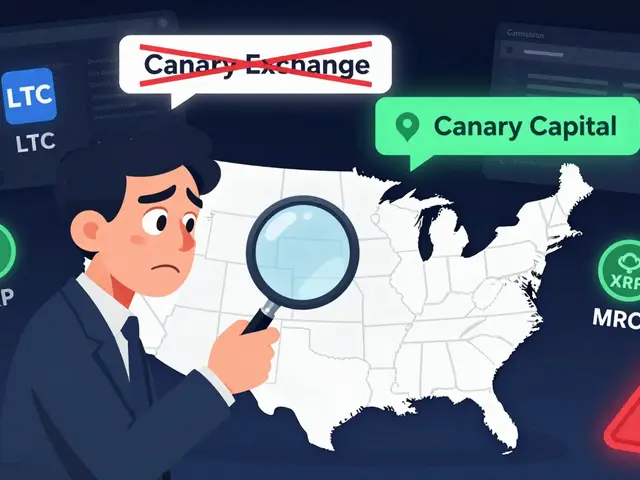
Joining a pool isn't exactly "plug and play." New miners often run into a few common headaches. The most frequent issue is "stale shares." This happens when your rig finds a solution, but by the time it reaches the pool server, the rest of the network has already found a new block. Your work becomes obsolete. If your server is in the US but you're mining in Asia, network latency can eat 3% to 7% of your potential earnings.
Another common mistake is incorrect worker configuration. In your mining software (like CGMiner or BFGMiner), you have to set up a "worker name." If you mistype this or use a format the pool doesn't recognize, your shares won't be credited to your account, and you'll be mining for someone else (or no one at all).
The Future: Decentralized Pools and Regulation
The industry is moving toward a middle ground between the risk of solo mining and the centralization of big pools. P2Pool is a decentralized mining pool that uses a peer-to-peer architecture to eliminate the need for a central operator. By using merge-mining, it allows users to get the consistency of a pool without trusting a single company with their funds.
At the same time, governments are waking up. In the US, FinCEN has classified some mining pools as money services businesses, meaning they now have to follow strict KYC (Know Your Customer) and AML (Anti-Money Laundering) laws. Similarly, the EU's MiCA regulations are forcing pools to identify their users. For the average miner, this means the days of completely anonymous mining are fading.
Is it safer to mine in a pool or solo?
From a financial perspective, pools are much safer. Solo mining is essentially a lottery; you could mine for years and earn nothing. Pools provide a steady, proportional income. However, pools introduce "counterparty risk," meaning you have to trust the pool operator to actually pay you and not steal your rewards.
How do I choose the best mining pool?
Look at three things: fees, payout frequency, and server location. A pool with 1% fees is better than one with 4%. Check the minimum payout threshold to ensure you'll actually receive your money in a reasonable timeframe. Finally, choose a server closest to your physical location to minimize stale shares and network latency.
What happens if a mining pool shuts down?
If a pool shuts down, any rewards that haven't reached the payout threshold are typically lost. This is why it's a good idea to use pools with lower thresholds or move your hashrate if you notice the pool's stability or reputation declining on community forums.
Can I join a pool with an old GPU?
For Bitcoin, no. Bitcoin requires specialized ASIC hardware to be profitable. However, for many altcoins (like some versions of Litecoin or various "meme" coins), you can still join pools using a GPU. The same pool principles apply, but the difficulty is much lower.
What is a 51% attack in the context of pools?
A 51% attack occurs when one entity controls more than half of the network's hashrate. If a single pool (or a few pools working together) reaches this level, they could theoretically reverse transactions or block others from mining. While this is a theoretical risk with large pools, the economic cost of attacking the network usually outweighs the potential gain.
 Finance

Gloris Young
April 24, 2026 AT 15:43Solid breakdown. Most people don't realize how brutal the odds are for solo mining these days.
Kyle Bush
April 26, 2026 AT 15:04USA has the best rigs and the best pools! 🇺🇸💪 Let's keep that hashrate dominating the globe!! 🚀💰
Caiaphas Konkol
April 28, 2026 AT 00:16The mention of centralization is the only part that actually matters here. If you think a handful of corporate entities like Foundry or AntPool aren't already colluding to manipulate the network, you're blissfully naive. The entire premise of Bitcoin was to escape this kind of systemic control, yet here we are, handing the keys back to a few digital landlords who likely have backchannels into the intelligence community. It's a joke.
Alex Hunter
April 28, 2026 AT 08:25For anyone just starting out, don't let the technical hurdles scare you. It takes a bit of patience to get your worker names right and find a server with low latency, but once it's set up, it's mostly passive. Just take it one step at a time.
Yvette P
April 28, 2026 AT 11:41Oh wow, a basic explanation of the Stratum Protocol. How absolutely thrilling. I'm sure the three people here who don't know what a nonce is are just vibrating with excitement. Let's talk about the actual hash-cost-to-reward ratio with current difficulty adjustments and the looming shadow of the next halving, or maybe we just stick to these little bedtime stories about "digital cooperatives." It's almost cute how this treats the mining industry like a neighborhood bake sale when it's actually an arms race of silicon and electricity consumption that would make a small country blush. I'm sure the "institutional clients" at Foundry are just so happy to have such a supportive community of hobbyists cheering them on from their GPUs in the basement. Truly a heartwarming tale of decentralized capitalism.
Eric Raines
April 30, 2026 AT 10:54Actually, PPS is barely even worth it for the average guy because the fees eat the profit. Everyone knows that.
Hannah Rubia
May 2, 2026 AT 06:20I believe it is prudent to emphasize that the selection of a mining pool should be predicated on a thorough audit of the operator's reputation and historical payout reliability.
debashish sahu
May 4, 2026 AT 02:04It is interesting to see how these protocols have standardized across different regions.
Mike Krasner
May 5, 2026 AT 12:37who cares about 51 percent attacks anyway most people just buy the coin and hope it goes up lol
Liz Ariza
May 6, 2026 AT 08:11This is such a helpful guide! 🌟 It really takes the mystery out of the process. Just be careful with those stale shares, they're such a sneaky little profit killer! 😱💸
Candace Sherrard
May 6, 2026 AT 09:53The philosophical tension between the dream of individual sovereignty in solo mining and the pragmatic reality of pooled resources mirrors so many other aspects of our modern existence where we trade our autonomy for a semblance of stability. We crave the jackpot of total independence, yet the fear of the void-the years of zero return-drives us back into the arms of a collective structure that, while efficient, slowly erodes the very decentralization that gave the technology value in the first place. It's a fascinating cycle of human nature where we innovate to be free, only to find that freedom is too volatile to be profitable.
Mary Tawfall
May 7, 2026 AT 03:22I love how clear this is. It's encouraging to see a path for smaller miners to still make a bit of something.
Matthew Morse
May 8, 2026 AT 10:49too many words for something simple
Tara Aman
May 9, 2026 AT 02:16Definitely agree that the consistency of a pool is the way to go. It just keeps the motivation higher when you see those daily drops!
Jennifer L
May 9, 2026 AT 15:38I am so deeply concerned about the KYC regulations!! 😭 It feels like the privacy we were promised is just slipping away from us so quickly it is truly heartbreaking to see the industry change like this
Jagdish Sutar
May 11, 2026 AT 03:54Very well explained. This should help many beginners in my community get started with the right expectations.
Ellie Drews
May 11, 2026 AT 15:40Glad you found it helpful. Just remember to always double check your wallet address before hitting start!