

Remember the days when claiming an airdrop felt like finding money in your old winter coat? You’d connect your wallet, click a few buttons, and boom-free tokens. Today, that same excitement is often bait for phishing sites designed to drain your funds. If you are searching for details on the WagyuSwap IDO launch airdrop, you need to pause and verify exactly what you are looking at before you sign any transaction.
WagyuSwap (WAG) is a real project, but the landscape around its "airdrops" is messy. There is the historical Initial DEX Offering (IDO) from 2021, and then there are numerous third-party claims popping up in 2025 and 2026 promising free WAG tokens. The difference between these two scenarios is the difference between getting paid and getting hacked. Let’s break down the facts, the risks, and how to safely navigate this specific token ecosystem.
What Is WagyuSwap and the WAG Token?
To understand the value-or lack thereof-in an airdrop, you first need to know what the asset actually is. WagyuSwap is a decentralized exchange (DEX) built on the Velas Network. It launched on September 13, 2021, positioning itself as the first DEX on a blockchain that uses Solana’s codebase for speed while maintaining Ethereum Virtual Machine (EVM) compatibility.
The native utility token is called WAG. It serves several functions within the ecosystem:
- Governance: Holders can vote on protocol changes.
- Rewards: Liquidity providers earn WAG to offset impermanent loss.
- Fees: Used to pay for trading fees on the platform.
As of mid-2026, the token has seen significant volatility. After hitting an all-time high of $0.00435, the price has dropped sharply, trading in the range of $0.00015. With a total supply capped at 500 million tokens, the market capitalization remains relatively small, ranking outside the top 2,000 cryptocurrencies globally. This low market cap means the token is highly susceptible to manipulation and large swings based on minor news or whale activity.
The Original IDO vs. Modern "Airdrops"
Confusion arises because WagyuSwap did have an initial distribution event. However, understanding the timeline is critical for safety.
| Event Type | Date | Status | Legitimacy Risk |
|---|---|---|---|
| Initial DEX Offering (IDO) | September 2021 | Completed | Low (Historical Fact) |
| Third-Party "Claim" Sites | 2025-2026 | Ongoing Scams | Extremely High |
The original IDO was part of the platform's bootstrap strategy to build liquidity on the Velas Network. That event is over. Any website currently advertising a "WagyuSwap IDO Launch Airdrop" for new users in 2026 is almost certainly a scam. These sites mimic official branding, use countdown timers to create false urgency, and ask you to connect your wallet to "claim" non-existent tokens.
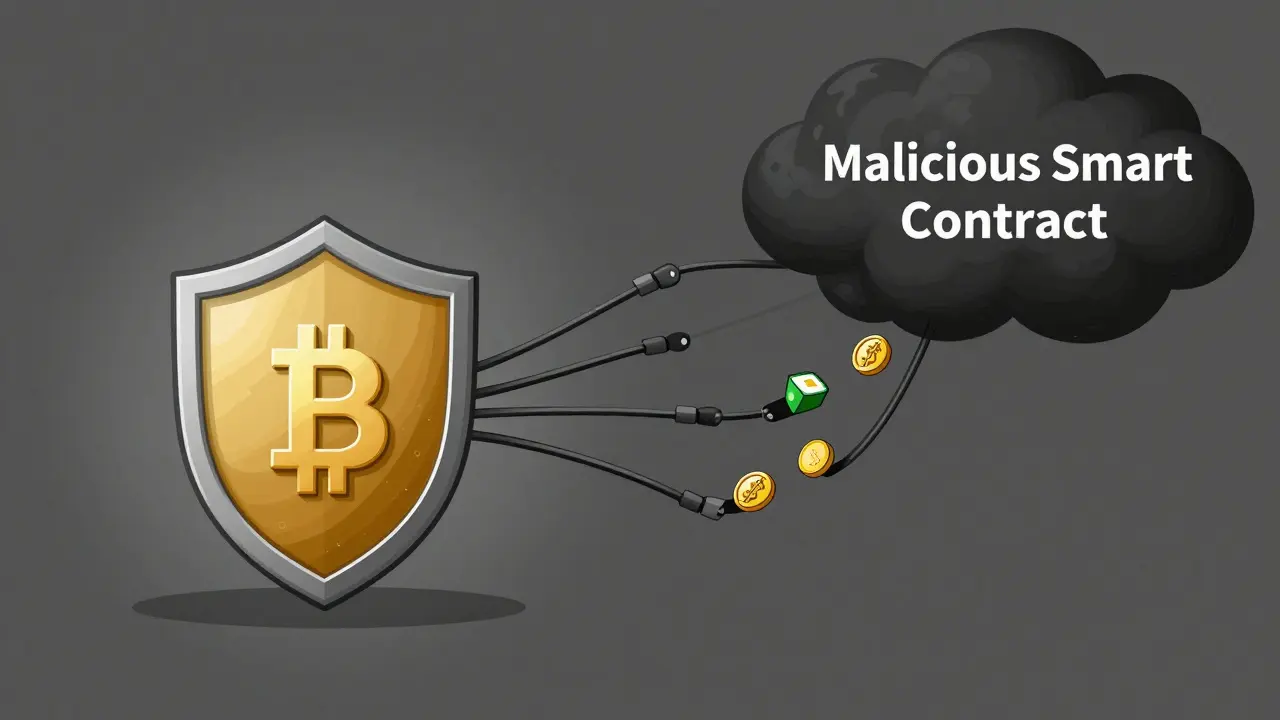
Why do they do this? Because connecting your wallet to a malicious smart contract allows them to approve unlimited spending of your assets. Once you sign that transaction, they don't just take fake WAG tokens; they can drain your ETH, USDT, or other valuable holdings.
How to Verify if an Airdrop Is Real
If you come across a link claiming to offer free WAG tokens, do not click it immediately. Instead, follow this verification checklist. This process applies to any crypto airdrop, not just WagyuSwap.
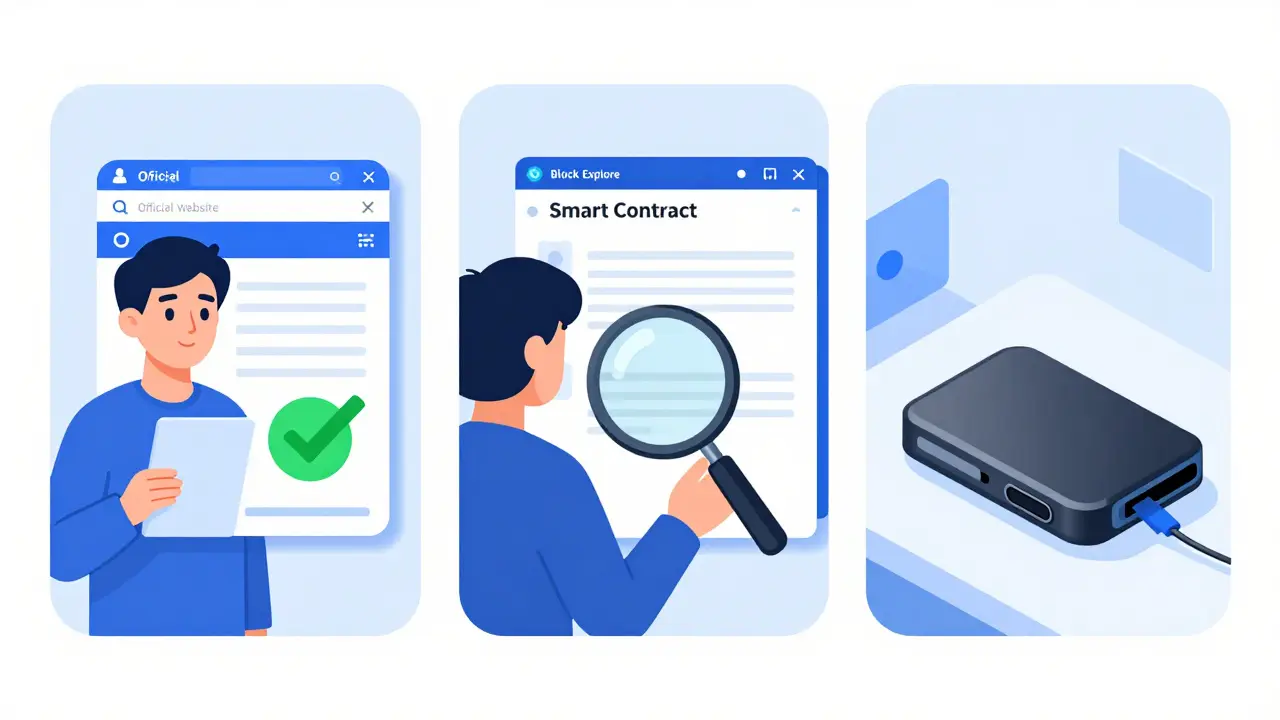
- Check Official Channels: Go directly to the official WagyuSwap website (verify the URL carefully) and check their verified Twitter (X) account or Discord server. Legitimate projects announce major distributions here first. If it’s not on their official social media, it doesn’t exist.
- Analyze the URL: Scammers often use slight misspellings like `wagyuswap-airdrop.com` or `wag-token-claim.net`. Look for typos, extra hyphens, or unfamiliar domain extensions.
- Review Smart Contract Interactions: Use tools like Etherscan (for Ethereum-based chains) or Velas Explorer. If a site asks you to interact with a contract that has no history, no audits, or zero transactions, walk away.
- Never Share Your Seed Phrase: No legitimate airdrop will ever ask for your 12 or 24-word recovery phrase. If a pop-up demands this, close the browser tab immediately.
The Velas Network Context
WagyuSwap operates on the Velas Network, which is a blockchain platform built using Solana’s core technology but designed to be EVM compatible. This technical architecture is interesting because it aims to combine the speed of Solana with the developer familiarity of Ethereum.
However, the success of WagyuSwap is tied directly to the adoption of Velas. As of 2026, Velas has struggled to gain widespread traction compared to competitors like Polygon, Arbitrum, or even native Solana dApps. The Total Value Locked (TVL) in WagyuSwap hovers around $180,000, which is modest in the DeFi world. Low TVL often correlates with lower liquidity, meaning higher slippage when you try to trade larger amounts of WAG tokens.
This context matters for airdrop hunters. Projects on struggling networks sometimes use aggressive marketing tactics-including fake airdrops-to generate artificial hype. Always assess the health of the underlying chain before investing time or risk into its associated tokens.
Current Market Outlook for WAG
Let’s look at the numbers without the hype. Technical analysis from late 2025 through 2026 shows a bearish trend for WAG. Key indicators include:
- Price Action: Trading significantly below its all-time high, with resistance levels holding strong against upward movement.
- Volume: Daily trading volume frequently drops near zero, indicating low interest from active traders.
- Moving Averages: Both the 50-day and 200-day Simple Moving Averages (SMA) point downward, suggesting continued selling pressure.
While some prediction models suggest potential rebounds, the consensus among analysts is cautious. The Fear & Greed Index often reflects broader market sentiment rather than specific project health, so don’t rely on it alone. For most investors, WAG remains a high-risk speculative asset rather than a stable store of value.
Safety First: Protecting Your Wallet
In the world of decentralized finance, your private keys are your bank. Losing them means losing everything. Here are practical steps to protect yourself while exploring platforms like WagyuSwap:
- Use a Burner Wallet: When interacting with new or unproven dApps, use a secondary wallet with minimal funds. Never connect your main holding wallet to experimental contracts.
- Revoke Permissions Regularly: Use tools like Revoke.cash to check which contracts have access to your tokens. If you accidentally approved a suspicious contract during a scam attempt, revoke it immediately.
- Enable Hardware Security: Consider using a hardware wallet (like Ledger or Trezor) for significant holdings. This adds a physical layer of security that software alone cannot provide.
Remember, if an offer sounds too good to be true-like getting thousands of dollars worth of tokens for free-it probably is. The crypto space rewards patience and skepticism, not greed.
Is the WagyuSwap IDO airdrop still active in 2026?
No. The original Initial DEX Offering (IDO) for WagyuSwap took place in September 2021. Any current websites claiming to host an active IDO airdrop for WAG tokens are likely scams designed to steal cryptocurrency from users' wallets.
How can I get WAG tokens legitimately?
You can purchase WAG tokens on supported decentralized exchanges like WagyuSwap itself or centralized exchanges that list the token. Ensure you are using the correct contract address for the WAG token on the Velas Network to avoid buying counterfeit tokens.
What is the Velas Network?
Velas is a blockchain network that utilizes Solana's high-performance architecture while remaining compatible with the Ethereum Virtual Machine (EVM). This allows developers to deploy Ethereum-style smart contracts on a faster, cheaper infrastructure.
Is WagyuSwap safe to use?
Like any decentralized exchange, WagyuSwap carries inherent risks related to smart contract vulnerabilities and market volatility. While the platform itself is established, users should always exercise caution, use burner wallets for testing, and never invest more than they can afford to lose.
Why are there so many fake WagyuSwap airdrop sites?
Scammers target popular or historically significant projects to lend credibility to their fraud. By using the WagyuSwap name, they attract users who may be less vigilant. These sites exploit the desire for free money to trick users into signing malicious wallet connections.
 Finance

Tuan Nguyen
July 4, 2026 AT 22:09The sheer intellectual laziness displayed by those chasing these phantom airdrops is truly staggering. It is not merely a financial error; it is a cognitive failure to understand the basic mechanics of value creation in decentralized systems. The Velas network, for all its technical pretensions regarding Solana's codebase and EVM compatibility, remains a marginal player with negligible liquidity depth. To suggest that one can profit from such an environment without rigorous due diligence is absurd.
Andrew Schneider
July 5, 2026 AT 03:48Oh please! 🙄 You sound like a broken record playing 'be careful' on loop while everyone else is actually making moves. 💸 I’ve seen people turn $10 into $10k on random shitcoins, so don’t act like you’re smarter than the market just because you read a whitepaper. WagyuSwap might be small, but that’s where the alpha hides if you have the guts to take the risk. 🚀✨
Josephine Finlayson
July 6, 2026 AT 00:28I think we can both agree that safety is paramount, Andrew. While enthusiasm is wonderful, the distinction between legitimate participation and predatory scams is quite clear here. Perhaps we could focus on educating others about the verification steps mentioned in the article? It seems beneficial for the community as a whole to remain vigilant rather than dismissive of cautionary advice.
Eric Braddock
July 7, 2026 AT 13:26The entire narrative of 'legitimate projects' vs 'scams' is a fabrication designed to keep the masses compliant. WagyuSwap isn't a scam; it's a honeypot set by the central banks to track retail wallet activity on non-EVM chains. They want you to connect your wallet so they can map your transaction history across the Velas network. Wake up. The IDO was never real; it was a data harvest operation disguised as a distribution event. 🔍👁️
Hazel Fruitman
July 8, 2026 AT 08:10i mean honestly why do ppl even bother with these tiny coins? its just greed talking. if u cant afford to lose it dont touch it. simple as that. but yeah scammers are everywhere now days so be carefull ok?
Autumn Story
July 8, 2026 AT 15:42That is such a great point Hazel!! I always try to remind myself that free money usually comes with a hidden cost... especially in crypto!! 😊 It is so important to protect our hard-earned assets. I use a burner wallet for everything new just to be safe. Do you think using hardware wallets is overkill for small amounts??
Mark Tuason
July 8, 2026 AT 23:15While I appreciate the sentiment, I must respectfully disagree with the notion that hardware wallets are overkill. Security is a layered approach. Even for small amounts, the principle of least privilege applies. If a contract is malicious, it does not discriminate based on balance size. It is better to establish secure habits early than to retrofit them after a loss occurs.
Ella Collinson
July 10, 2026 AT 14:15Your analysis lacks depth regarding the smart contract vulnerabilities inherent in EVM-compatible chains utilizing Solana consensus mechanisms. The interoperability layer introduces significant attack vectors that are often overlooked by retail participants. Furthermore, the TVL metrics cited are misleading when not adjusted for wash trading activities prevalent in low-cap DEXs. You are looking at surface-level indicators while ignoring the fundamental structural risks of the protocol architecture.
Ray Arney
July 11, 2026 AT 17:39Hey guys, just wanted to chime in. I remember when WagyuSwap first launched back in 2021. It had some promise but the community just didn't stick around. Now seeing all these fake sites popping up is frustrating. Just stick to the official docs if you really want to check anything out. No need to get heated though.
Nick G
July 13, 2026 AT 05:12It is fascinating how the intersection of technological innovation and human psychology creates such volatile environments. As someone who has observed the evolution of decentralized exchanges from their inception, I find the current landscape particularly intriguing. The Velas network represents an interesting hybrid model, attempting to bridge the gap between high throughput and developer familiarity. However, the lack of widespread adoption suggests that perhaps the market has already made its choice regarding which infrastructure providers will dominate. We must consider the cultural implications of this fragmentation.
Nick Wengel
July 14, 2026 AT 19:36Nick makes a good point. Technology alone doesn't drive adoption. People need to trust the platform. If the user experience is clunky or the security is questionable, users will leave. WagyuSwap needs to prove itself beyond just being another DEX on another chain.
Alicia Hull
July 16, 2026 AT 00:18I am highly skeptical of any project that relies on 'airdrop hype' to maintain relevance. This indicates a failure in core product development. Why should I care about governance tokens if the underlying protocol has zero utility? The bearish technical indicators are not coincidental; they reflect a lack of genuine interest. Stop trying to sell me a dream based on past performance that is irrelevant to current market conditions.
Johan Otto
July 17, 2026 AT 13:37You're missing the vibe Alicia! 🌊 It's not about utility right now, it's about the narrative. Crypto runs on memes and momentum. WagyuSwap might be dead money, but the *idea* of it brings people together. That's worth something. Don't be so serious all the time. Life is short, trade the chaos! 😂🔥
Anuj Kashyap
July 19, 2026 AT 09:25The irony is palpable here. We discuss 'decentralization' while relying on centralized narratives to validate our investments. 🧘♂️ Is the token valuable? Or is the *belief* in the token valuable? In the end, it is all just numbers on a screen. But hey, if connecting your wallet brings you joy (or terror), who am I to judge? Just remember: the house always wins, unless the house is also gambling. 🎲😏
Tracy Marshall
July 20, 2026 AT 01:37this is all part of the grand plan to destroy privacy and control the masses through digital currency manipulation. they want you to sign away your rights every time you click 'connect'. do not fall for it. stay woke. ;)
Guy Davis
July 20, 2026 AT 08:53people need to stop being so naive. if it sounds too good to be true it is. period. no excuses.
Antony Lopez
July 22, 2026 AT 07:26Let me tell you something about American resilience. We built this country on innovation, not on clicking shady links from overseas servers. These crypto scams are eating away at our economic sovereignty. We need stricter regulations on these foreign entities operating on our networks. Support local, support secure, and keep your money in regulated institutions where it belongs.
Erika Pozzetto
July 23, 2026 AT 10:02I would like to elaborate on the regulatory aspects mentioned previously. The intersection of international finance and decentralized protocols presents unique challenges for legal frameworks. It is imperative that we consider the long-term implications of unregulated asset distribution on global economic stability. Furthermore, the ethical considerations surrounding automated market makers and their impact on traditional banking sectors cannot be ignored. We must engage in thoughtful discourse rather than reactive panic.
Melissa Beckwith
July 24, 2026 AT 13:22You are all completely missing the forest for the trees. The real story here is not whether WagyuSwap is a scam or not, but rather how the entire concept of 'airdrops' has been co-opted by bad actors to undermine trust in the ecosystem. I have spent years studying blockchain forensics, and I can tell you that the patterns of these phishing sites are identical to those used in major heists. The sophistication is increasing daily. You need to understand that this is not just about losing a few dollars; it is about the erosion of the foundational trust required for decentralization to function. Without education, there is only exploitation.
KEITH WONG
July 26, 2026 AT 02:12Listen up kids! 📢 Real alpha doesn't come from free tokens. It comes from knowing when to fold. I've been in this game since Bitcoin was $10. I've seen bubbles burst and empires rise. WagyuSwap? Dust. Forget it. Focus on the big players. Don't let these internet gurus fool you into thinking you can get rich quick. Work hard, save smart, and invest in what you understand. 🇺🇸💪
Natalie Lucas
July 27, 2026 AT 05:28hey keith thats some tough love but maybe a bit harsh lol. i think most people just want to learn. its okay to make mistakes as long as we learn from them. lets keep the vibes positive and help each other out instead of judging. ✨😊