

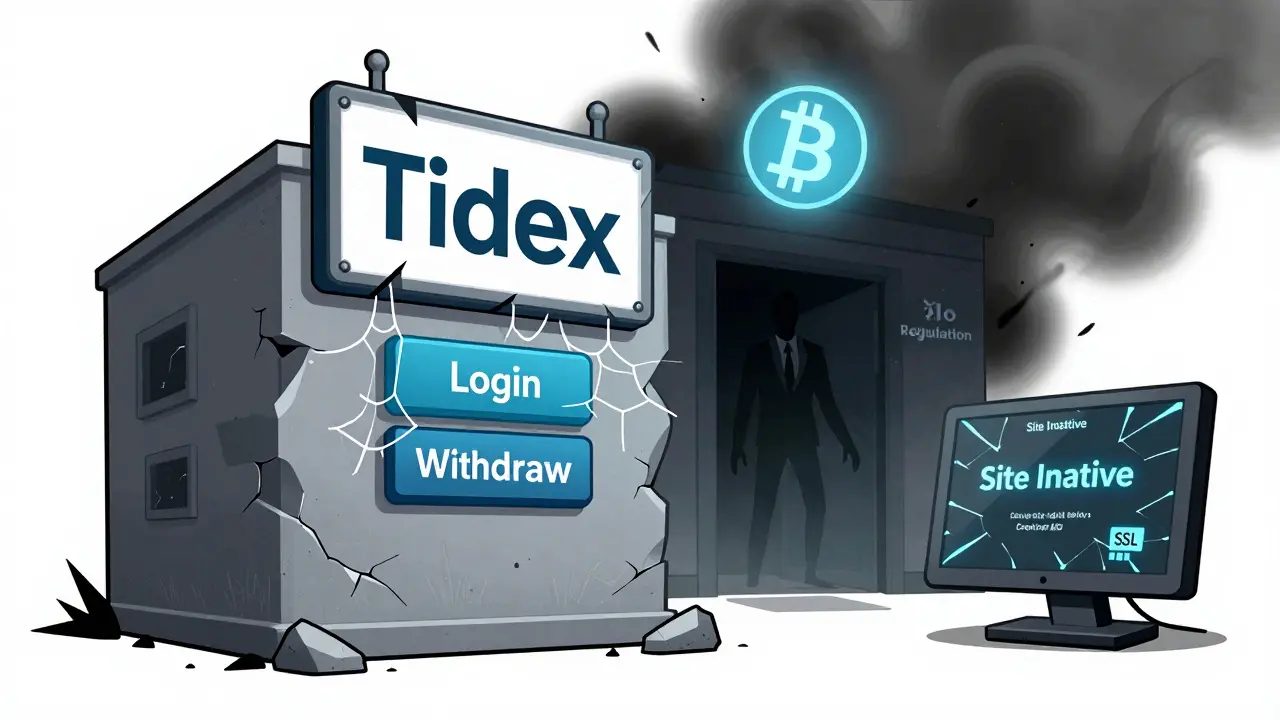
If you’re looking at Tidex as a place to trade crypto, you need to know one thing upfront: Tidex may not even be operating anymore. Back in 2023, users started reporting that the website wouldn’t load. Withdrawals stopped. Customer support vanished. By late 2024, CoinMarketCap listed it as inactive. And yet, some blogs still publish "reviews" of Tidex like it’s a live exchange - complete with fee structures, trading pairs, and mobile app details. That’s not a review. That’s a ghost story.
What Was Tidex?
Tidex launched in 2017 as a centralized crypto exchange run by Elite Way Development LLP - a company registered in Lithuania but operating out of London. It wasn’t a giant like Binance or Coinbase, but it carved out a niche. It supported around 40 cryptocurrencies and offered over 100 trading pairs. Bitcoin, Ethereum, and Waves were the most traded. Daily volume peaked at $16 million, which sounds big until you realize that even small regional exchanges now hit $100 million.
Its biggest selling point? Fees. Tidex charged 0% for market makers and 0.1% for takers. That’s lower than most exchanges, even today. For frequent traders, that meant real savings. Bitcoin withdrawals cost just 0.0005 BTC - cheaper than the industry average. It also had a native token, TDX, which gave users discounts and access to its "Wear2Earn" NFT program. Mobile apps existed for iOS and Android, though they never got more than a handful of reviews on app stores.
The User Experience: Simple, But Risky
For beginners, Tidex was easy. The interface was clean. No cluttered dashboards. No confusing tabs. You could place limit orders, market orders, and even use margin trading without needing a finance degree. Charts had basic technical indicators - RSI, MACD, moving averages - enough for casual traders. Order books were real-time. History was easy to pull up.
But simplicity came with a dark side. There was no KYC beyond basic email verification for low-tier accounts. That meant anonymity, but also zero regulatory protection. Tidex didn’t hold licenses from the FCA, MiFID, or any EU financial authority. It operated in a gray zone - registered in Lithuania but managed from London, which made it impossible to know who was accountable if things went wrong.
Security features looked good on paper: cold storage, 2FA, SSL encryption. But the SSL certificate expired in November 2024. No public update. No renewal notice. Just silence.
The Red Flags No One Talked About
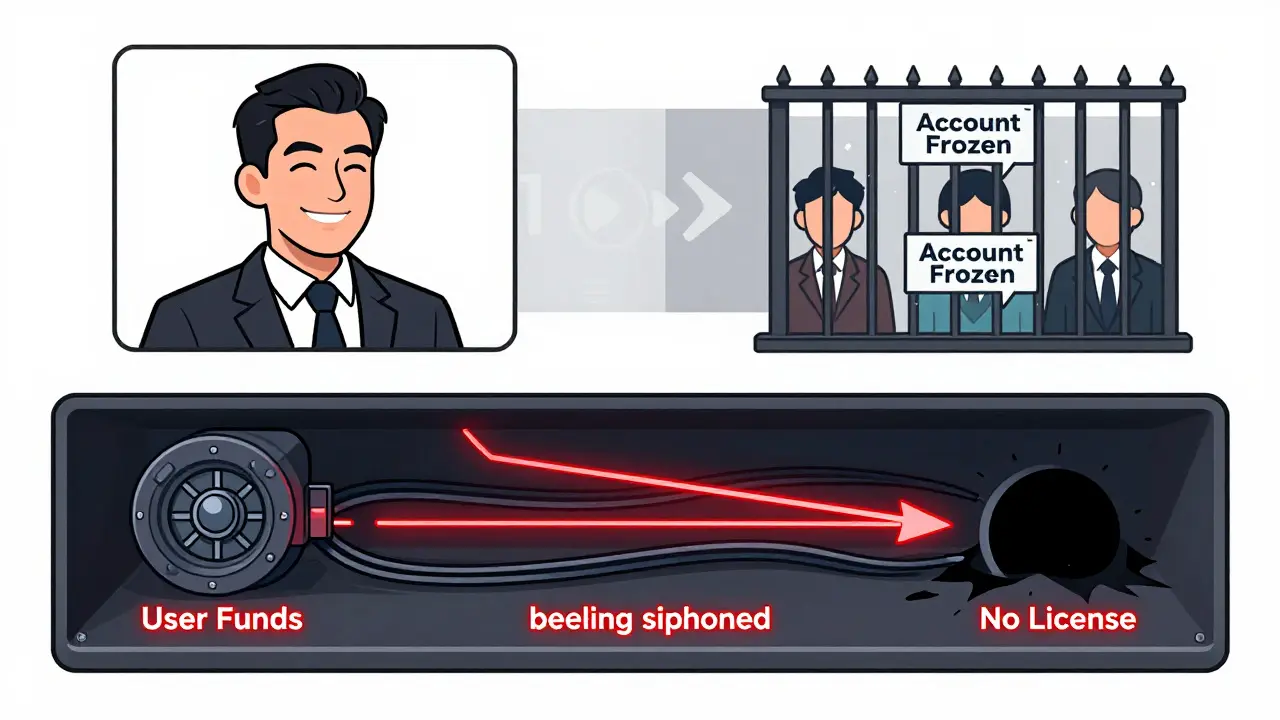
Here’s where things get ugly. Multiple users reported their accounts suddenly frozen. No warning. No explanation. One trader on Reddit said he deposited 3 BTC in early 2024. After a profitable week, he tried to withdraw. The platform told him his account was "under review." A month later, he got back his original 3 BTC - but none of the profits. He lost over $150,000.
Another user claimed he was banned for "suspicious activity" after making three large trades in a day. He tried contacting support via email, Telegram, and live chat. No replies. His account still sits locked. No one answers.
And then there’s the fake stuff. Traders Union dug into Tidex’s "team" photos. The CEO’s LinkedIn profile? A stock image. The "customer success manager" on their site? A photo stolen from a freelance developer in Poland. Even the "user testimonials" were copied from other exchanges.
Why Did Tidex Collapse?
Tidex didn’t fail because of bad tech. It failed because it was built on deception. The low fees? Too good to be true. The clean interface? Designed to trick new users into thinking it was legit. The lack of regulation? A deliberate choice. Operating without oversight meant they could move money freely - and disappear when things got hot.
By mid-2024, regulators in the UK and EU started cracking down on unlicensed crypto platforms. Tidex had no legal presence in either jurisdiction. It couldn’t defend itself. Its website went dark. Its social media vanished. Its Telegram group was deleted. The domain tidex.com now redirects to a parked page with ads.
What Happens to Your Money?
If you still have funds on Tidex, you’re out of luck. There’s no recovery process. No official statement. No bankruptcy filing. No lawyer. No whistleblower. Just silence.
Some users tried filing complaints with Lithuania’s Financial Crime Investigation Service. No response. Others reached out to the UK’s FCA. They were told: "Tidex is not authorized to operate in the UK. We cannot assist."
There’s no legal recourse. No insurance. No compensation fund. Just the harsh reality of trading on an unregulated platform.
Is There Any Way Back?
Some forums still claim Tidex will "come back." They point to old forum posts from 2023 that say "we’re upgrading." But there’s zero evidence. No new domain. No job postings. No developer activity on GitHub. No updates to the mobile apps. The last blockchain transaction from their wallet was in December 2023.
If Tidex ever reappears, it won’t be the same exchange. It’ll be a clone. A new team. A new name. And it’ll likely do the same thing again.
What Should You Do Now?
Don’t use Tidex. Don’t even think about it. If you’re still holding crypto there, assume it’s gone. Move on.
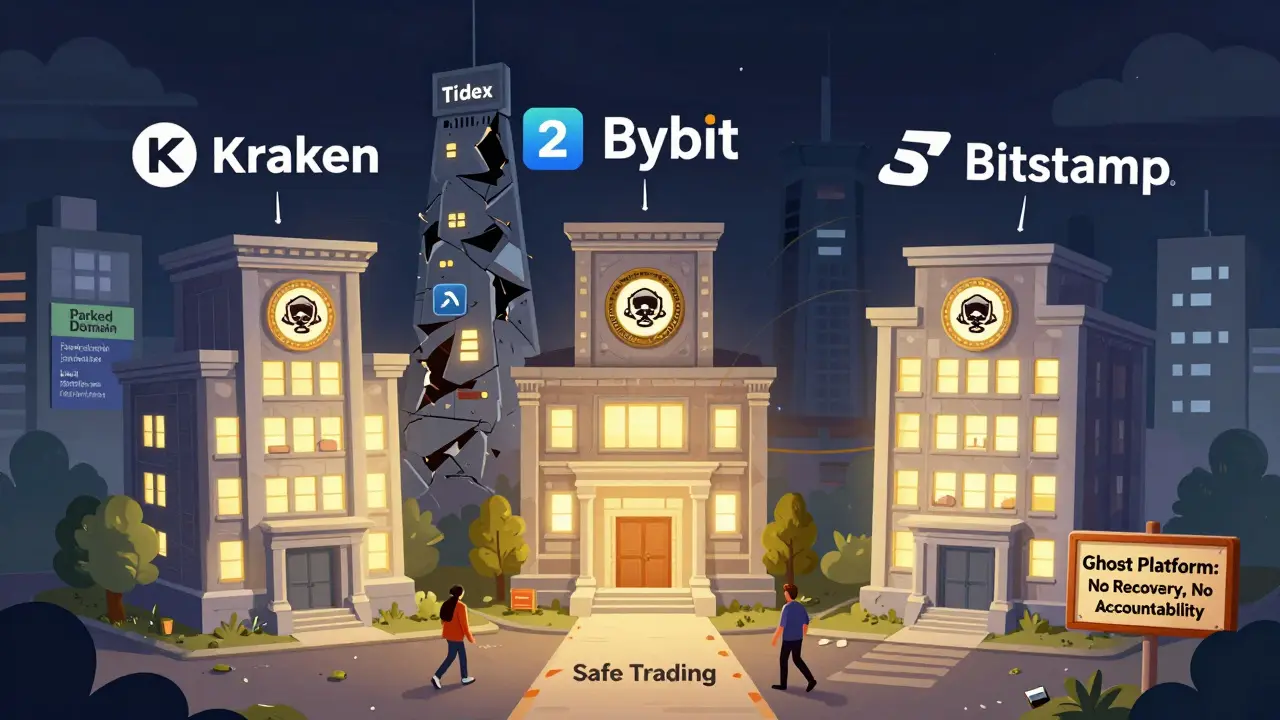
If you’re looking for a simple, low-fee exchange, try these instead:
- Bybit - 0.1% taker fees, strong security, regulated in Dubai
- Kraken - 0.16% fees, FCA-registered, transparent audits
- Bitstamp - 0.25% fees, founded in 2011, fully licensed in the EU
All of these have real customer support, clear regulatory status, and active user communities. No ghost stories.
Final Thoughts
Tidex wasn’t a scam from day one. It started as a real exchange with real features. But it chose shortcuts over trust. It ignored regulation. It silenced users. And when pressure came, it vanished.
This isn’t just about one exchange. It’s a warning. If a platform looks too easy, too cheap, or too quiet - walk away. Crypto is risky enough without adding fraud to the mix.
Is Tidex still operating in 2026?
No, Tidex is not operating in 2026. The website has been inaccessible since late 2024. CoinMarketCap lists it as inactive, and its domain now redirects to a parked page. All official communication channels, including Telegram and email support, have been shut down.
Can I get my money back from Tidex?
Almost certainly not. Tidex never held a license from any financial regulator, so there’s no legal framework for recovery. No bankruptcy proceedings were filed. No compensation fund exists. Users who tried contacting authorities in the UK or Lithuania received no response. If you still have funds on Tidex, assume they are lost.
Why did Tidex offer such low fees?
Tidex offered 0% maker fees and 0.1% taker fees to attract traders quickly - especially those used to paying 0.2% or more elsewhere. But this wasn’t a long-term business model. It was a lure. Once users deposited funds, the exchange could use them for internal trading, lending, or even personal withdrawal. The low fees weren’t sustainable - they were a trap.
Was Tidex regulated?
No. Tidex was registered as a company in Lithuania but operated without any financial services license from the Bank of Lithuania or any other EU regulator. It also had no authorization from the UK’s FCA. This meant users had zero legal protection. If the exchange froze accounts or disappeared, there was no agency to turn to.
Did Tidex have a mobile app?
Yes, Tidex had iOS and Android apps. But they were poorly maintained. Neither app had more than 50 reviews on their respective stores. The Android version hadn’t been updated since 2022. The iOS version was removed from the App Store in early 2024. The apps are no longer downloadable or functional.
What should I use instead of Tidex?
Stick with regulated exchanges like Kraken, Bybit, or Bitstamp. All three offer similar low fees (0.1%-0.25%), have transparent security practices, and are licensed in major jurisdictions. They also have active customer support and public audit reports. Avoid any exchange that doesn’t clearly state its regulatory status or hides its team behind stock photos.
 Finance




Lucy de Gruchy
March 15, 2026 AT 02:23Let me be perfectly clear: anyone who still references Tidex as if it were a functioning exchange is either delusional or complicit. The fact that blogs are still publishing fake fee structures and trading pair lists is not negligence-it’s malice. This isn’t a ghost story. It’s a crime scene with a cover-up. The owners didn’t just vanish; they laundered out with user funds and left behind a meticulously crafted illusion. And now? People are still falling for it. I’m not surprised. The crypto space thrives on collective amnesia.
Lauren J. Walter
March 15, 2026 AT 14:35Wow. A whole essay. And yet… still no one mentioned the fact that the "Wear2Earn" NFT program was just a GIF loop of a hoodie spinning on a black background. I saw it. I tried to mint it. It didn’t work. No one responded. Not even a "thanks for your support." Just silence. Classic.
Carol Lueneburg
March 15, 2026 AT 14:45Thank you for writing this. I’m so glad someone finally called it out. 💔 I lost $8k on Tidex back in 2023 and I was so ashamed to admit it. But reading this? It helps. You’re not alone. Move on. Find a real exchange. You deserve better. 🌱✨
Brenda White
March 15, 2026 AT 21:26wait so tidx was a scam?? i thought it was just slow?? i kept checking my balance for months like maybe it was a glitch?? lmao i feel dumb
Tobias Wriedt
March 16, 2026 AT 04:39People who trade on unregulated platforms deserve to get robbed. No one forced you to ignore the red flags. No KYC? No license? No oversight? Then you signed up for the wild west. Don’t cry when the bandits ride in. 💪
Ernestine La Baronne Orange
March 17, 2026 AT 13:09It’s not just Tidex. It’s EVERYTHING. Every time someone says "oh it’s just a small exchange," they’re handing over their life savings to a group of anonymous people in a basement with no accountability. I had a friend who lost $220k on something called "CryptoVault"-same story. Fake UI, fake team photos, fake testimonials. And then? Poof. Gone. And the regulators? They’re too busy chasing Bitcoin miners to notice the real predators. This system is broken. We’re all just rats in a maze with no cheese.
Manali Sovani
March 18, 2026 AT 12:37It is regrettable that such entities continue to be referenced with any semblance of legitimacy. The absence of regulatory oversight constitutes an existential risk to capital preservation. One cannot reasonably expect recourse under common law when jurisdictional boundaries are deliberately obfuscated. The situation is, in all respects, untenable.
Konakuze Christopher
March 18, 2026 AT 18:23They used stock photos of a guy named "Marcus" who works at a yoga studio in Portland. That’s not a CEO. That’s a LinkedIn template. And people gave them money?
S F
March 20, 2026 AT 16:02USA should ban this kind of foreign trash. Lithuania? Seriously? They can’t even run a decent public transit system. How are they regulating crypto? This is why America needs its own sovereign exchange. No more foreign scams.
Zachary N
March 22, 2026 AT 16:01For anyone reading this and thinking "maybe I should check if I can still log in"-don’t. Don’t even open the site. It’s likely a phishing mirror now. The original domain is dead, but scammers have bought up similar domains like tidex.io, tidex.app, tidex.exchange. They’re harvesting logins and 2FA codes. If you’ve ever used Tidex, change every password you reused elsewhere. Enable 2FA on everything. And if you still have funds? Assume they’re gone. The real win is not recovering crypto-it’s not losing more.
Cheri Farnsworth
March 23, 2026 AT 20:55Thank you for the comprehensive overview. The clarity of your analysis provides a necessary corrective to the misinformation still circulating in online forums. Regulatory compliance is not optional in financial services-it is foundational.
Gene Inoue
March 24, 2026 AT 14:05Oh wow. Another one bites the dust. And the dumbest part? People still post "Tidex is the future" threads on Reddit. I swear, if I see one more guy bragging about his "0% fee advantage," I’m gonna scream. You didn’t save money. You got played. Like a sucker. Welcome to crypto.
Ricky Fairlamb
March 25, 2026 AT 19:28Let’s be real: the entire crypto space is a Ponzi scheme with better graphics. Tidex was just the most honest one-no pretense, no SEC filings, no fake audits. They took your money and vanished. No apologies. No fines. Just silence. And the regulators? They’re waiting for the next big name to implode before they do anything. This isn’t a failure of Tidex. It’s a failure of everything.
Arlene Miles
March 25, 2026 AT 19:49I want to say something gentle to anyone who lost money here: it’s okay to feel angry. It’s okay to feel stupid. But don’t let this define your relationship with crypto. The system is rigged, yes-but there are good people building real things. Kraken, Bitstamp, Coinbase-they’re not perfect, but they show up. They answer emails. They have compliance teams. You can still trust. Just be smarter next time. You’re not broken. The system is.
Jessica Beadle
March 25, 2026 AT 20:02Given the absence of KYC protocols and the lack of regulatory authorization, Tidex’s operational model constituted a clear violation of the FATF’s Travel Rule. The platform’s failure to implement AML controls renders any transaction history on the exchange legally non-recognizable. Furthermore, the use of third-party imagery for executive personnel constitutes a prima facie case of identity fraud under 18 U.S.C. § 1028. The platform was never a viable financial entity-it was a vector for illicit capital movement.
Tony Weaver
March 26, 2026 AT 16:01It’s funny how people romanticize "simple interfaces." Like, sure, Tidex was clean. But so is a gun. Clean doesn’t mean safe. It means easy to use-and easy to weaponize. The UI was designed to make you feel smart while they stole from you. That’s not UX. That’s psychological manipulation. And now? The same design is being copied by new scams. They’re calling it "minimalist finance." I call it predatory.
Patty Atima
March 28, 2026 AT 03:43Yeah… I just deleted my Tidex app last week. Didn’t even think about it until now. Good riddance.
Angelica Stovall
March 29, 2026 AT 14:54Of course it’s a scam. No one with a real license would let their SSL expire. No one with real tech would use stock photos. This wasn’t a company. It was a shell. And now the shell is empty. Don’t feel bad. You just got outsmarted by a guy in a hoodie with a laptop. Happens to everyone.
Taylor Holloman.
March 31, 2026 AT 13:04I used to think crypto was about freedom. Then I lost money on Tidex. Now I think it’s about survival. The real win isn’t making money-it’s not getting scammed. I don’t care how low the fees are. If I can’t talk to a human, if I can’t find a real address, if I can’t verify who’s running it… I walk away. No amount of 0% fees is worth your peace of mind.
Bryan Roth
April 1, 2026 AT 11:04Let’s not forget: Tidex wasn’t the first, and it won’t be the last. But here’s the thing-you can’t fix a system where the victims are blamed. The real problem isn’t that users trusted a fake exchange. It’s that the entire ecosystem rewards deception. Low fees? Big marketing? Clean UI? Those are all red flags disguised as features. We need real accountability. Not just after the fact. Before. Every time. Or we’re all just waiting for the next ghost story to go viral.
sai nikhil
April 2, 2026 AT 00:07Respectfully, this is a cautionary tale for all participants in the digital asset ecosystem. One must prioritize institutional integrity over perceived convenience. The absence of regulatory alignment is not an opportunity-it is a warning.
Sahithi Reddy
April 3, 2026 AT 02:58Good info. I didn't know Tidex was gone. I'll check Kraken now.
George Hutchings
April 4, 2026 AT 22:18As someone who’s been in crypto since 2015, I’ve seen dozens of exchanges rise and fall. Tidex? One of the most transparent scams I’ve seen. No hidden code. No smart contracts. Just a website with fake photos and zero answers. It’s sad. But it’s also a lesson: if you can’t find a real person behind the platform, you shouldn’t be trusting it with your money.
Henrique Lyma
April 5, 2026 AT 16:52It’s ironic that the same people who scream about "centralized control" on Bitcoin are the ones who happily handed their life savings to a company with no legal entity, no license, and no accountability. Tidex didn’t exploit users. Users exploited their own ignorance. And now they’re crying about it. The market doesn’t owe you a safety net. It owes you transparency. And Tidex gave you none.