

UAE FATF Greylist: What It Means for Crypto and Finance in the UAE
When the UAE FATF greylist, a designation by the Financial Action Task Force identifying countries with weak anti-money laundering controls. Also known as FATF monitoring list, it signals that the UAE’s financial systems are under scrutiny for failing to stop dirty money from flowing through banks, exchanges, and crypto platforms. This isn’t just a bureaucratic label—it directly affects whether your favorite crypto exchange can operate, whether your funds can move internationally, and if regulators will shut down platforms like CBX or GCOX for being unregulated.
The FATF, an international body that sets global standards to combat money laundering and terrorist financing. Also known as Financial Action Task Force, it doesn’t just target banks. It watches crypto exchanges, DeFi platforms, and even NFT marketplaces. When the UAE was placed on the greylist, it meant regulators started cracking down on platforms with no KYC, no audits, and no oversight—exactly the kind of sites you’ll find reviewed here, like CBX Crypto Exchange and Cronus Finance. These aren’t random scams. They’re the exact kind of operations FATF wants to shut down because they let criminals move money without a trace.
And it’s not just about stopping fraud. The money laundering, the process of disguising illegally obtained money as legitimate funds. Also known as financial crime, it thrives where rules are loose. That’s why platforms with zero users, no team, and no regulation—like Launchium or CZF—are red flags not just for traders, but for national regulators. The UAE’s push to get off the greylist isn’t about looking good. It’s about survival. If they don’t clean up their financial ecosystem, foreign banks will cut ties, crypto projects will flee, and investors will lose trust.
What you’ll find in these posts isn’t just a list of bad exchanges. It’s a map of the risks that come when regulation lags behind innovation. From fake airdrops tied to CoinMarketCap to tokens with $16 market caps and no team, each article shows how greylist pressures expose the weakest players. You won’t find fluff here—just real cases where lack of oversight led to collapse, theft, or worse. If you’re trading, investing, or even just holding crypto in the UAE, you need to know what’s on the line. This isn’t theory. It’s your wallet.
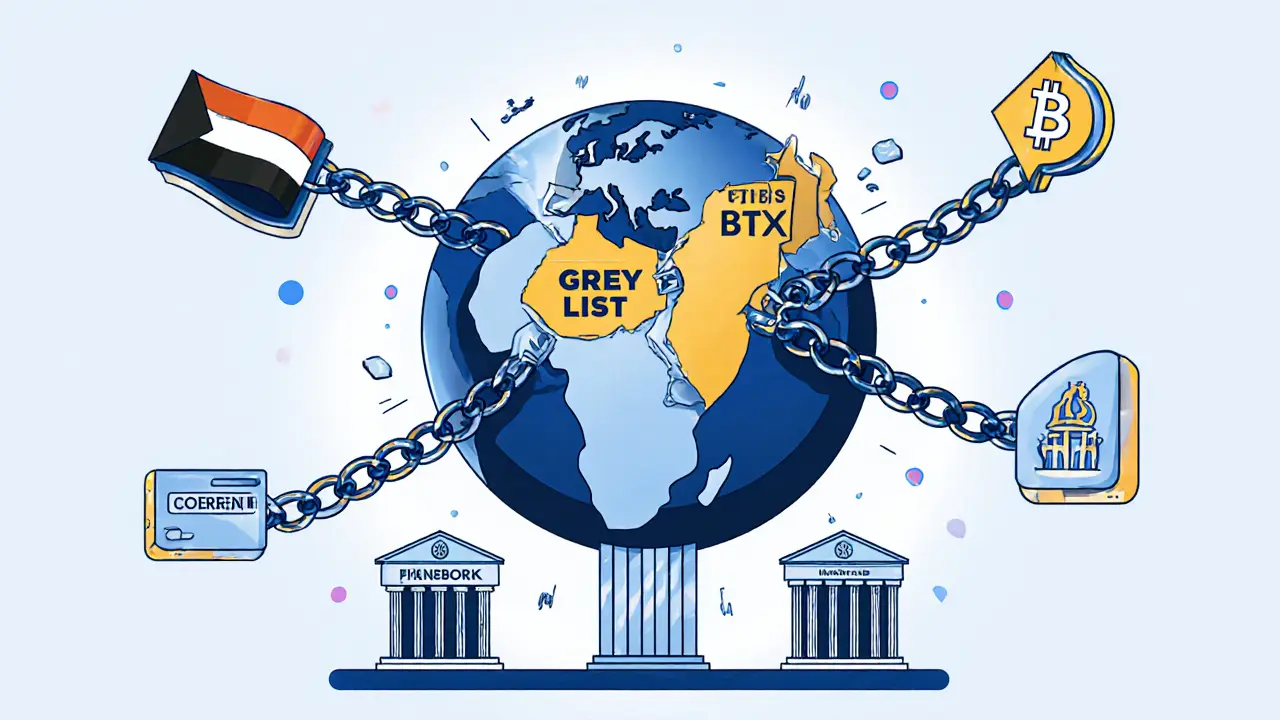
The UAE's removal from the FATF grey list in 2024 transformed its crypto landscape, boosting investor trust, unlocking global banking access, and setting a new compliance standard for the region. Here's how it changed everything.
Categories
 Finance
Archives
Recent-posts

What is Towelie (TOWELI) Crypto Coin? A Deep Dive into the Meme Token
Apr, 17 2026
(TSX) TradeStars × CoinMarketCap Community Airdrop: Eligibility, Details & How to Claim
Aug, 12 2026
Shiba Inu TREAT (TREAT) Token Explained - Price, Purpose & Risks
Jul, 17 2025

OwlDAO x CoinMarketCap Airdrop: How to Join, Rewards & Timeline
Dec, 21 2024

Crypcore Crypto Exchange Review: Is It Legit or a Red Flag?
Jan, 16 2026