
You’ve seen the buzz. Maybe it was a tweet, a Telegram group message, or a headline promising free RBT Rabbit token drops from CoinMarketCap. The allure is simple: free money in your wallet. But here’s the hard truth about the current landscape for RBT. As of mid-2026, there is no verified, active, or official airdrop campaign for the specific "Rabbit" token (ticker: RBT) listed on CoinMarketCap that matches the hype circulating online.
In fact, digging into the data reveals a much more concerning picture. The RBT listing on CoinMarketCap shows a total supply of 100 billion tokens, with 20 billion in circulation, yet the price sits at $0 USD with zero trading volume. This isn’t just a quiet project; it’s a red flag. When a token has no liquidity, no price action, and minimal operational details, participating in any associated "airdrop" carries extreme risk. It often points to an inactive project, a failed launch, or worse-a setup designed to harvest user data or drain wallets.
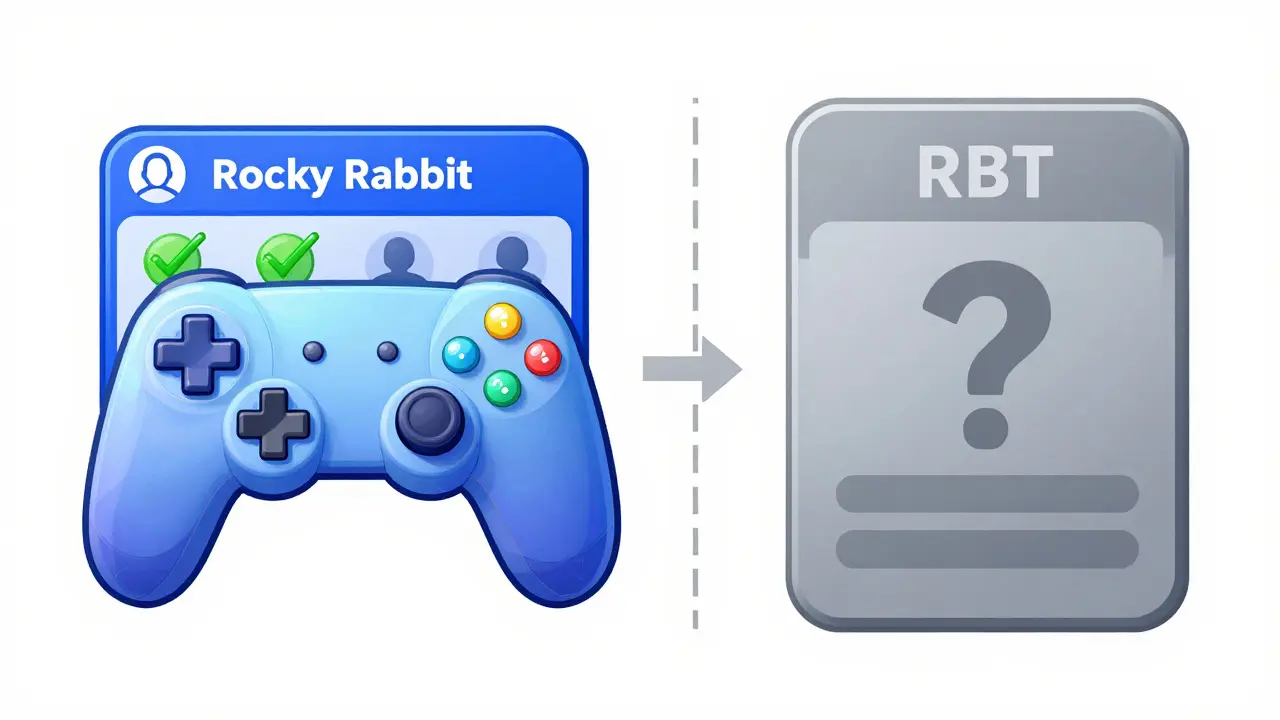
The Confusion: RBT vs. Rocky Rabbit (RBTC)
A major reason for the confusion surrounding "Rabbit" airdrops is the existence of multiple projects with similar names. The most prominent one recently was Rocky Rabbit, which uses the ticker RBTC. This project operated on The Open Network (TON) blockchain and gained massive popularity as a Telegram-based tap-to-earn game.
Rocky Rabbit conducted its main airdrop on September 23, 2024. By August of that year, it had attracted over 25 million users. The token launched with an initial price prediction between $0.001 and $0.005. However, this is a completely separate entity from the RBT token you see on CoinMarketCap. Mixing up these two projects is dangerous. If you are looking for information on the RBT CoinMarketCap listing, do not follow guides meant for Rocky Rabbit. They operate on different blockchains, have different teams, and carry different risks.
Analyzing the RBT CoinMarketCap Listing
Let’s look closely at what CoinMarketCap actually says about RBT. The platform lists the token, but the listing appears to be in a "preview" status. This means the data hasn’t been fully verified or integrated into live market tracking tools. Key attributes include:
- Total Supply: 100 Billion RBT
- Circulating Supply: 20 Billion RBT
- Current Price: $0.00 USD
- Trading Volume (24h): $0.00
- Market Cap: Not calculable due to zero price
When a token has a circulating supply but zero volume and zero price, it indicates that there are no active markets buying or selling the asset. For an airdrop recipient, this is problematic. Even if you successfully claim tokens, you cannot sell them because there is no liquidity pool or exchange pair supporting the trade. You would be holding digital paper with no exit strategy.
Other "Rabbit" Tokens in the Ecosystem
To ensure you aren’t falling for a mislabeled promotion, it helps to understand other rabbit-themed projects that have existed in the crypto space. These are distinct from RBT but often cause keyword confusion.
| Project Name | Ticker | Blockchain | Status & Notes |
|---|---|---|---|
| Rabbit Token | RBT | Unknown/Multiple | CMC Listed, $0 Price, No Volume. High Risk. |
| Rocky Rabbit | RBTC | The Open Network (TON) | Airdrop completed Sept 2024. Tap-to-earn game. |
| Rabbit Wallet | RAB | Multi-chain | Decentralized wallet app. Past promotional airdrops. |
| Little Rabbit v2 | LTRBT | Binance Smart Chain | Yield farming focus. Micro-cap value (~$0.0000000003). |
Note that Rabbit Wallet (RAB) is a decentralized application focused on multi-utility wallet services. It has conducted promotional airdrops in the past to reward early adopters, but these are tied to using their specific software, not simply claiming free tokens from a generic link. Similarly, Little Rabbit v2 (LTRBT) operates on Binance Smart Chain and focuses on gasless yield generation. Its market value is negligible, highlighting the volatility and risk inherent in micro-cap meme-style tokens.
Why There Is No Official RBT Airdrop Guide
If you search for "how to claim RBT airdrop," you will likely find broken links, outdated forums, or phishing sites. Here is why legitimate information is scarce:
- Lack of Official Communication: There are no verified social media channels, whitepapers, or official websites linked directly from the CoinMarketCap preview page for RBT. Legitimate projects maintain transparent communication channels.
- No Liquidity Event: Airdrops are typically timed with liquidity events (like a DEX launch) to give recipients a way to sell. Since RBT has no trading volume, there is no economic incentive for the team to distribute tokens widely right now.
- Potential Inactivity: The zero-price status suggests the project may have stalled. Teams often abandon tokens after raising funds or failing to gain traction, leaving holders with worthless assets.
Safety First: How to Spot Airdrop Scams
Because the RBT token lacks clear legitimacy, any website claiming to offer an "RBT CoinMarketCap Airdrop" should be treated as highly suspicious. Scammers thrive on confusion. They create fake landing pages that mimic the CoinMarketCap interface or use familiar branding to trick users into connecting their wallets.
Here is how to protect yourself:
- Never Connect Your Main Wallet: If you must investigate a token, use a burner wallet with no significant funds. Never connect your primary hardware or hot wallet to unverified dApps.
- Check Contract Addresses: Always verify the smart contract address on official sources like CoinGecko or CoinMarketCap before interacting. Do not copy-paste addresses from Telegram messages or Twitter DMs.
- Beware of "Gas Fee" Requests: Legitimate airdrops are usually free. If a site asks you to pay a "gas fee" or "verification tax" to claim tokens, it is a scam. You are sending money to the attacker, not paying network fees.
- Verify Domain Names: Phishing sites often use slight misspellings (e.g., coinmarketcap-airdrop.com). Always type the URL manually or use a trusted bookmark.

What Should You Do Instead?
If you are looking for legitimate airdrop opportunities, shift your focus to projects with transparent roadmaps, active development, and verified listings. Look for protocols that have announced airdrops through their official blogs and verified social media accounts. Participate in testnets, provide liquidity to established decentralized exchanges, or engage with new Layer 2 solutions that have funding from reputable venture capital firms.
For the specific case of RBT, the safest course of action is to avoid interaction entirely. The combination of a preview-only listing, zero trading volume, and lack of official documentation makes it a high-risk asset. In the crypto world, if something looks too good to be true-and especially if the underlying asset has no market value-it almost certainly is.
Understanding Tokenomics Red Flags
Even if an airdrop were real, the tokenomics of RBT raise questions. A total supply of 100 billion is large, but not inherently bad. However, when paired with a circulating supply of 20 billion and no visible utility or buy-back mechanisms, it suggests potential inflationary pressure. Without demand, the value remains at zero. Always analyze the vesting schedules and team allocations of any token you consider holding. If the team holds a disproportionate amount of tokens without lock-up periods, they could dump their holdings on retail investors once liquidity is added, crashing the price instantly.
Final Thoughts on RBT and Crypto Due Diligence
The crypto market is filled with noise. New tokens launch daily, many with catchy names and animal themes. While some, like Rocky Rabbit, managed to build genuine communities and deliver on promises, others fade into obscurity or turn out to be malicious traps. The RBT token currently falls into the latter category based on available data.
Your security is more important than the chance of getting free tokens. Stick to verified platforms, double-check every link, and remember that CoinMarketCap listings-even preview ones-do not guarantee a project’s success or safety. When in doubt, wait. The best airdrops are those where you can clearly understand the project, trust the team, and safely claim your rewards without risking your financial health.
Is there an official RBT Rabbit token airdrop on CoinMarketCap?
No. As of June 2026, there is no verified or active airdrop campaign for the RBT token listed on CoinMarketCap. The listing shows a price of $0 and zero trading volume, indicating inactivity or lack of liquidity. Be wary of unofficial sites claiming otherwise.
What is the difference between RBT and Rocky Rabbit (RBTC)?
They are completely different projects. RBT is a token with a preview listing on CoinMarketCap showing no market activity. Rocky Rabbit (RBTC) is a separate project on The Open Network (TON) that ran a successful tap-to-earn game and airdrop in late 2024. Do not confuse the two.
Why does RBT show a price of $0 on CoinMarketCap?
A price of $0 with zero trading volume means there are no active buyers or sellers for the token on tracked exchanges. This often indicates the project is inactive, has failed to launch properly, or lacks liquidity pools necessary for trading.
Is it safe to connect my wallet to claim RBT tokens?
It is highly unsafe. Given the lack of official documentation and the presence of numerous scams targeting popular keywords, connecting your wallet to unverified RBT claiming sites poses a significant risk of theft. Only interact with verified, official project channels.
Are there other rabbit-themed crypto projects I should know about?
Yes. Besides RBT and Rocky Rabbit (RBTC), there is Rabbit Wallet (RAB), a decentralized wallet app, and Little Rabbit v2 (LTRBT) on Binance Smart Chain. Each has different utilities and risk profiles. Always research the specific ticker and blockchain before engaging.
How can I identify a fake airdrop website?
Fake sites often ask for upfront fees, use misspelled URLs, or promise unrealistic returns. They may also pressure you to act quickly. Always verify the domain against official social media links and never connect your main wallet to untrusted dApps.
 Finance