

When Nicolás Maduro announced the Petro, a sovereign cryptocurrency backed by Venezuela's natural resources in December 2017, the world watched with skepticism. By 2026, that skepticism has hardened into reality. The Petro was never just another coin; it was a political tool designed to bypass international sanctions and fund a struggling economy. But for anyone looking to use, trade, or understand this asset today, the landscape is defined not by innovation, but by heavy restrictions and limited utility.
If you are wondering whether the Petro is a viable investment or a functional currency in Venezuela right now, the answer is complicated. It exists primarily as a mechanism for state control rather than organic market adoption. This article breaks down how the government program works, the severe restrictions imposed on users, and why most Venezuelans have turned elsewhere for financial survival.
What Is the Petro and How Does It Work?
The Petro (PTR) is officially defined as a crypto asset issued and backed by the Bolivarian Republic of Venezuela. Unlike Bitcoin, which relies on decentralized mining and open-source code, the Petro operates on a federated blockchain. This means that not everyone can participate in verifying transactions. Instead, a specific group-controlled by the Venezuelan government-manages the network. This structure allows the state to maintain tight control over issuance, circulation, and validation, fundamentally contradicting the decentralization ethos that drives most successful cryptocurrencies.
Originally launched in February 2018, the Petro was supposed to be backed by reserves of oil, gasoline, gold, and diamonds. The government valued the initial issuance of 100 million tokens at approximately $6 billion, implying a price of $60 per token. However, this valuation was largely theoretical. Leaked documents from the advisory group VIBE revealed recommendations to sell $2.3 billion worth of Petros at discounts of up to 60%, signaling immediate market doubt about the official pricing. To date, the Petro has never achieved significant listing on major international exchanges, meaning its value remains isolated within Venezuela’s domestic framework.
| Feature | Petro (PTR) | Bitcoin / Ethereum |
|---|---|---|
| Blockchain Type | Federated (Centralized Control) | Decentralized |
| Backing Asset | Oil, Gold, Diamonds (Theoretical) | None (Market Driven) |
| Governance | Venezuelan Government / SUPCACVEN | Community / Developers |
| International Listing | Limited / None on Major Exchanges | Widely Available |
| Primary Use Case | Government Payments / Sanctions Evasion | Store of Value / Smart Contracts |
The Regulatory Framework: SUPCACVEN and State Control
The entire ecosystem surrounding the Petro is overseen by the Superintendence of Crypto Assets and Related Activities (SUPCACVEN). Created by Presidential Decree, this agency holds exclusive authority over the issuance, exchange, and protection of crypto assets in Venezuela. Its role goes beyond simple regulation; it acts as a gatekeeper for who can mine, trade, or hold these assets.
SUPCACVEN maintains registries of miners and collects fees, ensuring that all activity aligns with state interests. In April 2018, the government established a Treasury of Cryptoassets under the Vice-Presidency to handle the custody and distribution of these instruments. This centralized approach means that if the government decides to restrict access or freeze accounts, they have the technical and legal power to do so. For users, this introduces a level of risk rarely seen in traditional finance or decentralized crypto markets.
The legal basis for the Petro comes from the Cryptoassets Constituent Decree, which allowed the creation and circulation of crypto assets by both residents and non-residents. However, this decree also empowered the National Executive to regulate the market strictly. While the law promises protection and promotion of cryptocurrency use, the practical application favors state-controlled entities like PDVSA (the state-owned oil company) over individual citizens.
Petro Zones: Tax Incentives vs. Economic Reality
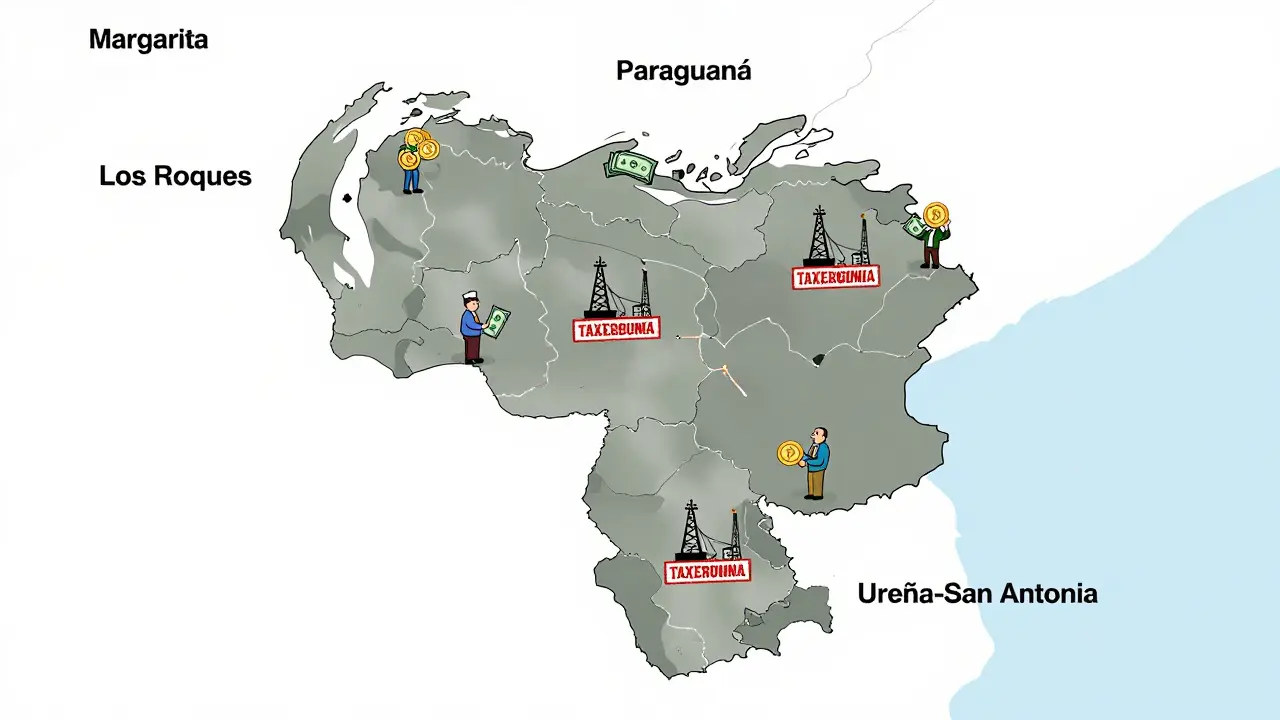
In an effort to boost adoption and mining activity, the government designated four "Petro Zones" in March 2018:
- Margarita Island
- Los Roques Archipelago
- Paraguaná Peninsula
- Ureña-San Antonio area (near the Colombian border)
These zones were created to promote virtual mining and the use of Petros in domestic commerce. Businesses operating in these areas received tax incentives, including exemptions from import duties on electronic equipment, software, hardware, and air-conditioning units for two years. The goal was to create hubs where citizens could buy goods and services using Petro.
However, reports on actual usage within these zones remain scarce. While some mining operations exist due to the tax benefits, widespread commercial adoption has not materialized. Most merchants prefer dealing in hard currencies like the US dollar or established cryptocurrencies like Bitcoin. The Petro Zones function more as regulatory enclaves than thriving economic centers, with limited impact on the daily lives of average Venezuelans.
Restrictions and International Sanctions
The most significant barrier to the Petro’s success is not technological, but political. The United States has imposed strict sanctions targeting Venezuelan cryptocurrency activities. Congressional measures, such as S.37, aim to codify financial sanctions on Venezuelan debt and crypto-related technologies. These sanctions effectively isolate the Petro from the global financial system, preventing it from being traded on major international platforms or used for cross-border transactions outside of sanctioned channels.
For individuals, this means that holding or trading Petro carries substantial legal risk if you reside in or interact with jurisdictions enforcing these sanctions. Banks and payment processors avoid any transaction linked to the Petro to prevent secondary sanctions. Consequently, the cryptocurrency cannot serve as a bridge for international financing, which was one of its stated goals upon launch.
Additionally, the opposition-controlled National Assembly declared the Petro illegal in March 2018, calling it an unauthorized debt issuance. This creates ongoing legal uncertainty within Venezuela itself. While the executive branch mandates its use, the legislative branch rejects its legitimacy. This dual reality forces citizens to navigate a complex web of conflicting laws, often choosing to ignore government mandates in favor of practical survival strategies.
Mandatory Adoption vs. Organic Usage
By January 2020, President Maduro decreed that the Petro must be used for paying government document services and airplane fuel. This mandate represents forced adoption rather than organic market acceptance. Citizens needing passports, visas, or other official documents had no choice but to acquire and spend Petros. Similarly, airlines operating in Venezuela were required to accept the currency for fuel purchases.
This approach highlights the Petro’s primary function: a tool for state revenue collection and subsidy management. Rather than empowering individuals with financial freedom, it imposes additional friction on basic bureaucratic processes. Users must convert their savings into Petro, often at unfavorable rates, to complete essential tasks. This dynamic discourages trust and encourages avoidance whenever possible.
In contrast, many Venezuelans have gravitated toward stablecoins like Tether (USDT) or Bitcoin to protect their wealth against hyperinflation. These assets offer transparency, liquidity, and independence from state interference. The Petro, by comparison, lacks these qualities, making it unattractive for personal savings or long-term investment.
Current Status and Future Outlook
As of 2025, the Petro remains a niche instrument controlled entirely by the Venezuelan government. Its value is determined by state decrees rather than market forces, and its utility is confined to specific interactions with government entities. The federated blockchain ensures that the state retains ultimate authority over every transaction, eliminating the possibility of censorship-resistant finance.
The future viability of the Petro depends heavily on broader changes in Venezuela’s political and economic landscape. Without relief from international sanctions, improvements in economic stability, or recognition from the opposition, the Petro is unlikely to gain traction beyond its current limited scope. For investors and observers, it serves as a case study in how cryptocurrency technology can be repurposed for centralized control rather than liberation.
If you are considering exposure to Venezuelan assets, understand that the Petro offers little in terms of diversification or growth potential. Its risks are tied directly to geopolitical tensions and domestic policy shifts, making it highly volatile and illiquid. Most experts advise focusing on established cryptocurrencies or fiat alternatives for safer navigation of emerging market opportunities.
Can I buy Petro cryptocurrency on international exchanges?
No, the Petro is not listed on major international cryptocurrency exchanges due to U.S. sanctions and lack of global recognition. It can only be acquired through domestic Venezuelan channels or private offerings sanctioned by the government.
Is the Petro legal in the United States?
Handling or trading the Petro may violate U.S. sanctions laws. The Office of Foreign Assets Control (OFAC) has restricted transactions involving Venezuelan government-backed crypto assets. Engaging with the Petro could result in legal penalties for U.S. persons or entities.
Why did the Venezuelan government create the Petro?
The Petro was created to circumvent international sanctions, raise funds for the government, and assert monetary sovereignty. It was intended to provide new forms of international financing and stabilize the economy amid high foreign debt and inflation.
Does the Petro have real-world backing like oil or gold?
Officially, yes-the Petro is backed by reserves of oil, gasoline, gold, and diamonds. However, independent audits have not verified these claims, and market participants view the backing as theoretical rather than redeemable.
What are the Petro Zones and do they work?
Petro Zones are designated areas in Venezuela (like Margarita Island) where tax incentives encourage mining and use of the Petro. While some mining activity exists due to tax breaks, widespread commercial adoption and economic impact remain minimal.
Who controls the Petro blockchain?
The Petro operates on a federated blockchain controlled by the Venezuelan government through SUPCACVEN. Unlike decentralized networks, the state manages node participation and transaction validation, ensuring central oversight.
Can I use Petro to pay for everyday goods in Venezuela?
While legally mandated for certain government services, everyday merchants generally prefer dollars or stablecoins. Organic adoption for retail purchases is low, and finding places to spend Petro outside of state requirements is difficult.
 Finance