

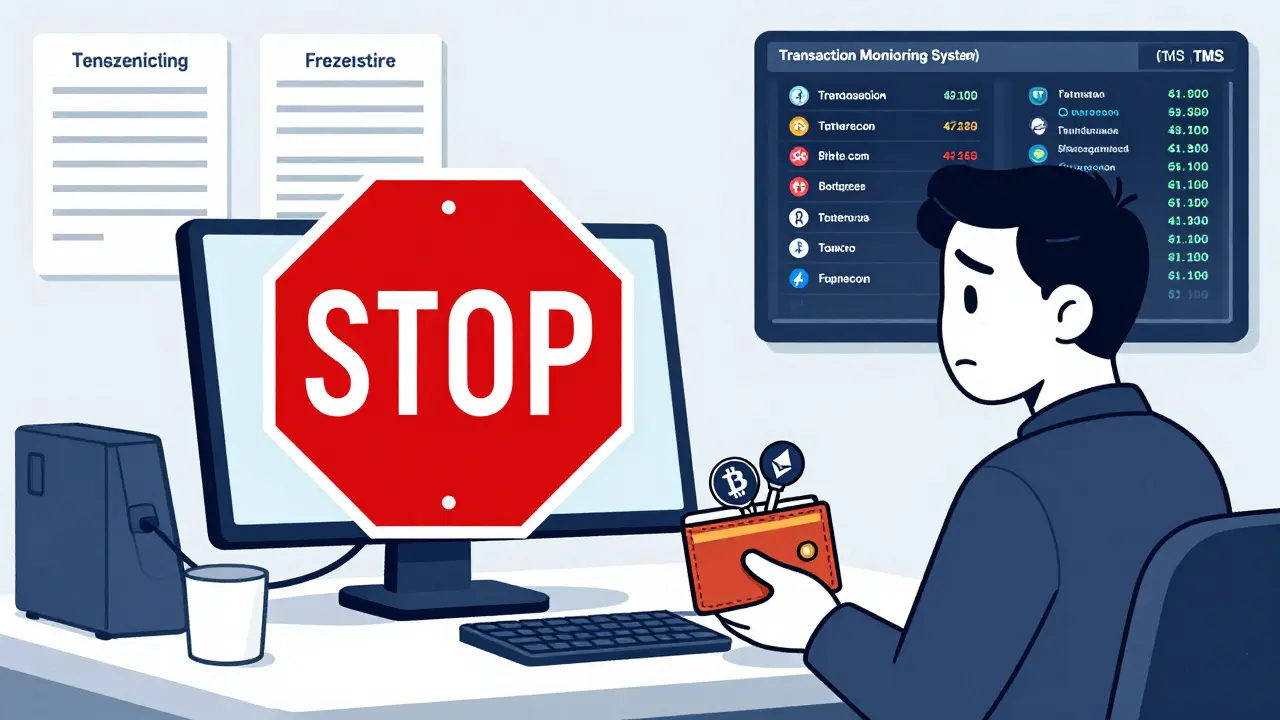
When you try to send Bitcoin from your wallet to a local exchange in Ecuador, your bank might freeze your account. Not because you broke the law, but because the bank is following rules that don’t quite match reality. In Ecuador, you can own cryptocurrency. You can trade it. You can even mine it. But if you use a bank to do any of those things, you’re breaking the rules. And the banks know it.
How the Ban Works - And Doesn’t Work
Ecuador’s crypto ban isn’t a simple law. It’s a maze of overlapping rules. The core idea comes from Article 94 of the Monetary Code, which says only the US dollar is legal tender. That’s been true since 2000, when the country ditched its own currency. But in 2022, the Central Bank of Ecuador (BCE) and the Monetary and Financial Policy Board (JPRM) added new layers. Resolution 001-22 and Resolution 002-23 made it clear: financial institutions cannot process cryptocurrency transactions. That means banks, credit unions, payment processors - all of them - are blocked from handling Bitcoin, Ethereum, or any other crypto. Here’s the twist: the ban doesn’t touch private individuals. You’re not breaking the law if you buy crypto on Binance, hold it in your wallet, or trade it peer-to-peer with a friend. The government isn’t trying to stop you from owning crypto. It’s trying to stop the banking system from touching it. This creates a weird gap: crypto is legal to hold, but illegal to move through banks.How Banks Enforce the Ban
The Superintendency of Banks (SB) doesn’t just issue warnings - it acts. Every bank in Ecuador must use a Transaction Monitoring System (TMS) Version 3.1, which automatically flags any transfer that matches one of 47 known crypto-related patterns. These include payments to Binance, OKX, Mercado Bitcoin, or even wallet addresses linked to exchanges. If your account sends $200 or more to one of those addresses, the system triggers an alert. Banco Pichincha, Ecuador’s largest bank with nearly 40% of the market, is the most aggressive. Users on Reddit report that accounts are frozen for 3 to 14 days after a first offense. Repeat violations can lead to permanent account closure. The SB has fined 12 financial institutions over $1.2 million in 2024 alone for helping customers move crypto. These aren’t small fines - they’re meant to scare banks into compliance.What People Do Instead
With banks locked down, 385,000 Ecuadorians (about 2.2% of the population) found workarounds. Most rely on peer-to-peer (P2P) trades. You find someone on Telegram or WhatsApp who wants to buy Bitcoin. You send them crypto. They send you cash - in a parking lot, a coffee shop, or even through a trusted third party. According to Trustpilot reviews from Ecuadorian users, this is the most common path. But it’s risky. There’s no buyer protection. Scams are common. And since there’s no bank record, there’s no proof of where the money came from. Stablecoins like USDT have become the unofficial bridge. People convert Bitcoin to USDT, then try to send USDT as a regular USD transfer. Sometimes it works. Sometimes the bank catches it and freezes the account. Over $382,000 in frozen funds was reported in Q2 2025 alone. Users report that 74% of crypto holders in Ecuador use stablecoins this way - not because they want to, but because they have no other option.
The Underground Economy
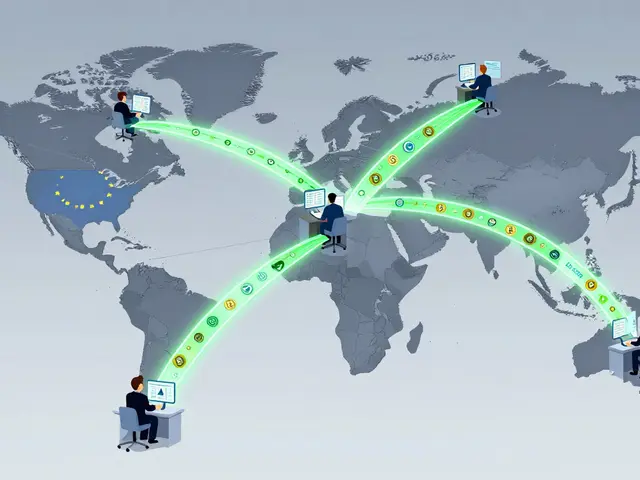
Ecuador’s crypto ban didn’t kill the market - it pushed it underground. Mining operations have grown from 100 in 2023 to over 1,000 in 2025. But none of them have bank accounts. They use third-party payment processors that charge 3-5% more than normal. Gift cards, prepaid dollar cards, and cross-border services like Wise are now major channels. About 22% of crypto trades happen through gift card exchanges. Another 17% use prepaid cards issued by non-bank companies. And 31% use services like Wise, which don’t explicitly block crypto-derived cash - even if they don’t want to know where it came from. The result? A thriving but fragile ecosystem. The average Ecuadorian crypto user maintains 3.2 different exchange accounts and spends nearly 9 hours a month just trying to move money. Compare that to Colombia, where banking access is allowed - users there spend under 3 hours a month on crypto logistics.Who’s Losing and Who’s Winning
The ban was meant to protect Ecuador’s dollarized economy. Officials argue that allowing crypto through banks could destabilize the dollar. But the real cost isn’t theoretical - it’s measurable. The Latin American Institute of Economic and Social Planning (ILPES) estimates Ecuador loses $18 million a year because people can’t use blockchain to send remittances cheaply. Traditional remittance fees average 6.5%. Crypto could cut that to under 1%. But with banks blocked, people can’t take advantage. Meanwhile, institutional investors have stayed away. In 2024, only $12.7 million flowed into Ecuadorian blockchain startups. Brazil got $210 million. The difference? Clear rules. Ecuador’s gray zone scares off venture capital. Even fintech startups must register as corporations with $200,000 in capital and go through a 17-day government verification process just to open a bank account - if they can find one that won’t shut them down.The Future: Bill 6538 and the CBDC
Change is coming - slowly. In May 2025, National Assembly member Shirley Rivera introduced Bill 6538. It proposes a licensing system for crypto exchanges in Ecuador. Exchanges would need $500,000 in capital, proof-of-reserves audits, and real-time monitoring tied to the Financial Analysis Unit (UAF). It’s a step toward regulation - not prohibition. But the bill has been stuck in three different congressional committees since June 2025. Analysts say it won’t pass before late 2027. Even more confusing: the BCE announced in March 2025 that it’s testing a Central Bank Digital Currency (CBDC). If launched in Q4 2025, this government-backed digital dollar could either replace crypto - or coexist with it. If the CBDC is designed to be private and accessible, it might give people the digital tools they want - without crypto. If it’s rigid and controlled, it could make the crypto ban even harder to ignore.
What This Means for You
If you’re in Ecuador and you use crypto:- Never use your bank to buy, sell, or transfer crypto.
- Use P2P platforms like LocalBitcoins or Telegram groups - but verify identities.
- Stick to USDT if you need to move value - but expect occasional freezes.
- Keep records of every transaction. If your account gets flagged, you’ll need proof it wasn’t fraud.
- Don’t assume your crypto gains are tax-free. The Internal Revenue Service (SRI) taxes crypto profits up to 35% for individuals.
- Avoid sending crypto directly to a local bank account. It will be blocked.
- Use a trusted P2P contact to cash out locally.
- Consider using Wise or similar services - but warn the recipient that funds might be flagged.
Frequently Asked Questions
Is it illegal to own Bitcoin in Ecuador?
No, owning Bitcoin or any other cryptocurrency is not illegal in Ecuador. The ban only applies to banks and financial institutions. You can buy, hold, and trade crypto privately - as long as you don’t use a bank to do it.
Can I use Binance or Coinbase in Ecuador?
Yes, you can use Binance, Coinbase, and other exchanges to trade crypto. But you can’t link them to your Ecuadorian bank account. Most users rely on P2P trading or deposit cash into the exchange directly. The platforms themselves aren’t banned - just the banking connection.
Why do banks freeze accounts for crypto transactions?
Banks are forced to freeze accounts because the Superintendency of Banks requires them to block any transaction linked to cryptocurrency. If they don’t, they face heavy fines - up to $1.2 million in 2024. The banks have no choice but to act, even if the user didn’t do anything wrong.
Are crypto transactions taxed in Ecuador?
Yes. The Internal Revenue Service (SRI) taxes crypto gains as income. Individuals pay up to 35% on profits, and corporations pay 25%. Even if you never used a bank, you’re still required to report crypto earnings. Many users don’t, but audits are increasing.
Will Ecuador lift the crypto ban soon?
Not in the near future. Bill 6538, which would create a legal licensing system, is stuck in Congress and won’t pass before 2027. Meanwhile, the Central Bank is testing a digital currency (CBDC) that could replace crypto entirely. The government’s priority is dollar stability - not crypto access.
 Finance


Chelsea Boonstra
March 12, 2026 AT 11:06So let me get this straight-you can own Bitcoin but can't move it through banks? That's not regulation, that's bureaucratic nonsense. If you're going to ban financial institutions from touching crypto, at least make it a law, not some vague resolution that lets banks play judge, jury, and executioner. This isn't protecting the dollar-it's protecting the banking oligarchy.
And don't get me started on USDT as a 'bridge.' That's like using duct tape to fix a turbine. One wrong transfer, and your account gets nuked. No due process. No appeal. Just frozen funds and silence.
This system is designed to fail. It's not about control-it's about fear. And the people paying the price? The ones who need crypto the most.
Craig Gregory
March 13, 2026 AT 15:55It's not that complicated. The state doesn't want decentralized money because it can't tax it, monitor it, or control it. The dollar is a tool of governance, not currency. Crypto exposes that. So they create artificial friction-freeze accounts, inflate compliance costs, scare off innovation. All to preserve a system that's already crumbling under its own weight.
The real crime? People are still using crypto anyway. That's the only victory here.
PIYUSH KOTANGALE
March 14, 2026 AT 21:04Julie Tomek
March 15, 2026 AT 07:05While the systemic inefficiencies described are undeniable, one must also consider the macroeconomic implications of permitting crypto transactions through regulated financial institutions. The Ecuadorian economy, having adopted the U.S. dollar as legal tender in 2000, achieved a measure of stability previously unattainable under its volatile national currency. Introducing unregulated digital asset flows-however beneficial for individuals-risks destabilizing monetary velocity, reserve ratios, and inflationary controls.
It is not merely a matter of enforcement-it is a matter of systemic integrity. The workaround mechanisms described-P2P trades, gift cards, non-bank processors-are not solutions; they are symptoms of a deeper regulatory failure. A licensed, audited, transparent framework-such as Bill 6538 proposes-is the only path forward that balances innovation with macroeconomic responsibility.
And yes, I am aware that the bill is stalled. That is precisely why we must continue to advocate for clarity-not chaos.
Jenni James
March 15, 2026 AT 17:01Oh, so now we're pretending this is about 'dollar stability'? Please. Ecuador ditched its currency because of hyperinflation, not because they love the Fed. The real reason banks are freezing accounts? They're terrified of competition. Crypto doesn't need them. And that terrifies them more than any shadowy 'unbanked' narrative.
Let me guess-the next thing you'll say is that the CBDC will 'solve' this. No. A government digital currency isn't innovation. It's surveillance with a blockchain sticker. You think people are using USDT because they're clever? No. They're using it because they have no other choice. And you're defending that?
Meanwhile, in Colombia, people use crypto to send remittances at 0.8% fees. Here? 6.5%. And you call this protection? This is economic apartheid.
Lindsay Girvan
March 17, 2026 AT 06:35Tina Keller
March 18, 2026 AT 02:53As someone who's lived through currency collapses in three different countries, I can tell you this: when the state takes away your financial freedom, it doesn't matter if it's called 'regulation' or 'protection.' It's control. Plain and simple.
Ecuadorians aren't trying to overthrow the dollar. They're trying to send money to their moms without getting locked out of their own accounts. They're not crypto anarchists. They're just people who need to survive.
The real tragedy? The government could have made this work. They could've licensed exchanges, required KYC, taxed gains, and let innovation breathe. Instead, they chose fear. And now, 385,000 people are stuck in a gray zone where every transaction feels like a gamble.
And yes, I know Bill 6538 is stuck. But the people? They're already moving. No law can stop that. Not forever.
ann neumann
March 19, 2026 AT 00:24You think this is about crypto? No. This is about the global elite. The same people who control the Fed, the IMF, the World Bank-they don’t want you to have money they can’t track. That’s why they’re pushing CBDCs. That’s why they froze accounts. That’s why they’re making you use gift cards and Telegram.
They’re scared. Because if people in Ecuador can move value without banks… what’s next? Mexico? Brazil? The whole continent?
And don’t tell me about 'dollar stability.' The dollar is a weapon. And they’re using it to keep you poor, dependent, and silent.
They’ve been doing this for decades. This isn’t Ecuador. This is the new colonialism. And you’re still using your bank account like it’s safe?
Wake up. They’re coming for your money next.
Brandon Kaufman
March 20, 2026 AT 12:06Just wanted to say-this is brutal, but I’ve seen this in my family. My cousin in Guayaquil got her account frozen for sending $150 to a friend who was buying crypto. She had to go to three branches, show ten different documents, and wait 11 days. No explanation. Just 'system alert.'
She’s not a hacker. She’s a nurse. She just wanted to help her brother buy a new laptop. Now she’s terrified to even use online banking.
This isn’t policy. It’s punishment. And the people who lose? They’re not criminals. They’re just trying to live.
Alex Thorn
March 20, 2026 AT 18:24There's a philosophical paradox here: if you can own something, but not transact through the system that makes ownership meaningful, then ownership is an illusion.
We grant people the right to possess, but deny them the right to exchange-this is not liberty. It's feudalism with a digital interface.
The state doesn't ban crypto because it's dangerous. It bans it because it's democratic. And democracy-real, decentralized, peer-to-peer democracy-is the only thing that truly threatens centralized power.
So they make it inconvenient. They make it risky. They make it exhausting.
And then they call it 'stability.'
But stability without freedom isn't stability. It's captivity.
And captivity, eventually, always cracks.
Anthony Marshall
March 22, 2026 AT 05:07Listen. This isn't about crypto. It's about hope.
People in Ecuador aren't using Bitcoin because they're tech bros. They're using it because they're tired of paying 7% to send money home. They're using it because they're tired of waiting weeks for a wire. They're using it because they believe there's a better way-even if the system is trying to crush it.
And guess what? It's working. 385,000 people. 1,000 mining rigs. $382K in frozen funds-this isn't a glitch. This is a movement.
They're building the future in the cracks. And no amount of fines or TMS alerts can stop that.
So if you're reading this and you think this is hopeless? You're wrong.
They're already winning.
Howard Headlee
March 23, 2026 AT 11:09Let me paint you a picture: a guy in Quito sends USDT to his cousin in Cuenca. They meet at a Starbucks. He hands her cash. She smiles. They both know they just outsmarted a banking system that thinks it owns them.
That’s not a workaround. That’s rebellion.
And the banks? They’re out here spending millions on monitoring software to catch $200 transfers. Meanwhile, the real economy-the one that feeds families, pays rent, buys medicine-is running on WhatsApp, gift cards, and sheer grit.
They thought they could bury this. But you can’t bury a movement with spreadsheets and fines.
They’re not breaking the law. They’re breaking the system. And I’m here for it.
Zephora Zonum
March 24, 2026 AT 22:49Grace van Gent-Korver
March 25, 2026 AT 13:56My grandma in Ecuador used to send money to her sister in Peru using cash hidden in shoeboxes. Now her grandkids use USDT. Same risk. Same trust. Just… faster.
This isn’t about technology. It’s about love. And no law can stop that.
vishnu mr
March 26, 2026 AT 01:57vasantharaj Rajagopal
March 27, 2026 AT 17:44The institutional inertia is palpable. The regulatory architecture is predicated upon centralized monetary authority, which inherently conflicts with the distributed ledger paradigm. The TMS v3.1 protocol, while technically sophisticated, operates on heuristic blacklists that are both obsolete and ethically suspect-flagging wallet addresses without provenance or context.
The real issue is not crypto per se, but the inability of legacy financial infrastructure to adapt to non-sovereign value transfer mechanisms. The CBDC, if implemented with interoperable standards, may serve as a bridge-but only if it abandons surveillance-centric design.
Until then, the underground economy is not a failure-it is an evolutionary response.
William Montgomery
March 28, 2026 AT 01:35Anshita Koul
March 28, 2026 AT 08:59There’s a quiet dignity in what Ecuadorians are doing. They’re not trying to overthrow governments. They’re just trying to send money home. To feed their kids. To pay their bills. To survive.
And in doing so, they’ve built something beautiful: a network of trust that doesn’t need banks, doesn’t need permission, doesn’t need approval.
The system wants them to be silent. But silence isn’t safety. It’s surrender.
So they talk. They trade. They meet in parking lots. They send USDT like it’s a secret language.
And maybe… just maybe… that’s the most revolutionary thing of all.
Douglas Anderson
March 29, 2026 AT 18:09I used to think crypto was just for speculators. Then I talked to a teacher in Cuenca who uses it to get paid for tutoring. She doesn’t have a bank account. But she has a wallet. And she gets paid in 30 seconds, not 3 days.
That’s not a loophole. That’s justice.
And if the government wants to stop it? Fine. But they’ll have to stop every single person who’s ever sent a dollar to someone they love.
Good luck with that.
Alex Thorn
March 30, 2026 AT 04:07And here’s the quietest truth: the banks didn’t create this system. They’re just its enforcers. The real architects? The regulators who wrote Resolution 001-22. The politicians who buried Bill 6538. The central bankers who chose control over clarity.
But you know what? The people didn’t wait for permission.
They just started.