

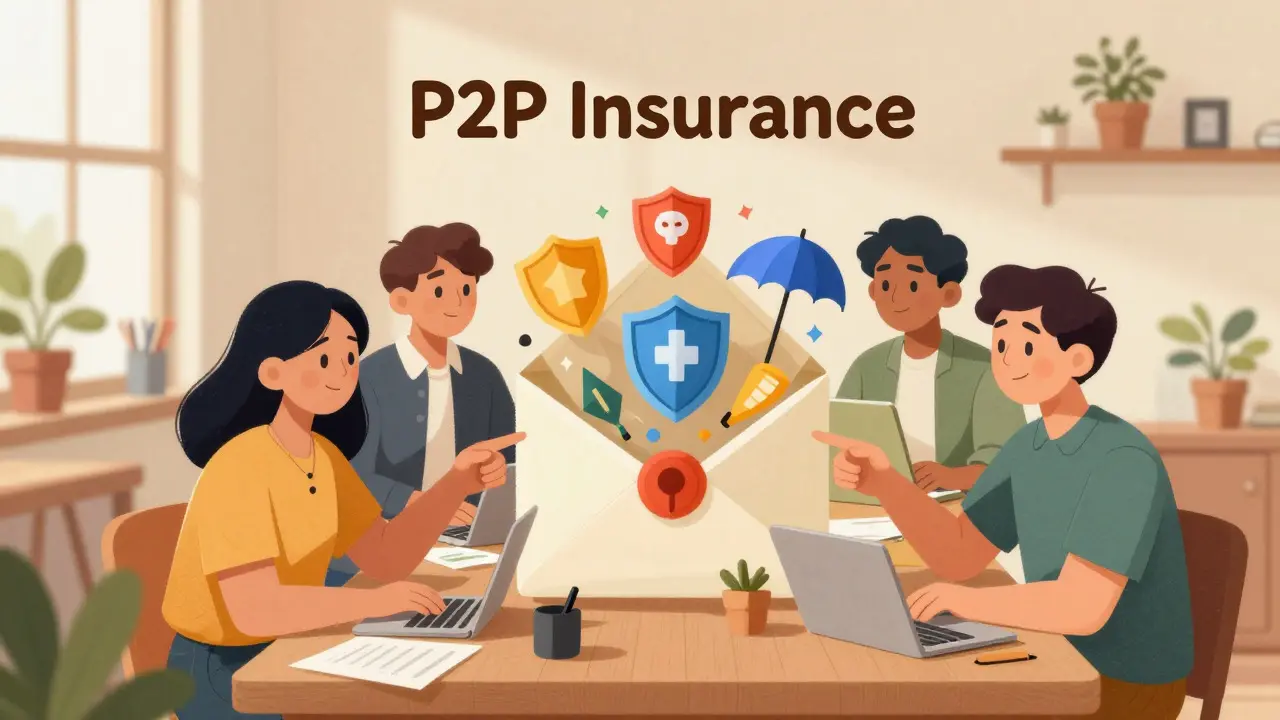
Imagine paying for car insurance only to find out that half your premium went to covering a stranger's risky driving habits. Now picture a different scenario: you join a group of five other cautious drivers in your neighborhood, pool your money together, and split the costs of any minor fender benders. If nobody gets into an accident, everyone keeps their surplus. This is the core promise of peer-to-peer insurance, a model where individuals with similar risk profiles pool resources directly, bypassing traditional centralized insurers. It’s not just a theoretical concept; it’s a growing market segment valued at USD 63 billion in 2023, driven by consumers who want transparency, lower premiums, and a say in how their money is spent.
The Core Mechanics: How P2P Insurance Works
At its heart, peer-to-peer insurance operates on the principle of mutuality, a concept that dates back centuries to mutual aid societies but has been supercharged by modern technology. The National Association of Insurance Commissioners (NAIC) defines this product as one that allows a group of insureds to pool their capital, self-organize, and self-administer their own coverage. Unlike traditional insurance, where a massive corporation pools risks from millions of diverse customers, P2P models focus on smaller, homogeneous groups. This homogeneity is key. When everyone in the pool has a similar risk profile-say, all are young professionals in Leeds or all are freelance designers-the statistical predictability improves, often leading to lower premiums.
The operational flow is straightforward. Members pay fixed premiums into a shared fund. This fund covers claims during the coverage period. Here is where it gets interesting: if the total claims are less than the total premiums collected, the leftover money doesn’t vanish into corporate profits. Instead, it is returned to the members, distributed as dividends, or directed toward a community cause chosen by the group. This direct link between contribution and reward creates a powerful incentive for members to be honest and careful, reducing fraud naturally.
Two Structural Approaches: Broker vs. Insurer
Not all P2P platforms operate the same way. There are two primary structural models that define how risk is managed and who holds the ultimate liability. Understanding the difference is crucial for anyone considering switching to this model.
- The Insurance Broker Model: In this setup, the P2P platform acts as a broker. Members pool money to cover small, frequent claims directly. However, for larger, catastrophic losses, a third-party traditional insurance company steps in. The platform earns revenue through commissions from the insurer rather than charging extra fees to members. This model typically offers standardized coverage types, such as liability or physical damage for vehicles, keeping the administrative burden low.
- The Insurance Company Model: Here, an insurance company provides the actual coverage and manages operations for a flat fee. If claim payouts exceed the group’s pooled funds, the insurer covers the difference through reinsurance. Reinsurance is essentially insurance for the insurer, protecting them from massive losses. While this offers broader, more robust coverage similar to standard policies, it can sometimes result in higher costs for members due to the additional layer of institutional involvement.
| Feature | Broker Model | Insurance Company Model |
|---|---|---|
| Risk Handling | Small claims paid from pool; large claims by 3rd party | Insurer covers all, backed by reinsurance |
| Revenue Source | Commissions from insurer | Flat fee from insurer |
| Coverage Scope | Standardized, specific risks | Broad, comprehensive policies |
| Cost Implication | Lower overhead, competitive premiums | Potentially higher due to institutional layers |
The Role of Blockchain and Smart Contracts
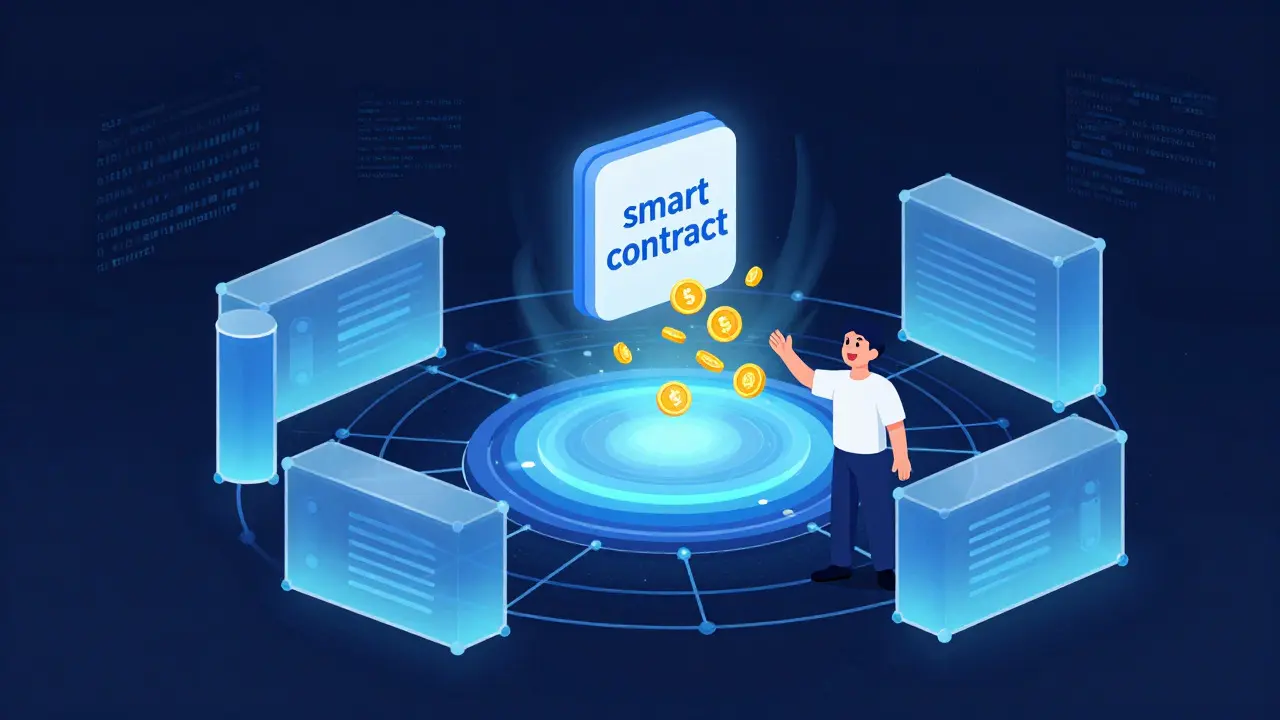
While the concept of mutual aid is old, the technology enabling modern P2P insurance is cutting-edge. Blockchain serves as the digital backbone for many of these platforms, providing a decentralized ledger that ensures every transaction is recorded transparently and immutably. This solves a major pain point in traditional insurance: trust. In conventional systems, policyholders often feel like they are fighting against the insurer during claims. With blockchain, the rules are written into code known as smart contracts.
A smart contract is a self-executing agreement that automatically triggers payouts when predefined conditions are met. For example, if a flight is delayed by more than three hours, a smart contract can verify this via an external data feed and instantly release funds to the traveler without them needing to file paperwork or wait for approval. This automation drastically reduces administrative costs and speeds up resolution times. Furthermore, because the ledger is public (or permissioned among members), everyone can see exactly where the money goes. This radical transparency aligns perfectly with the values of the sharing economy, much like how Airbnb and Uber disrupted hospitality and transport by removing middlemen.
Why Microbusinesses Are the Sweet Spot
You might think P2P insurance is only for individual consumers buying home or car policies. But there is a hidden gem in this space: microbusinesses. Kyle Hoffman, program lead at Chubb, notes that companies with fewer than 10 employees are prime candidates for this model. Why? Because they are traditionally underserved by large brokers and carriers who find them too small to be profitable individually but too complex for simple consumer products.
Microbusinesses often have simpler underwriting requirements since there are fewer individuals to insure. By pooling together-perhaps a group of local freelancers or small creative agencies-they can access coverage that was previously expensive or unavailable. As P2P insurers become more sophisticated, experts predict they will move up-channel, serving larger businesses that offer better unit economics. For now, though, the smallest businesses stand to gain the most from this democratization of risk management.
Benefits and Real-World Impact
The advantages of moving to a P2P model are tangible. First, cost efficiency. By eliminating heavy administrative overhead and reducing intermediaries, premiums drop. Second, transparency. Digital platforms provide real-time dashboards showing fund balances and payout history. Third, member-centric decision-making. Members often vote on governance issues, such as which charity receives surplus funds or what criteria define a valid claim. This sense of ownership fosters a community spirit that traditional insurance lacks.
Consider the case of Lemonade, a prominent player in this space. They use AI and behavioral economics to create a fast, user-friendly experience. Their 'Giveback' feature, where unused premiums are donated to charities chosen by users, exemplifies the P2P ethos. Research indicates that these models demonstrate lower expense and loss ratios compared to traditional giants. Fraud levels also tend to be lower because social pressure within a close-knit group deters frivolous claims. You don’t want to look bad in front of your neighbors or colleagues, do you?
Challenges and Future Outlook
Despite the hype, P2P insurance isn’t perfect. It remains in its early stages of development. One challenge is scalability. Managing thousands of distinct pools requires robust technology and regulatory clarity. Another is the 'adverse selection' risk: if only high-risk individuals join a pool, premiums will spike, potentially driving away low-risk members. Platforms must carefully curate communities to maintain balance.
Regulatory environments vary by region. In the UK and US, regulators are watching closely to ensure that these digital cooperatives meet solvency and consumer protection standards. However, the trajectory is clear. With projected growth rates exceeding 30% annually until 2027, the sector is poised for substantial expansion. As blockchain technology matures and AI improves risk assessment, we can expect P2P insurance to become a mainstream alternative, offering a fairer, faster, and more transparent way to manage life’s uncertainties.
Is peer-to-peer insurance cheaper than traditional insurance?
Generally, yes. Because P2P models reduce administrative overhead and eliminate profit margins associated with large corporations, premiums are often lower. Additionally, if claims are low, members receive a share of the surplus, effectively refunding part of their premium.
What happens if claims exceed the pooled funds?
In most models, a reinsurer or a third-party insurance company covers the difference. In the broker model, a partner insurer handles large claims. In the insurer model, the managing insurance company uses reinsurance to protect against catastrophic losses, ensuring members are fully covered.
How does blockchain improve insurance claims?
Blockchain enables smart contracts that automate payouts when specific conditions are met, such as flight delays or weather events. This removes manual processing, reduces disputes, and provides instant, transparent record-keeping that builds trust between members.
Who is the best candidate for P2P insurance?
Individuals with similar risk profiles, such as low-risk drivers or homeowners in the same area, benefit most. Microbusinesses with fewer than 10 employees are also ideal targets, as they are often underserved by traditional carriers and can pool resources effectively.
Can I choose my insurance pool?
Yes, a defining feature of P2P insurance is the ability to select your community. You can join pools based on geography, profession, interests, or even personal relationships like friends and family, creating a personalized approach to risk management.
 Finance