
Have you ever stumbled upon a cryptocurrency project that sounds too good to be true? You see a name like KibbleSwap, hear it’s tied to the beloved Dogecoin ecosystem, and wonder if this is your next big investment opportunity. It’s a common scenario in the crypto world, especially when new platforms launch with flashy promises of high rewards and low fees. But here’s the hard truth: not every exchange deserves your trust or your capital. In fact, many obscure decentralized exchanges (DEXs) are little more than empty shells designed to pump up token prices before vanishing.
If you’re considering using KibbleSwap for trading or staking in 2026, you need to look past the marketing hype. This review cuts through the noise to examine what KibbleSwap actually offers, how it compares to established giants like Uniswap or PancakeSwap, and whether the risks outweigh the potential rewards. We’ll dig into the technology behind it, the reality of its tokenomics, and the critical security factors you must check before connecting your wallet.
What Exactly Is KibbleSwap?
KibbleSwap is a decentralized exchange (DEX) built specifically for the DogeChain network. Unlike major competitors that operate across multiple blockchains, KibbleSwap focuses exclusively on assets native to DogeChain. Its primary function is to allow users to swap tokens within this specific ecosystem while earning rewards in the form of its native token, $KIB.
To understand KibbleSwap, you first need to understand its home: DogeChain is a Layer 1 blockchain that combines Ethereum compatibility with Proof-of-Work consensus, using Dogecoin as its native currency. This setup is unique because most modern chains have moved to Proof-of-Stake for speed and lower costs. DogeChain tries to bridge the gap between the meme culture of Dogecoin and the smart contract functionality of Ethereum.
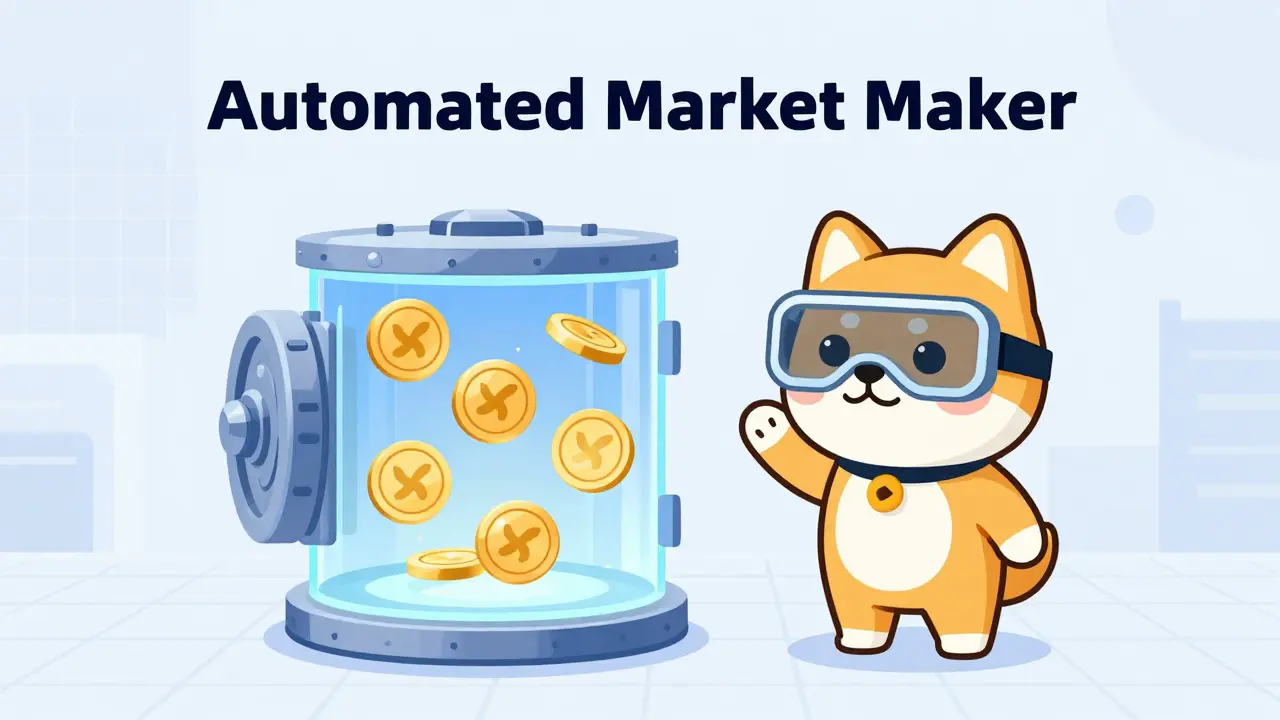
KibbleSwap acts as the liquidity hub for this niche environment. It uses an Automated Market Maker (AMM) model, which means there are no order books or central intermediaries. Instead, traders swap tokens against liquidity pools provided by other users. If you want to trade a specific DogeChain-based token, KibbleSwap is likely the only place where you can find decent liquidity. However, this specialization is both its strength and its biggest weakness.
The $KIB Token: Rewards vs. Reality
Every DEX needs a governance and reward token, and for KibbleSwap, that’s $KIB is the native utility token used for governance, staking rewards, and fee distribution. The platform claims to operate on a deflationary model, meaning some trading fees are burned or distributed to holders, theoretically increasing scarcity over time.
But let’s look at the numbers. As of mid-2026, the market valuation of $KIB remains extremely low compared to industry standards. Data from CoinDataFlow suggests the token trades at fractions of a cent-around $0.0000000147. While analysts have predicted significant percentage growth (such as a projected 90% increase in previous cycles), these percentages often mask tiny absolute values. A 90% gain on a micro-cap token doesn’t necessarily mean life-changing wealth; it might just mean your investment went from $10 to $19.
When you compare this to tokens like UNI (Uniswap) or CAKE (PancakeSwap), which power billions in daily volume, $KIB struggles to show similar traction. The lack of substantial market depth means that large trades could cause massive slippage, eating into your profits. Always ask yourself: is the reward worth the risk of holding a token with minimal liquidity?
How KibbleSwap Compares to Major DEXs
You wouldn’t buy a car without comparing it to others on the lot. The same applies to crypto exchanges. Let’s put KibbleSwap side-by-side with established players to see where it stands.
| Feature | KibbleSwap | Uniswap v3 | PancakeSwap |
|---|---|---|---|
| Primary Network | DogeChain (EVM-compatible) | Ethereum & L2s | Binance Smart Chain |
| Token | $KIB | UNI | CAKE |
| Liquidity Depth | Low (Niche) | Very High | High |
| Cross-Chain Support | No (Single-chain focus) | Yes (Multi-chain) | Yes (Multi-chain) |
| User Base Size | Small / Undocumented | Millions | Millions |
| Security Audits | Limited Public Info | Multiple Top-Tier Audits | Multiple Top-Tier Audits |
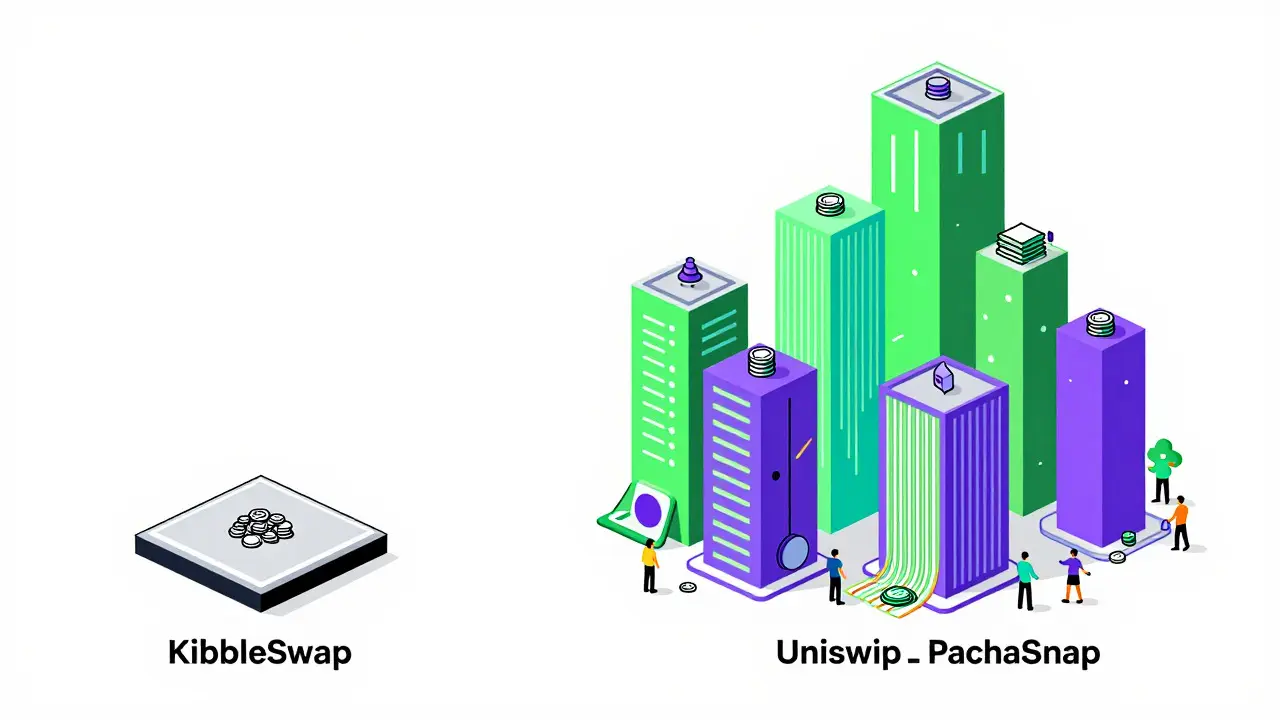
The table above highlights a clear disparity. Uniswap and PancakeSwap benefit from network effects: more users mean more liquidity, which attracts even more users. KibbleSwap operates in isolation. Its main advantage is that if you *only* care about DogeChain-native tokens, you might find better rates here than trying to route those trades through a general aggregator. But for everything else, the major DEXs offer superior security, liquidity, and feature sets.
Security Risks: What You Need to Watch Out For
In the world of decentralized finance (DeFi), security isn’t a feature-it’s a prerequisite. Unfortunately, information regarding KibbleSwap’s security posture is sparse. There are no widely publicized audits from reputable firms like CertiK or Trail of Bits. This absence is a red flag.
Smart contracts are code, and code has bugs. Without independent verification, you’re trusting the developers’ word that their code is safe. Consider the history of DeFi hacks: countless projects have been drained due to simple errors in their AMM logic or reentrancy vulnerabilities. When you connect your wallet to KibbleSwap, you are granting permission for its smart contracts to interact with your assets. If those contracts are flawed, your funds are at risk.
Furthermore, the lack of user feedback on platforms like Trustpilot or Reddit suggests a small community. Small communities mean fewer eyes on the code and less pressure on developers to maintain high standards. Always start with small amounts. Never invest money you can’t afford to lose, and consider using a "burner" wallet-a separate wallet with limited funds-for interacting with lesser-known protocols.

User Experience and Technical Setup
Using KibbleSwap requires a basic understanding of Web3 tools. Since DogeChain is EVM-compatible, you can use popular wallets like MetaMask. Here’s the typical workflow:
- Configure MetaMask: Add DogeChain as a custom network. You’ll need the correct RPC URL, chain ID, and currency symbol (DOGE).
- Acquire DOGE: Buy Dogecoin on a centralized exchange (like Binance or Coinbase) and withdraw it to your MetaMask address on the DogeChain network.
- Connect Wallet: Visit the KibbleSwap interface and click "Connect Wallet."
- Approve Tokens: Before swapping, you may need to approve the smart contract to spend your tokens. This step incurs a gas fee.
- Execute Swap: Enter the amount you wish to trade and confirm the transaction.
The learning curve is moderate. If you’ve used Uniswap before, the interface will feel familiar. However, documentation and customer support are notably absent. Most niche DEXs rely on Discord or Telegram for help, which can be hit-or-miss. Expect to troubleshoot issues on your own.
Is KibbleSwap Right for You?
So, should you use KibbleSwap? The answer depends entirely on your goals.
If you are a die-hard believer in the DogeChain ecosystem and hold specific tokens that only exist there, KibbleSwap might be your only viable option for trading. In this narrow case, its specialization provides value. However, if you are looking for a general-purpose trading platform, stick to the giants. The liquidity, security, and reliability of Uniswap, PancakeSwap, or Curve far outweigh the marginal benefits of a niche player.
For investors eyeing the $KIB token, proceed with extreme caution. The low market cap indicates high volatility and speculative risk. Treat any investment as a gamble, not a savings plan. Always do your own research (DYOR), verify contract addresses directly from official sources, and beware of phishing sites that mimic legitimate DEX interfaces.
Is KibbleSwap safe to use?
Safety in DeFi is relative. While KibbleSwap operates on the secure DogeChain network, the lack of public smart contract audits from top-tier firms increases risk. Always use a burner wallet and start with small amounts to test the waters.
What is the $KIB token used for?
The $KIB token serves as the governance and reward mechanism for KibbleSwap. Holders can stake $KIB to earn a share of trading fees and participate in platform decisions. However, its current market value is very low.
Can I trade Ethereum tokens on KibbleSwap?
No, KibbleSwap is designed specifically for DogeChain-native assets. To trade standard Ethereum tokens, you would need to use a cross-chain bridge or a multi-chain DEX like Uniswap.
How do I add DogeChain to MetaMask?
You can manually add DogeChain to MetaMask by going to Settings > Networks > Add Network. You will need the DogeChain RPC URL, Chain ID (typically 1807 or similar depending on the specific fork), and Currency Symbol (DOGE). Verify these details from the official DogeChain documentation.
Why is KibbleSwap less popular than Uniswap?
KibbleSwap is limited to the DogeChain ecosystem, which is much smaller than Ethereum or BNB Chain. Uniswap benefits from a massive user base, deep liquidity, and broad token support, making it the default choice for most traders.
 Finance