

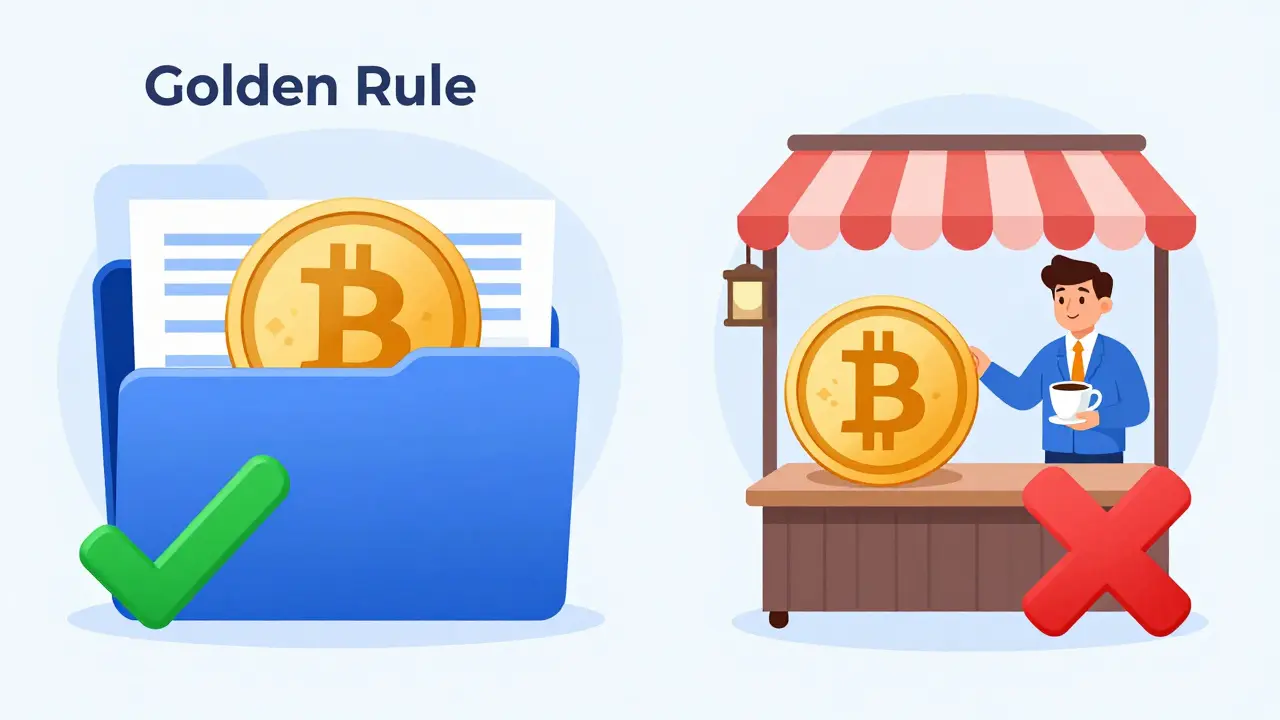
Imagine waking up to find your favorite digital asset has surged in value, only to realize that using it to buy your morning coffee in Jakarta could land you in legal trouble. In Indonesia, the rules are crystal clear: you can trade crypto to make money, but you can't use it as money. This distinction is the golden rule for anyone looking to enter the market without risking a run-in with the law.
The landscape shifted dramatically in 2025. For years, the commodity agency BAPPEBTI handled things, but as of January 10, 2025, the Financial Services Authority (also known as OJK) took the wheel. This move wasn't just a change in office; it reclassified crypto from a "commodity" to a "digital financial asset." This means the government now views your Bitcoin or Ethereum more like a stock or a bond than a sack of coffee beans.
The Golden Rule: Investment vs. Payment
Before you open an account, you need to understand the legal wall between investing and spending. Under Bank Indonesia regulations, the Indonesian Rupiah is the only legal tender. This means while you can legally buy and sell crypto on an exchange to grow your portfolio, using crypto to pay for goods or services violates the Payment Systems Law.
If you're caught using a crypto wallet to pay a local vendor, you're venturing into illegal territory. Stick to using your assets for trading and investment, and you'll stay on the right side of the law.
Picking a Legal Trading Platform
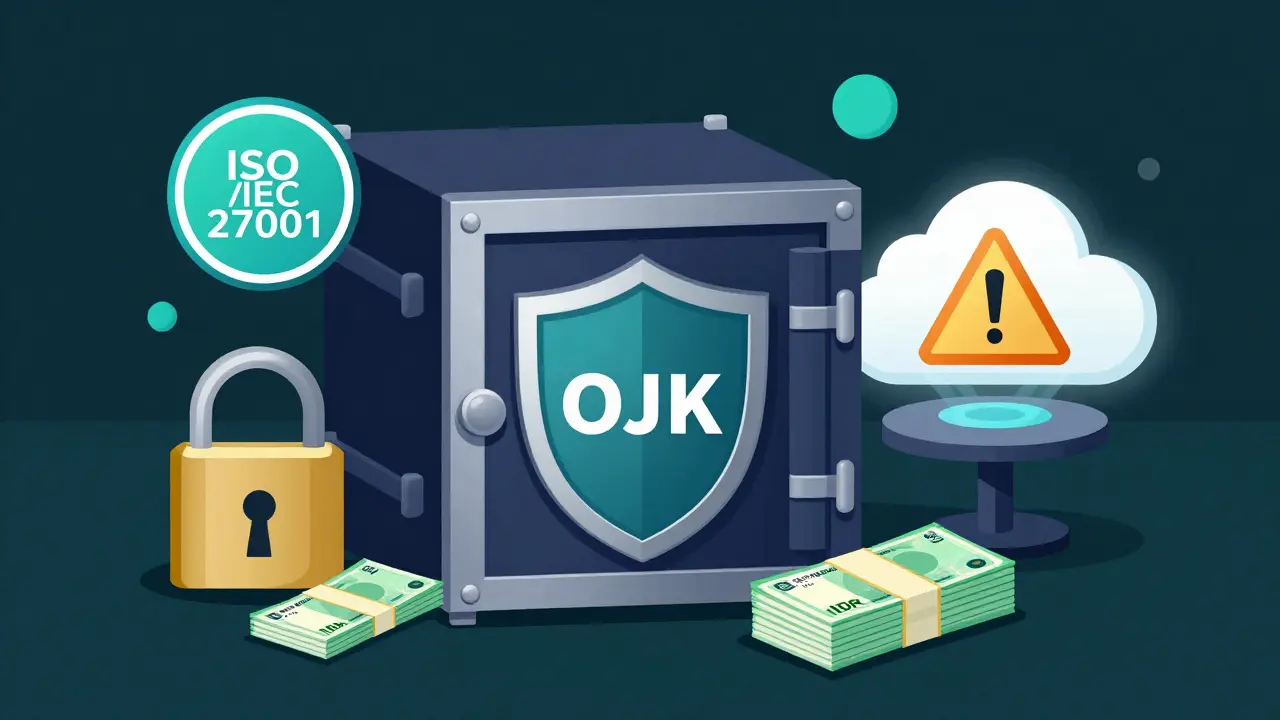
Not every app on your phone is legal in Indonesia. To stay compliant, you must use an exchange licensed by the OJK. As of mid-2025, there are about 22 approved platforms. Using a licensed exchange isn't just about following the law; it's about your own safety. These platforms are required to have minimum operational capital of IDR 5 billion and must meet strict ISO/IEC 27001 cybersecurity standards.
The market is currently led by three heavy hitters: Indodax, which holds nearly half the market share, Tokocrypto, and Pintu. If you use an offshore platform, you aren't necessarily breaking the law, but you're walking into a tax trap that could cost you significantly more.
| Feature | OJK-Licensed Exchange | Foreign/Offshore Platform |
|---|---|---|
| Income Tax Rate | 0.21% (Final Tax) | 1.00% (Self-Reported) |
| VAT (PPN) | 0% (Exempt) | 0% (Exempt) |
| Regulatory Protection | OJK Oversight | None / Foreign Law |
| Onboarding Speed | 3-7 Business Days | Instant to 2 Days |
Understanding the New Tax Rules (PMK 50/2025)
Taxation used to be a headache, but Regulation No. 50 of 2025 (PMK 50/2025) simplified things while adding a steep penalty for those avoiding domestic exchanges. The biggest change is that Value Added Tax (VAT) has been eliminated for crypto transactions, as they are now treated like securities.
Now, it all comes down to where you trade. If you use a licensed Indonesian exchange, the platform automatically handles a final Income Tax of 0.21%. You don't have to sweat the math; it's deducted during the transaction. However, if you trade on a foreign platform, you are responsible for reporting your own taxes at a much higher rate of 1%. This gap is designed to keep the money inside Indonesia's borders.
Pro tip: Keep an eye on your quarterly tax statements. Licensed exchanges are required to provide these by the 10th business day of the following quarter. If you're doing high-volume trades, these documents are your best defense during a tax audit.

Step-by-Step Guide to Legal Onboarding
Getting started is more rigorous than it used to be. The OJK has increased the verification requirements to prevent money laundering. Here is the exact path you need to take:
- Select a Licensed Exchange: Check the official list on the OJK website to ensure the platform is approved.
- Submit Identity Docs: You'll need a clear scan of your KTP (National Identity Card) and your NPWP (Tax Identification Number). Without an NPWP, you may face different tax treatments or registration hurdles.
- Pass the Literacy Test: This is a newer requirement. You'll take a 15-question quiz on crypto risks. You need a score of 80% to pass. If you fail, you'll have to study the platform's risk disclosures and try again.
- Link Your Bank Account: Your fiat on-ramp must be a bank account registered with Bank Indonesia.
Be patient. Because of these new checks, onboarding now takes about 3 to 7 business days. If you're in a rush, start the process a week before you actually intend to trade.
Pitfalls and Red Flags to Avoid
Even seasoned traders make mistakes. One common trap is the "foreign exchange illusion." Some traders think the 1% tax for foreign platforms is a suggestion. It isn't. Failing to self-report foreign gains can lead to heavy penalties from the Directorate General of Taxes (DGT).
Another hurdle is moving large sums. If you need to send more than IDR 100 million (roughly USD 6,500) across borders, you can't just hit "send." You'll need special OJK approval under Circular Letter No. 15/SEOJK.04/2025. Trying to bypass this by splitting the payment into smaller chunks is a red flag for AML (Anti-Money Laundering) systems and can get your account frozen.
Lastly, be careful with DeFi (Decentralized Finance). While trading on a centralized exchange like Indodax is legally mapped out, DeFi applications currently live in a legal gray area. They aren't explicitly banned, but they don't have the same regulatory safety net.
Is it legal to own Bitcoin in Indonesia?
Yes, owning and trading Bitcoin as an investment is completely legal. However, you cannot use it to pay for goods or services, as only the Indonesian Rupiah is recognized as legal tender.
Do I have to pay tax on my crypto profits?
Yes. If you use a licensed domestic exchange, a final Income Tax of 0.21% is automatically deducted. If you use a foreign platform, you must self-report and pay a 1% tax.
What happens if I fail the OJK financial literacy test?
You won't be permanently banned from trading, but you cannot complete your account registration until you pass. You'll need to review the provided educational materials on crypto volatility and risks before retaking the test.
Which exchange is the safest to use?
The safest options are those officially licensed by the OJK. Indodax, Tokocrypto, and Pintu are the most prominent. Check the official OJK portal for the current list of 22 approved platforms.
Can I transfer more than 100 million IDR to a foreign wallet?
Doing so requires special approval from the OJK under Circular Letter No. 15/SEOJK.04/2025. Transfers above this limit without approval may be flagged as suspicious activity.
 Finance

Robert Smith
April 27, 2026 AT 06:05Wild rules 🤯🚀
Felix Eduardo Velasquez
April 27, 2026 AT 08:36The shift from BAPPEBTI to OJK is a textbook example of a developing economy attempting to institutionalize a volatile asset class. By reclassifying crypto as a digital financial asset, Indonesia is essentially treating it as a security to maintain systemic stability and ensure that the national currency retains its dominance in the domestic payment ecosystem. This strategy minimizes the risk of currency substitution while still allowing the state to capture tax revenue through a structured framework. It's a pragmatic approach, albeit one that restricts the original decentralized vision of cryptocurrency. Most people ignore the nuance of the Payment Systems Law, but that's exactly where the legal liability lies for the average user.
Lloyd I
April 27, 2026 AT 16:06This is such a great breakdown!! It's awesome to see a clear path for people to get started legally!
edie rosa
April 28, 2026 AT 09:23The sheer audacity of expecting people to take a 15-question quiz just to trade their own money is peak government overreach. It's just another way to create a facade of 'protection' while they actually just want a tighter grip on the data. Honestly, it's depressing how we've just accepted these digital fences as the new normal. The tax gap between domestic and foreign exchanges is practically a shakedown to force everyone into a controlled environment where the state can watch every single cent move in real time. It's a bleak outlook for anyone who actually values financial privacy in 2026.
Michael Repak
April 29, 2026 AT 02:34I totally agree with the focus on safety!!! Using an OJK licensed platform is definitely the way to go!!!!
debra hoskins
April 29, 2026 AT 21:42Calling it a 'golden rule' is a bit melodramatic for what is essentially a basic regulatory boundary. The whole setup feels like a bureaucratic labyrinth designed to exhaust the user into submission.
VIVEK SINGH
May 1, 2026 AT 06:12Oh, look at that, the government has discovered how to tax things they can't actually control. How revolutionary. I'm sure the 'literacy test' is a masterpiece of educational engineering, probably designed by someone who still thinks a blockchain is a physical chain made of blocks. It's truly touching that we are 'protected' by a 5 billion IDR capital requirement, as if that's a fortress against a global market crash. Absolute genius move to punish those using foreign platforms with a 1% tax, because nothing says 'welcome to the future' like antiquated tax traps.
Rain Richardsson
May 3, 2026 AT 03:58Does the 0.21% tax apply to all coins?
Harvey Alford
May 4, 2026 AT 07:27I bet you're just asking because you're scared of the tax man. Are you hiding a lot of gains?
Ralph Espinosa
May 5, 2026 AT 11:02To answer the previous point, yes, the final income tax usually applies across the board for licensed exchanges!!!! It makes the bookkeeping much easier for everyone involved!!!!
April D Thompson
May 6, 2026 AT 01:17This is just such a cosmic dance of control and freedom! We're literally watching the birth of a new financial era where the state tries to tame the wild horse of decentralization. It's almost poetic that we have to pass a test to be 'smart enough' to lose our money in a volatile market. Let's just embrace the chaos of these transitions and find the beauty in the struggle between old laws and new code!
Kara Spadone
May 7, 2026 AT 12:34Typical. People think they can just bypass the system and then act surprised when their accounts get frozen 🙄. If you can't handle a simple quiz, you have no business touching a digital asset. Basic vibration check: if you're stressing over 1%, your energy is just too low for this market ✨.
Arun Prabhu
May 7, 2026 AT 14:45The prose here is far too pedestrian for such a pedestrian topic. A tedious exercise in regulatory compliance that offers nothing but the obvious. How quaint.
Jehan ZA
May 8, 2026 AT 05:45The distinction between investment and payment is a necessary legal safeguard to protect the national currency. I find the regulatory framework presented here to be quite reasonable.
Lex Harley
May 9, 2026 AT 08:06Im wondering if the AML flags for the 100m IDR limit use some kind of heuristic analysis or just straight thresholds. The slippage on those domestic exchanges can be brutal when you're trying to exit a position quickly, especially if the liquidity pools are shallow. I tried a p2p move once and the KYC process was a total nightmare with the KTP scan failing like five times. Just a mess of legacy systems trying to interface with web3 protocols.
Arti Jain
May 10, 2026 AT 05:37Only OJK platforms are acceptable. Anything else is reckless.
Kristi Swartz
May 10, 2026 AT 06:33It is a matter of law that the Rupiah is the only legal tender and any person attempting to use cryptocurrency for payments is simply acting against the state which is unacceptable
Alex Mazonowicz
May 11, 2026 AT 22:27Keep pushing forward everyone!!!! This is a great time to get into the market if you do it the right way!!!!
AP Fisher
May 13, 2026 AT 21:13I'm just trying to understand if DeFi is totally off limits or just risky. It sounds like the government hasn't decided yet.
Iestyn Lloyd
May 15, 2026 AT 05:45From a UK perspective, this is quite a structured approach. The automatic tax deduction at the exchange level is actually very efficient compared to the manual reporting we often deal with. It certainly lowers the barrier for entry for the average person who isn't an accounting expert.