
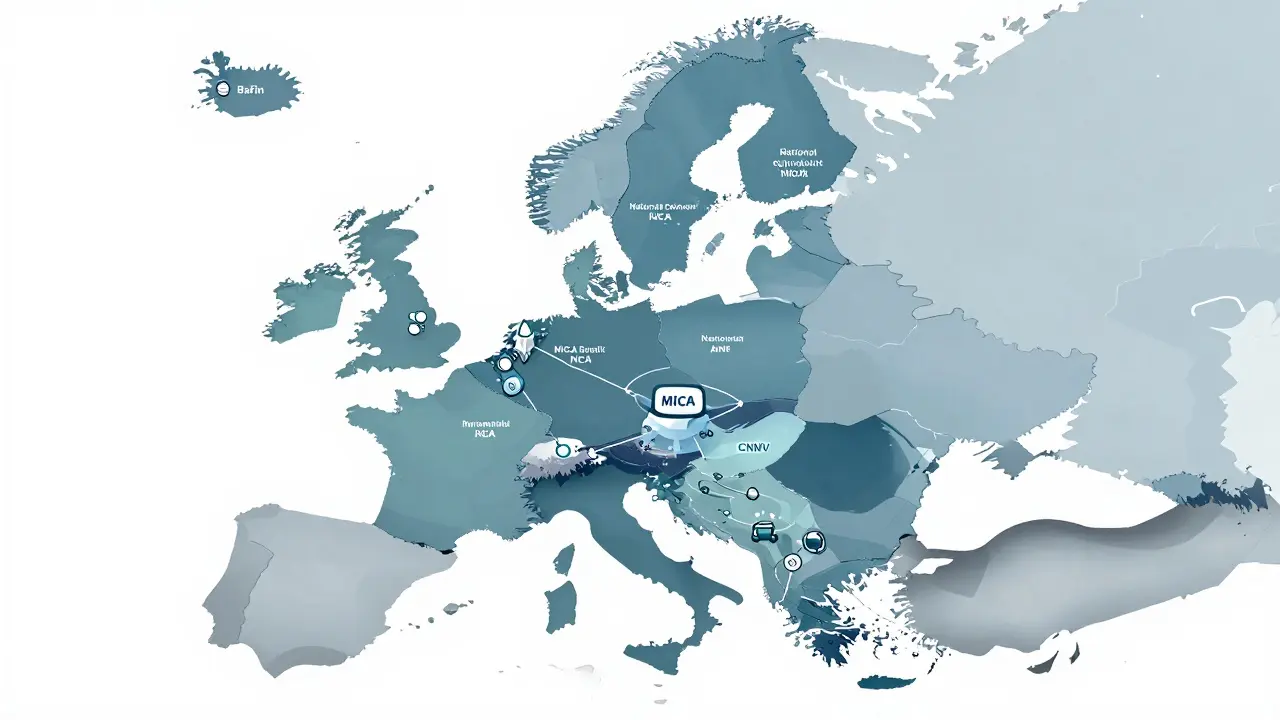
The landscape of cryptocurrency regulation in Europe changed forever on December 30, 2024. That was the day the Markets in Crypto-Assets Regulation (MiCA) entered full effect, creating a unified rulebook for digital assets across the European Union. But here is the catch: while the rules are now uniform, the enforcement is not. The system relies on National Competent Authorities (NCAs)-the specific financial regulators in each of the 27 member states-to license and supervise crypto firms.
If you are running a crypto business or investing in one, understanding who these authorities are and how they operate is critical. You cannot just get a generic "EU license." You must apply through a specific country’s regulator. This guide breaks down which agencies hold the power, how the licensing process actually works on the ground, and why the entire system might be shifting toward centralization soon.
Who Are the National Competent Authorities?
Under MiCA, every EU member state designates one primary agency as its NCA. These are not new bodies created from scratch; they are established financial watchdogs that have added crypto oversight to their existing portfolios. For a crypto asset service provider (CASP), your NCA is your main point of contact. They review your application, grant your license, and monitor your compliance.
The choice of NCA matters significantly. While MiCA sets the baseline, national regulators interpret guidelines differently. Some move fast; others take their time. Here is a look at the key players:
- Germany: The BaFin (Bundesanstalt für Finanzdienstleistungsaufsicht) serves as Germany's NCA. Known for its rigorous approach to banking and securities, BaFin began issuing licenses in mid-January 2025. It has become a top destination for major crypto firms seeking stability and credibility in Europe's largest economy.
- France: The AMF (Autorité des Marchés Financiers) handles crypto supervision in France. With sophisticated market surveillance capabilities, AMF offers a robust framework for firms looking to establish a strong presence in Western Europe.
- Netherlands: The Dutch financial authority emerged as an early mover. On December 30, 2024-the very first day MiCA became fully effective-they issued some of the initial licenses. Their efficiency made them a hotspot for early adopters.
- Malta: Historically known as a "crypto-friendly" jurisdiction, Malta’s regulator also moved quickly, issuing licenses on day one. However, the gap between Malta and larger economies like Germany and the Netherlands has narrowed significantly under the standardized MiCA rules.
- Spain and Italy: Spain uses the CNMV (Comisión Nacional del Mercado de Valores), while Italy relies on CONSOB (Commissione Nazionale per le Società e la Borsa). Both bring deep experience in traditional securities regulation to the crypto space.
By June 2026, more than 40 CASP licenses had been issued across the EU. The data shows a clear trend: Germany and the Netherlands dominate the early approvals. This isn't random. Companies are choosing jurisdictions where the regulatory infrastructure is mature and the processing times are predictable.
How the Licensing Process Works in Practice
Getting licensed under MiCA is not a simple paperwork exercise. It is a comprehensive vetting process. When you submit your application to an NCA, you are essentially proving that your company can operate safely within the EU financial system. Here is what that looks like step-by-step:
- Jurisdiction Selection: You choose one member state to be your "home" regulator. This decision impacts your operational costs, legal team requirements, and speed to market. There is no single "EU passport" application; you start with one NCA.
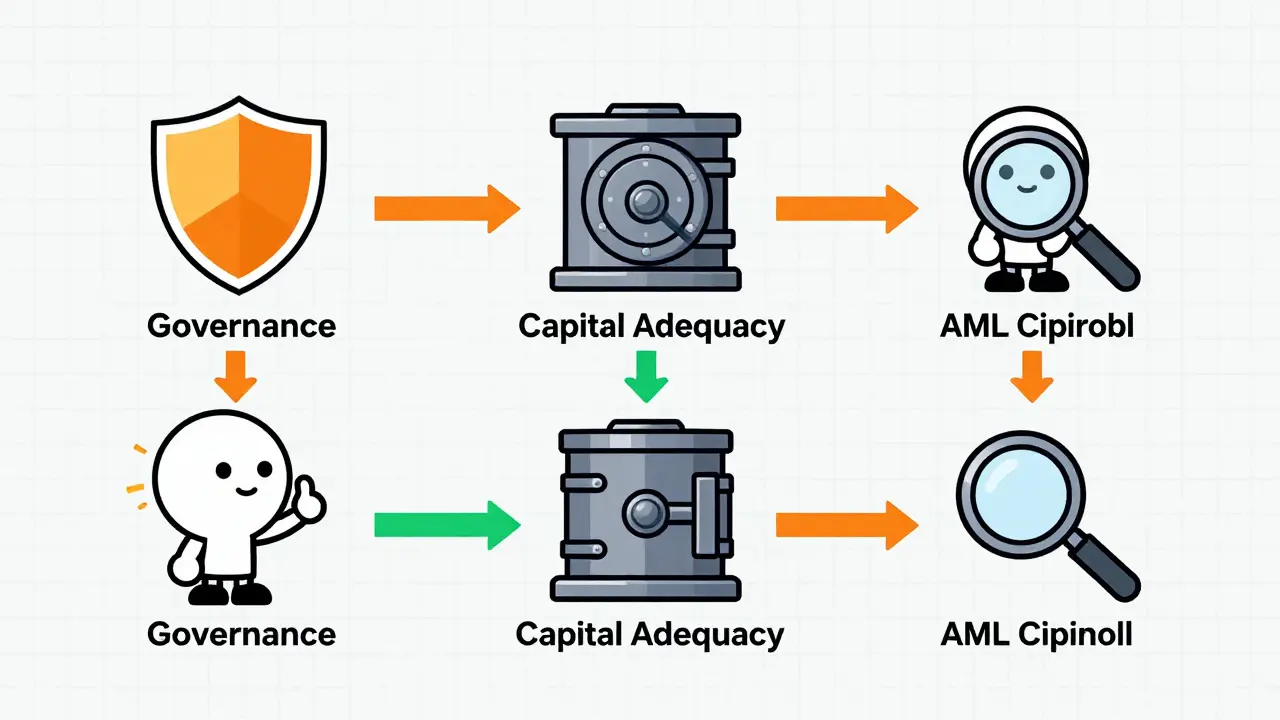
- Governance and Risk Framework: Your NCA will scrutinize your corporate structure. Who are the directors? Do they have relevant experience? How do you manage conflicts of interest? You need a clear governance model that meets strict fiduciary standards.
- Capital Adequacy: You must demonstrate sufficient capital reserves. MiCA sets minimum capital requirements based on your activities. If you custody client assets, the bar is higher. Your NCA will verify these funds are available and segregated.
- Consumer Protection Protocols: How do you handle customer complaints? What happens if your system goes down? Your NCA requires detailed procedures for incident reporting and client asset protection.
- AML/CFT Compliance: Anti-money laundering checks are non-negotiable. Your systems must detect suspicious transactions. Note that starting in 2026, the largest cross-border firms will also face direct scrutiny from the new Anti-Money Laundering Authority (AMLA).
Once licensed, the relationship doesn't end. NCAs require regular audits, periodic disclosures, and immediate reporting of significant incidents. You are under constant supervision. The NCA monitors your trading activities, custody arrangements, and adherence to disclosure rules for different token types, such as utility tokens or asset-referenced tokens.
The Fragmentation Problem: Why One Size Doesn't Fit All
Even though MiCA provides a single set of rules, the execution varies by country. This creates a "fragmented" reality for businesses. Imagine having to navigate different interpretations of the same law depending on whether you are licensed in Berlin, Paris, or Amsterdam.
This fragmentation leads to several headaches:
- Duplicated Efforts: Each NCA builds its own internal expertise and resources to understand crypto. As Verena Ross, chair of ESMA, pointed out in late 2024, this means building "specific new resources and expertise 27 times in different national supervisors." It is inefficient.
- Inconsistent Timelines: One NCA might approve a license in three months; another might take six. This unpredictability makes long-term business planning difficult.
- Coordination Costs: If you operate across borders, you may need to interact with multiple NCAs. While MiCA aims for mutual recognition, practical coordination still requires significant legal and administrative overhead.
For smaller startups, this complexity is a barrier to entry. The cost of complying with varying national expectations adds up quickly. Larger firms with dedicated legal teams manage it better, but they too feel the friction.
The Shift Toward Centralized Supervision
Here is where things get interesting. The current NCA-centric model is already facing pressure to change. EU leaders recognize that the fragmented approach is slowing down the creation of a truly integrated European capital market.
In October 2024, Verena Ross confirmed that the European Commission is preparing new rules to transfer supervision of certain entities-including significant crypto companies-from national authorities directly to ESMA (European Securities and Markets Authority). Maria Luís Albuquerque, the EU commissioner for financial services, explicitly stated they are considering transferring supervisory powers to ESMA for the "most significant cross-border entities."
Why the shift? Efficiency and consistency. ESMA argues that centralized supervision eliminates duplication and ensures that major players are held to the exact same standard regardless of their home country. This would mirror models used in other financial sectors where systemic risk is high. However, this transition won't happen overnight. Legislative processes in the EU take time. We are likely looking at several years before any major centralization takes effect. In the meantime, the NCAs remain the primary gatekeepers. The current period is crucial because the success of early MiCA implementation will influence how future centralization is designed. While NCAs are your daily contact, they don't work in isolation. Several EU-level bodies play supporting roles that affect your operations: Additionally, recent developments have strengthened the tools available to NCAs. On April 29, 2025, the European Commission adopted a Delegated Regulation adding strict technical standards for preventing market abuse. This means NCAs now have clearer mandates to demand robust monitoring systems from firms arranging transactions. If you are a PPAET (Person Professionally Arranging or Executing Transactions), you must report suspicious activities to your NCA immediately. So, what should you do with this information? If you are planning to launch or expand in the EU, keep these points in mind: The EU has positioned itself as a global leader in crypto regulation. By combining national expertise with EU-wide standards, it offers clarity that many other regions lack. But navigating the NCA system requires patience, precision, and a solid understanding of both the letter and the spirit of MiCA. An NCA is the specific financial regulator designated by each EU member state to oversee cryptocurrency activities under MiCA. For example, BaFin is the NCA for Germany, and AMF is the NCA for France. They are responsible for licensing crypto firms and ensuring ongoing compliance. MiCA entered full effect on December 30, 2024. This date marked the start of the licensing regime for most crypto asset service providers, allowing NCAs to begin issuing licenses and enforcing the new rules. The Netherlands and Malta were among the first, issuing licenses on December 30, 2024. Germany followed closely, with BaFin beginning issuances in January 2025. These countries have since dominated the early license counts due to their efficient regulatory processes. Not immediately. While there are proposals to transfer supervision of significant cross-border entities to ESMA for greater efficiency, the current NCA system remains in place. Any centralization will likely take several years to implement legislatively. The Anti-Money Laundering Authority (AMLA), launching in 2026, will directly supervise the largest cross-border crypto firms for anti-money laundering and counter-terrorist financing compliance. This adds a layer of centralized oversight specifically for financial crime prevention. Consider factors like processing speed, regulatory clarity, and local business environment. Germany and the Netherlands are currently popular choices due to their established financial infrastructure and relatively swift licensing processes. Consult with legal experts to assess which jurisdiction aligns best with your operational needs.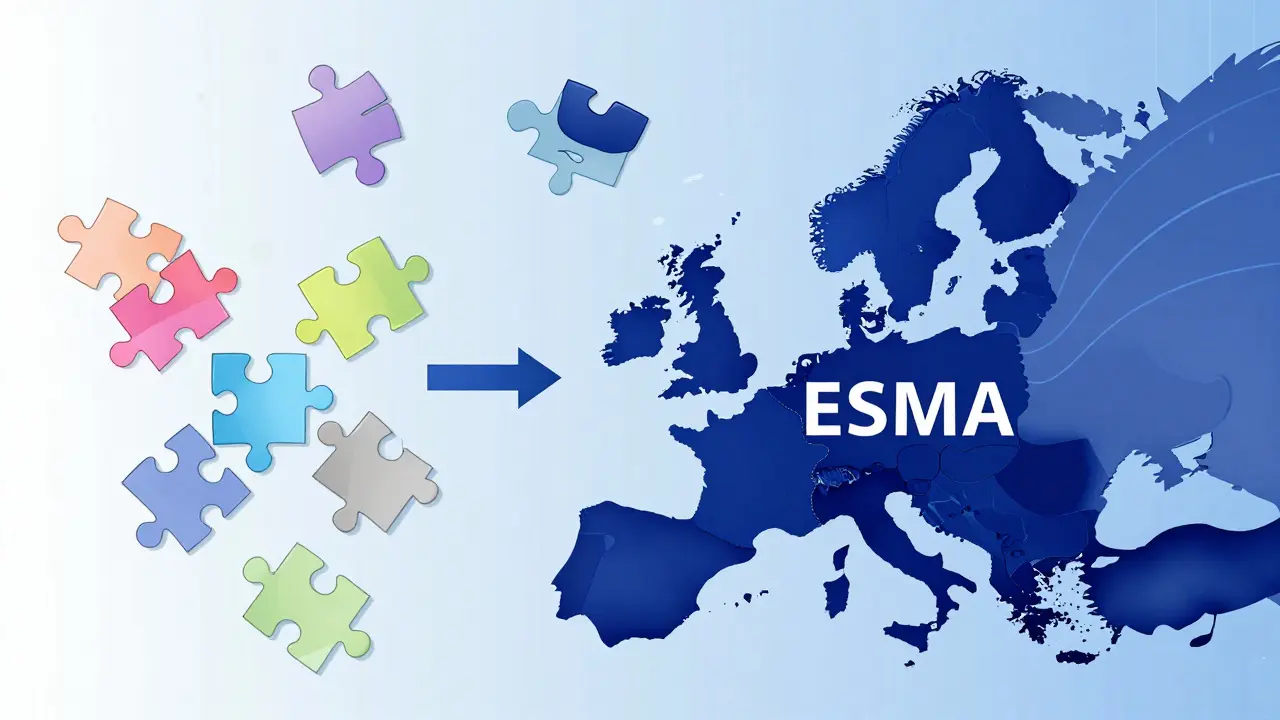
The Role of Other EU Bodies
Authority
Primary Role in Crypto
Impact on Firms
ESMA
Develops technical standards, coordinates NCAs, maintains blacklists.
Sets the detailed rules you must follow; publishes lists of banned providers.
EBA
Focuses on stablecoin issuers and prudential standards.
Oversees reserve assets and liquidity for significant stablecoins.
ECB
Monitors financial stability and monetary policy risks.
Can intervene if stablecoins threaten payment systems or eurozone stability.
AMLA
Directly supervises largest cross-border firms for AML/CFT.
Added layer of compliance for big players starting in 2026.
Strategic Advice for Crypto Businesses
What exactly is a National Competent Authority (NCA)?
When did MiCA fully come into effect?
Which countries were fastest to issue MiCA licenses?
Will ESMA replace the NCAs entirely?
What does AMLA have to do with crypto regulation?
How do I choose the best NCA for my crypto business?
 Finance