
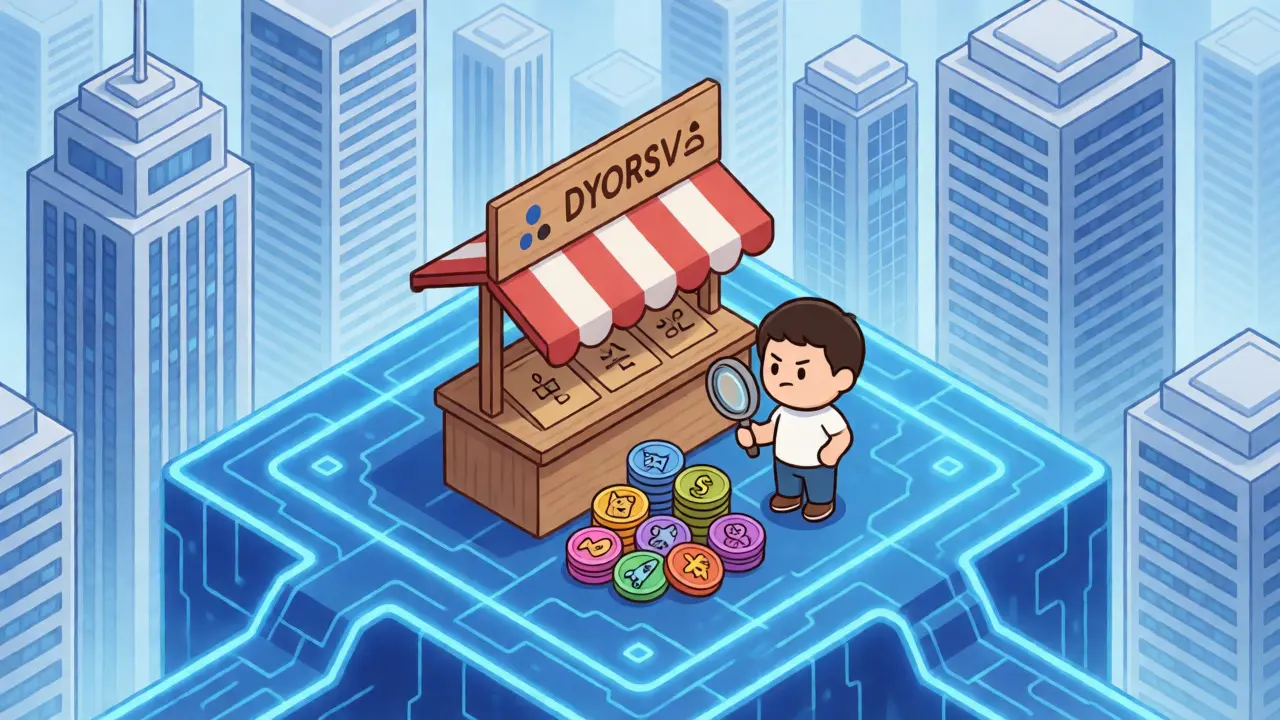
You see a token with a name like "trillions" or "GOD ♱" and you want to buy it. You head to the usual exchanges, but they don't list it. Then you find DYORSwap on the Plasma blockchain. It promises zero fees. Sounds great, right? But before you connect your wallet, you need to know what you are actually dealing with. This isn't Uniswap. It isn't even close. It is a niche, high-risk platform for specific tokens that most people have never heard of.
Here is the reality check: DYORSwap operates in the wild west of crypto. It targets new tokens and meme coins on the Plasma network. The main hook is its 0.00% maker and taker fee structure. That sounds amazing until you realize the liquidity is thin and the transparency is questionable. If you are here because you found a cool new token, this review will help you decide if the risk is worth the reward. We will look at the fees, the tech, the security risks, and whether this platform is actually usable for anyone other than hardcore speculators.
What Exactly Is DYORSwap?
DYORSwap is a decentralized exchange (DEX) built specifically for the Plasma ecosystem. Unlike major aggregators that pull liquidity from many places, DYORSwap acts as a standalone venue for Plasma-based assets. Think of it as a small local market stall rather than a massive shopping mall. It launched without much fanfare, and its founding team remains largely undisclosed. This lack of public identity is the first red flag for cautious investors.
The platform distinguishes itself by operating exclusively within the Plasma chain. Do not confuse it with DYOR.io, which runs on The Open Network (TON). They share a name similarity, but they are different beasts. DYORSwap focuses on emerging tokens, often meme coins, that haven't graduated to larger exchanges yet. Its primary selling point is cost. While standard DEXs like Uniswap charge around 0.3% per swap, DYORSwap claims a 0.00% fee. For large trades, this saves money. For tiny trades, it barely matters. The real question is whether you can actually execute the trade smoothly.
Fees and Trading Costs: The Zero-Fee Myth
Let's talk numbers because that is why most people click on this title. DYORSwap advertises a zero-fee model. In theory, you keep more of your capital when you swap tokens. There are no maker fees for providing liquidity and no taker fees for buying or selling. This is aggressive pricing designed to attract traders who are sensitive to costs.
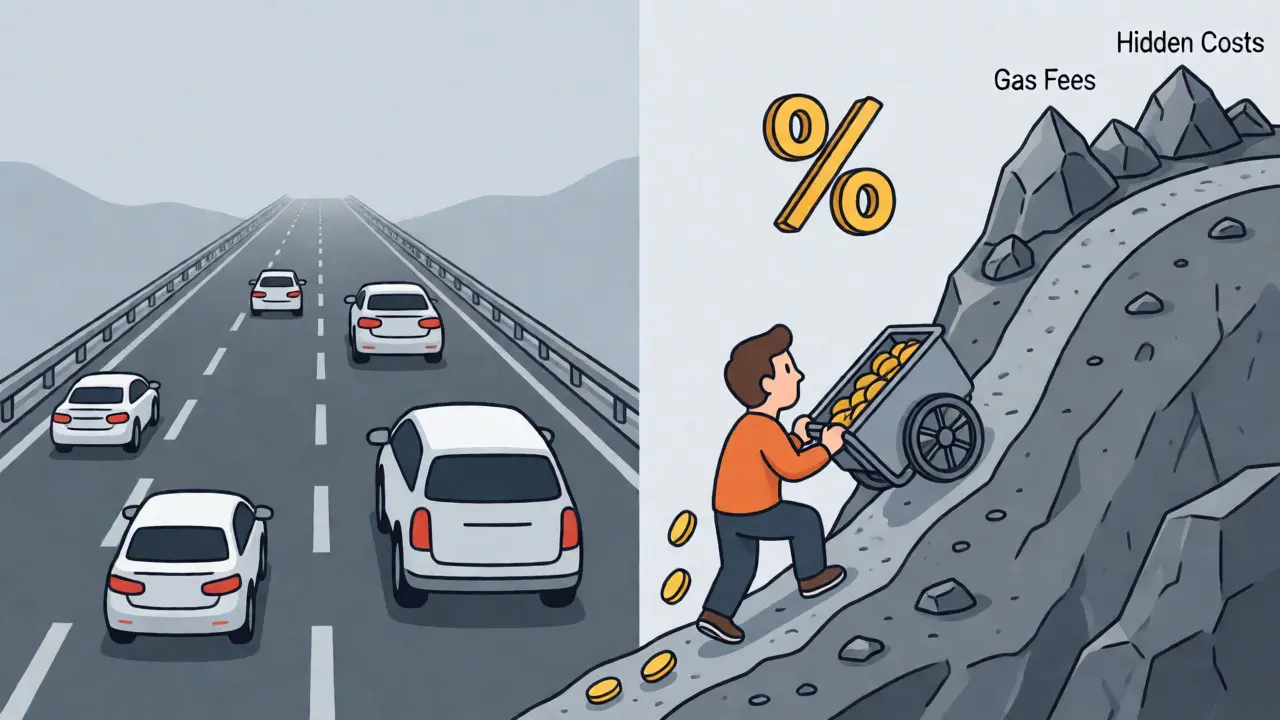
However, zero trading fees do not mean zero costs. You still pay gas fees for every transaction on the Plasma network. These network costs vary based on congestion. More importantly, you face slippage. Because liquidity pools on DYORSwap are often shallow, moving a significant amount of money can shift the price unfavorably. If you try to buy $10,000 worth of a low-cap token, you might end up paying 5% or 10% more than the displayed price just to fill the order. That hidden cost wipes out any savings from the zero trading fee.
| Feature | DYORSwap (Plasma) | Uniswap V3 | PancakeSwap |
|---|---|---|---|
| Maker Fee | 0.00% | Variable (0.01%-1%) | 0.25% |
| Taker Fee | 0.00% | Variable (0.01%-1%) | 0.25% |
| Network | Plasma | Ethereum, Arbitrum, etc. | BSC, Ethereum, etc. |
| Liquidity Depth | Low/Niche | Very High | High |
Liquidity and Token Selection
If you are looking for Bitcoin, Ethereum, or Solana, you are in the wrong place. DYORSwap lists eight primary trading pairs as of late 2024. These include obscure assets like BitcoinBR, U Plasma USD₮0, and tokens named "trillions" and "ARAUCO." The volume varies wildly. Some pairs show hundreds of millions in reported volume, while others have almost nothing.
This discrepancy raises concerns about data accuracy. One analysis noted that a pair was created only two days prior yet showed high activity. Such patterns often suggest wash trading, where bots buy and sell the same tokens to fake volume. When you look at the actual depth of the order book, it is thin. You might see a token listed with a $23 million market cap, but if you try to exit your position quickly, you may find there are no buyers. Liquidity Finder data has previously shown zero pairs for certain metrics, contradicting CoinMarketCap listings. This inconsistency means you cannot trust the dashboard blindly. Always verify the contract address on a block explorer before swapping.
User Experience and Interface
Using DYORSwap feels less like using a polished app and more like solving a puzzle. There is no mobile application. You must use a web browser. The interface is basic, lacking advanced features like limit orders, stop-losses, or staking options. If you want to automate your trades, you are out of luck.
The process requires manual verification. Users report having to cross-reference contract addresses across multiple sources, including Twitter, the project website, and the Plasma scan explorer. This step is crucial because scams are common in new ecosystems. A typo in the contract address could send your funds into the void. Once you paste the address, enter the amount of XPL (the native currency) you wish to spend, and click swap. It works, but it lacks the hand-holding beginners expect. There is no visible customer support chat, no comprehensive FAQ, and no active Discord community dedicated solely to the exchange. If you get stuck, you are on your own.
Security and Trustworthiness
Security is the biggest worry here. DYORSwap does not appear to be regulated by any government authority. For many users, this is acceptable in DeFi, but it adds risk. The platform has not undergone widely publicized smart contract audits. Without an audit, you rely on the code being written correctly by anonymous developers.
Transparency issues further complicate things. On analytics platforms like DexScreener, DYORSwap is sometimes labeled as an "unknown DEX." This label appears when the platform is not integrated into standard indexing protocols. It suggests that the exchange is too new or too small to be tracked properly by industry tools. Blockchain researchers have pointed out that high reported volumes with low liquidity depth are classic signs of potential manipulation. If the volume is fake, the price you see might not reflect reality. Treat every trade as a speculative bet, not an investment.

Who Should Use DYORSwap?
So, who is this actually for? It is not for the average investor who buys BTC and holds. It is also not for day traders who need fast execution and deep books. DYORSwap serves a very specific niche: early adopters hunting for meme coins on the Plasma network.
- The Meme Coin Hunter: If you are trying to get in on a token before it hits major exchanges, this might be your only option. The zero fees help preserve capital on small entries.
- The Plasma Ecosystem Believer: If you already hold XPL or other Plasma-native assets and want to rotate them into newer projects, DYORSwap provides the necessary bridge.
- The Risk-Tolerant Speculator: You understand that you could lose 100% of your money due to a rug pull or technical failure. You are okay with doing your own research (DYOR) manually.
If you value convenience, safety, and reliability, stick to established platforms. DYORSwap is a tool for those willing to jump through hoops for potentially higher rewards in a micro-cap environment.
Final Verdict: High Risk, Niche Reward
DYORSwap offers a compelling proposition with its zero-fee structure, but the drawbacks are significant. The lack of regulation, opaque team, and questionable liquidity make it a risky playground. It functions adequately for its intended purpose-swapping Plasma-based tokens-but fails as a general-purpose exchange. The user experience is clunky, and the support infrastructure is virtually non-existent.
Use it with caution. Start with small amounts. Verify every contract address twice. And remember, in the world of new blockchains and meme coins, absence of evidence is often evidence of absence. If the volume looks too good to be true, it probably is. DYORSwap is a gateway to the frontier of the Plasma ecosystem, but bring your own map and compass.
Is DYORSwap safe to use?
DYORSwap carries moderate to high risk. It is unregulated, lacks public audits, and operates on a newer blockchain with limited adoption. While the smart contracts function, the lack of transparency and potential for volume manipulation means users should exercise extreme caution and only invest what they can afford to lose.
Does DYORSwap really have zero fees?
Yes, DYORSwap charges 0.00% maker and taker fees for swaps. However, you still pay network gas fees on the Plasma blockchain, and you may incur significant slippage costs due to low liquidity in some trading pairs.
What wallets work with DYORSwap?
You need a wallet that supports the Plasma blockchain. Specific compatibility depends on the current state of the Plasma ecosystem's wallet integrations, but generally, wallets supporting Plasma-native transactions are required. Check the Plasma documentation for the latest supported wallets.
Why is my trade showing high slippage?
High slippage occurs because DYORSwap pools often have low liquidity. If you trade a large amount relative to the pool size, the price moves against you during the transaction. To reduce this, try splitting large orders into smaller chunks or choosing pairs with higher verified volume.
Is DYORSwap related to DYOR.io?
They share similar branding but operate on different blockchains. DYOR.io runs on The Open Network (TON), while DYORSwap operates on the Plasma blockchain. They serve distinct ecosystems and should not be confused.
 Finance