

Imagine you have a digital dollar. You send it to Alice. Then, milliseconds later, you try to send that same digital dollar to Bob. In the physical world, this is impossible-you can't hand over the same $10 bill twice. But in the digital realm, where information is easily copied, this is the double-spending problem. It’s the central challenge blockchain technology was built to solve. If you’re building a payment system or just trying to understand why your Bitcoin transaction takes time to confirm, you need to know how different consensus mechanisms prevent this fraud.
|
The Core Problem: Why Digital Money Can Be Copied
Physical cash has a unique property: once I give you a coin, I no longer have it. The state changes instantly and visibly. Digital data doesn’t work that way. If I email you a photo, I still have the original file. If I send you a digital token, I could theoretically keep a copy and send it to someone else. This is the double-spend attack. Without a trusted third party like a bank to verify who owns what, we need a decentralized way to agree on the order of transactions.
Blockchain solves this by creating a public ledger. Every node in the network keeps a copy of this ledger. When you try to spend your tokens twice, the network checks which transaction came first. The second one gets rejected because the balance is already zero. But here’s the catch: different blockchains reach this agreement in very different ways. Some use brute force, some use financial stakes, and others use voting systems. Each method has its own trade-offs between speed, security, and decentralization.
Proof-of-Work: Brute Force Security
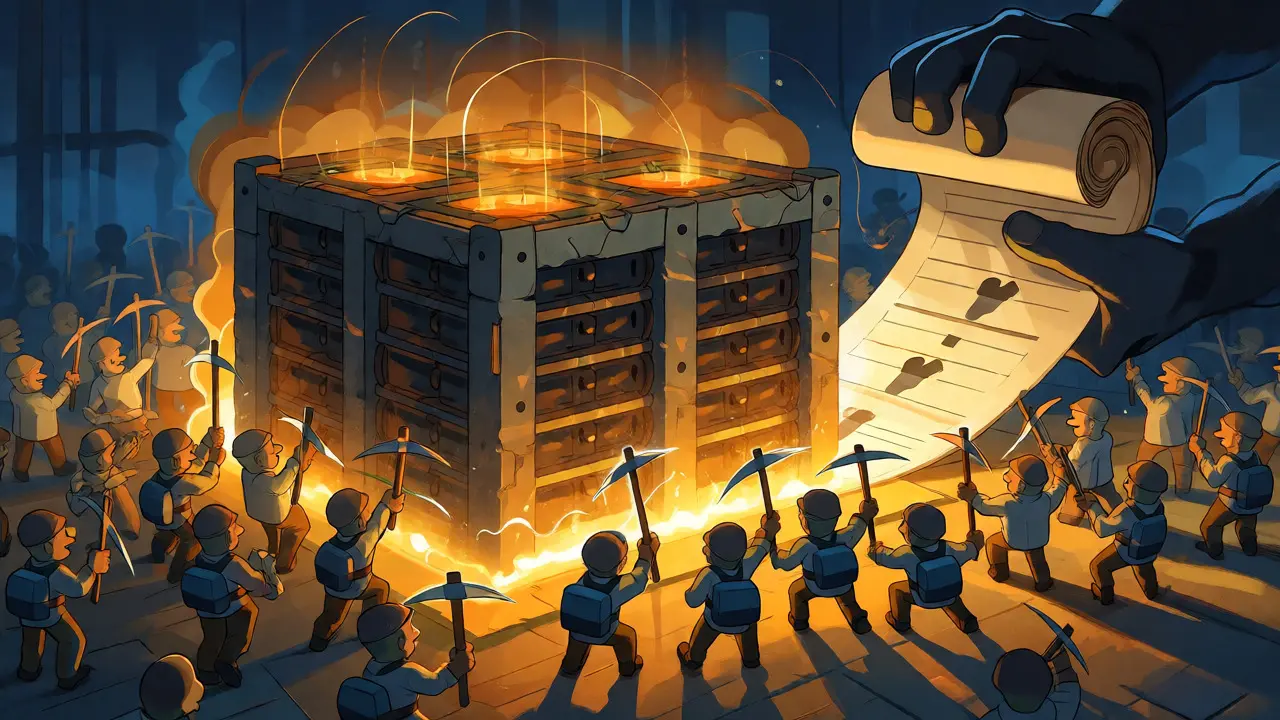
Bitcoin pioneered Proof-of-Work (PoW), a mechanism where miners compete to solve complex mathematical puzzles. This isn't just busywork; it's a cost barrier. To rewrite history and double-spend, an attacker would need to outpace the honest network by solving these puzzles faster than everyone else combined.
As of mid-2024, the global Bitcoin network hashes at approximately 300 exahashes per second. Trying to execute a 51% attack-where you control more than half the mining power-would cost billions in hardware and millions per hour in electricity. For most attackers, the math simply doesn't add up. It’s cheaper to mine honestly than to cheat.
However, this security comes at a price: time. A single block is mined roughly every 10 minutes. For a merchant accepting a large payment, waiting for one confirmation isn't enough. A temporary chain reorganization could reverse that transaction. Standard practice requires 6 confirmations, meaning you wait about 60 minutes for the transaction to be considered secure against deep reorganizations. If you’re integrating Bitcoin payments, don’t skip this step. One user reported losing 0.5 BTC ($32,000) because they accepted a payment after just one confirmation during a network hiccup.
Proof-of-Stake: Putting Skin in the Game
Ethereum switched to Proof-of-Stake (PoS) to reduce energy consumption while maintaining security. Instead of burning electricity, validators lock up their own cryptocurrency as collateral. On Ethereum, this means staking 32 ETH (worth over $100,000). If a validator tries to double-spend or act maliciously, the protocol slashes their stake-they lose their money.
This economic disincentive makes cheating irrational. Why risk losing $100,000 to gain a small profit from a double-spend? PoS also offers much faster finality. While Bitcoin needs an hour, Ethereum achieves true finality in about 12-15 minutes. This involves checking 64 epochs (short periods of time). Developers often misunderstand this. Many DeFi protocols incorrectly treat 15 blocks as final, but if you want absolute certainty, you must wait for the full epoch count.
The downside? Centralization risks. The top 10 staking entities control nearly a third of the network. If these big players collude, they could theoretically manipulate the chain. But again, the financial penalty for doing so is severe. They’d be slashing their own massive holdings.
Delegated Proof-of-Stake: Speed Over Decentralization
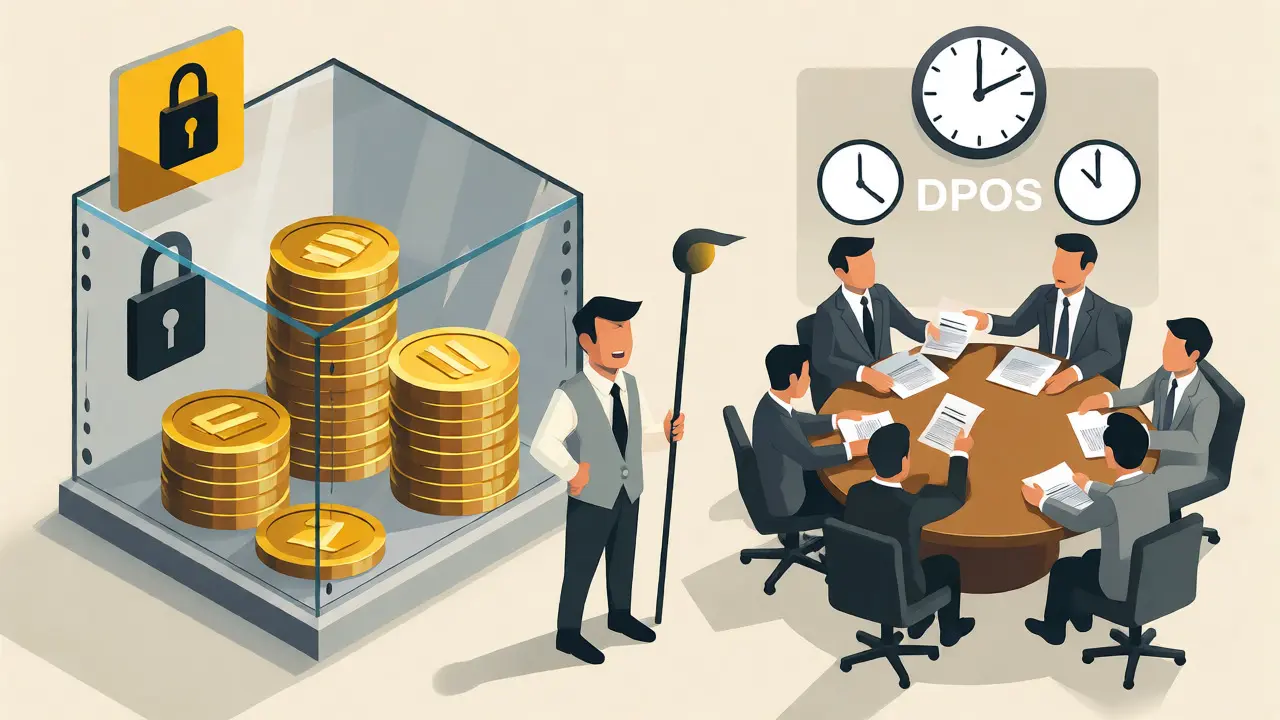
DPoS networks like EOS and TRON take a different approach. Token holders vote for a small number of delegates (block producers) who validate transactions. EOS, for example, uses only 21 active producers. This allows for incredibly fast transactions-up to 2,000 per second-and near-instant finality.
But this speed creates a vulnerability. With only 21 validators, it’s easier for them to coordinate. If a majority of these elected nodes decide to collude, they can rewrite the history and double-spend. Unlike PoW, where you fight thousands of anonymous miners, here you’re dealing with a known group. If they all get bought off or hacked, the network suffers. It’s a trade-off: you get Visa-like speeds, but you trust a small club more than you trust the crowd.
Comparing Finality and Risk
How do you choose which mechanism is best for your needs? It depends on what you value: security, speed, or decentralization. Here’s how they stack up.
| Mechanism | Primary Defense | Time to Finality | Attack Cost/Risk |
|---|---|---|---|
| Proof-of-Work | Computational Power & Energy Cost | ~60 mins (6 confirmations) | $14B+ hardware + $4M/hr electricity |
| Proof-of-Stake | Economic Slashing Penalties | ~12-15 mins (64 epochs) | Loss of 32 ETH stake + reputation |
| Delegated PoS | Voting & Reputation | Seconds to Minutes | Collusion of 21 elected nodes |
Notice the pattern? Higher security generally equals slower finality. Bitcoin is the safest vault, but it’s slow. DPoS is a race car, fast but potentially fragile if the driver team betrays you. PoS sits in the middle, offering a strong balance for most modern applications.
Practical Tips for Developers and Users
If you’re building apps or handling payments, here’s how to avoid getting burned by double-spends:
- Wait for Confirmation: Don’t rely on mempool visibility. Use libraries like BitcoinJS or Web3.js to monitor actual block confirmations. For high-value trades, wait for the recommended threshold (6 blocks for BTC, 64 epochs for ETH).
- Understand Reorgs: Temporary forks happen. If your app shows "Success" too early, users might see their funds vanish when the fork resolves. Always display a "Pending" state until finality is reached.
- Check Network Health: During congestion, fees spike and confirmation times vary. Dynamic fee estimation helps, but never assume instant settlement.
- Use Checkpoints: Some chains allow checkpoints-blocks that are hard-coded as final. This prevents deep reorganizations beyond a certain point, adding extra safety for exchanges.
The Future: Hybrid Models and Regulation
We’re seeing a shift toward hybrid consensus models. Projects like Decred combine PoW and PoS to get the best of both worlds: the security of mining and the governance of staking. Research suggests these hybrids offer better resistance to attacks. Meanwhile, regulators are catching up. The EU’s MiCA regulation now explicitly requires robust consensus mechanisms to prevent double-spending for crypto service providers. This means compliance isn’t just about KYC; it’s about technical architecture.
By 2027, analysts predict most major networks will use some form of hybrid consensus. The goal remains the same: ensuring that when you send digital value, it leaves your wallet and enters the recipient’s, without any sneaky copies appearing elsewhere.
What is a double-spend attack?
A double-spend attack occurs when a user attempts to spend the same digital currency unit twice. Because digital files can be copied, without a consensus mechanism to order transactions, a user could pay two different people with the same coins. Blockchains prevent this by validating that the sender has sufficient balance and hasn't already spent those specific units.
Why does Bitcoin require 6 confirmations?
Six confirmations provide a high level of security against chain reorganizations. While a transaction might appear valid after 1 block, a deeper fork could reverse it. Waiting for 6 blocks (approx. 60 minutes) ensures that the probability of a successful double-spend attack becomes negligible due to the cumulative computational work added to the chain.
Is Proof-of-Stake less secure than Proof-of-Work?
Not necessarily less secure, but differently secure. PoW relies on physical resource expenditure (energy/hardware), making attacks expensive. PoS relies on economic penalties (slashing stakes). An attacker in PoS must risk losing their own capital, which makes cheating financially irrational unless the reward outweighs the potential loss of the entire stake.
Can DPoS networks suffer from double-spending?
Yes, though it’s rare. Because DPoS uses a small number of elected validators (e.g., 21 in EOS), there is a higher risk of collusion. If a majority of these validators agree to rewrite the ledger, they can double-spend. This is mitigated by community voting and slashing penalties, but the attack surface is smaller than in PoW networks.
How long does it take for Ethereum transactions to be final?
Ethereum achieves finality in approximately 12-15 minutes. This process involves 64 epochs. While transactions may appear confirmed sooner, waiting for the full finality window ensures that the transaction cannot be reversed by a chain reorganization.
 Finance