
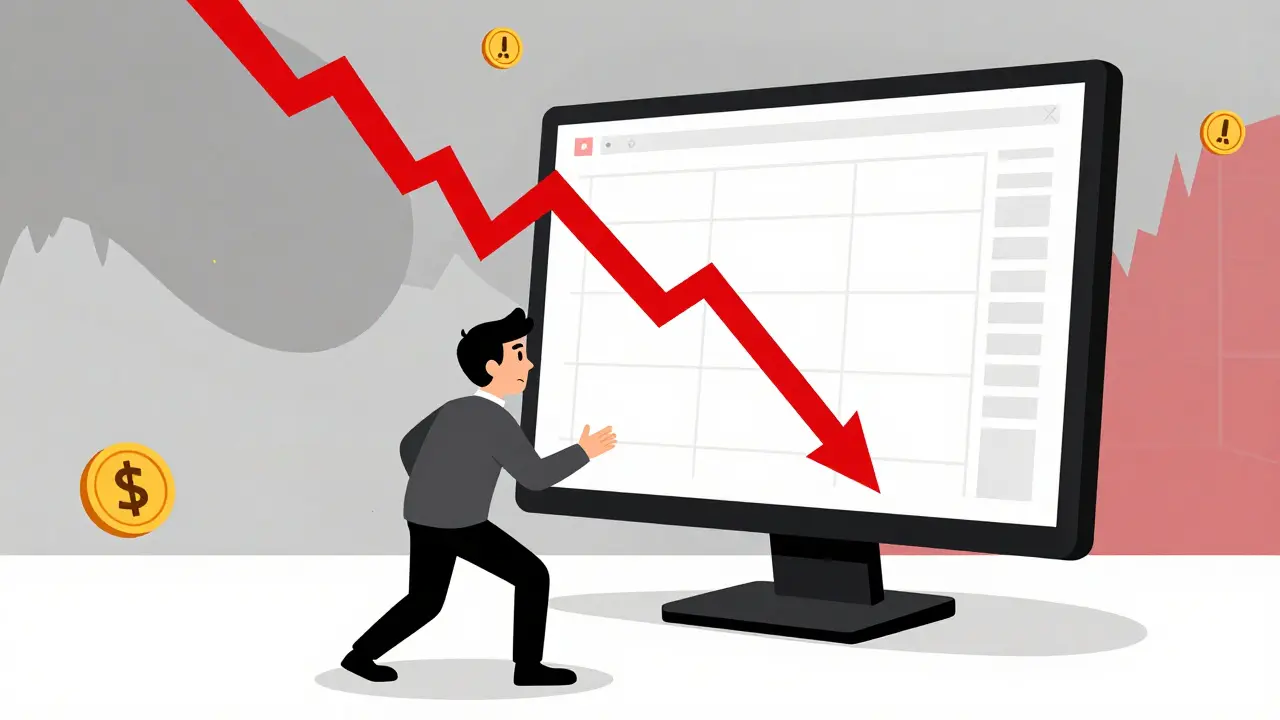
Imagine watching your portfolio drop by 40% in a single afternoon. It happens more often than you think in the world of cryptocurrency. Unlike traditional stocks that close at market hours, Crypto Trading is a 24/7 global market for digital assets like Bitcoin and Ethereum never sleeps. This constant activity brings opportunity, but it also exposes you to risks that can wipe out your capital faster than you can react. The difference between surviving and thriving isn't just about picking the right coin; it's about how well you manage risk.
Risk management isn't a boring checklist. It is the shield that keeps your account alive when the market turns violent. Without it, even the best trade ideas can lead to disaster. With it, you stay in the game long enough to let compounding work in your favor. Let’s look at the practical principles that professional traders use to protect their money.
The Core Framework: Identify, Analyze, and Act
Effective risk management follows a logical five-step process. You don’t guess; you plan. First, you identify the risks. Are you exposed to a specific project failing? Is the broader market trending down? Second, you analyze the potential impact. If this trade goes wrong, how much do I lose? Third, you assess severity. Is this a minor fluctuation or a catastrophic event?
Fourth, you treat the risk. This means taking action to avoid, reduce, transfer, or accept the danger. Finally, you monitor and review. Markets change, so your defenses must adapt. For example, a strategy that worked during a bull market might fail in a bear market. Sticking to this framework removes emotion from the equation. It forces you to make decisions based on data, not fear or greed.
Position Sizing: The 1-2% Rule
The most critical tool in your arsenal is position sizing. This determines how much capital you put into any single trade. Many beginners fall into the trap of going "all-in" on a promising altcoin. Professionals do the opposite. They limit their exposure.
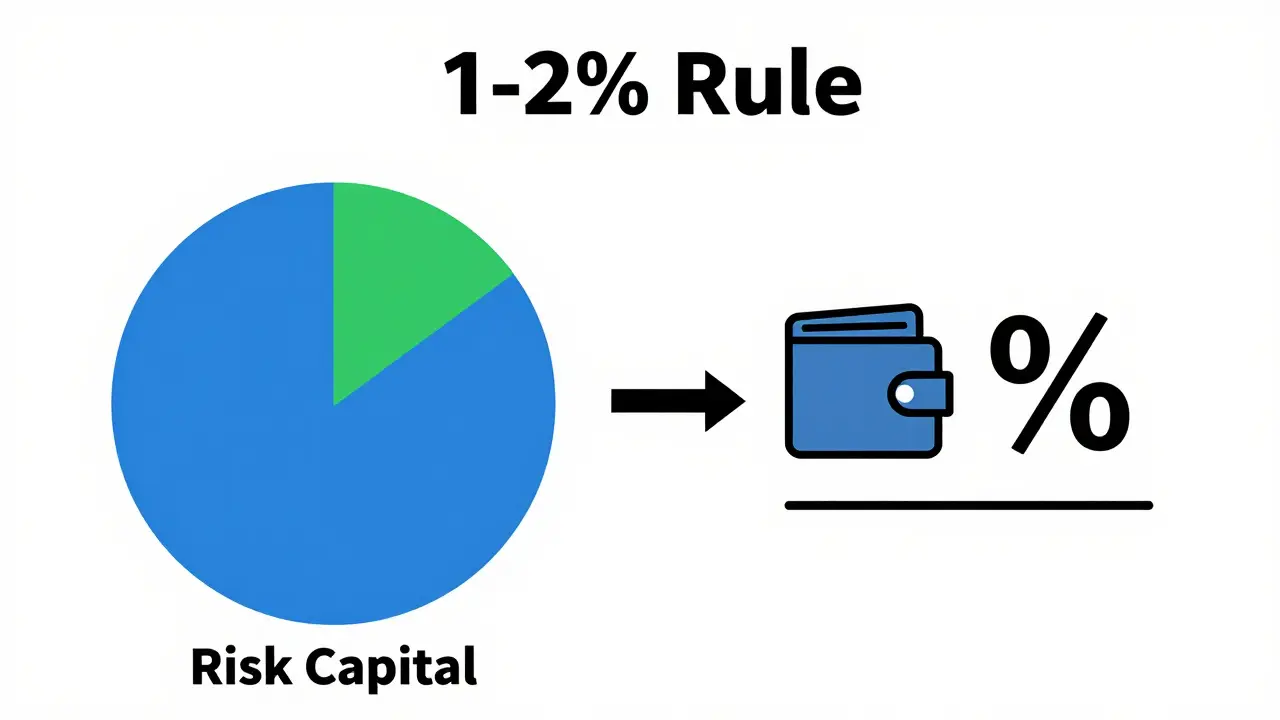
The golden rule is simple: never risk more than 1-2% of your total account value on a single trade. Here is how you calculate it:
- Account Size: Your total trading capital.
- Risk Per Trade: Usually 1% or 2%.
- Stop-Loss Distance: The percentage drop from your entry price to your exit point.
The formula looks like this: Position size = (Account size × Risk per trade) ÷ Stop-loss distance. If you have $10,000 and want to risk 1%, you are risking $100. If your stop-loss is set 5% away from your entry price, your position size should be $2,000 ($100 ÷ 0.05). This ensures that if the trade hits your stop-loss, you only lose $100. You survive the loss and keep 99% of your capital intact for the next opportunity.
Stop-Loss Orders: Your Automatic Safety Net
A Stop-Loss Order is an automated instruction to sell an asset when it reaches a specific price acts as your insurance policy. Without one, you are gambling. With one, you are trading. Human psychology is flawed. When a trade goes against you, you tend to hold on, hoping it will come back. This hope often leads to massive losses.
Set your stop-loss before you enter the trade. Place it at strategic technical support levels, not arbitrary round numbers. For volatile assets, consider using trailing stops. These adjust upward as the price rises, locking in profits while protecting against sudden reversals. Remember, a stop-loss doesn't prevent losses; it limits them. That limitation is what allows you to recover and grow over time.
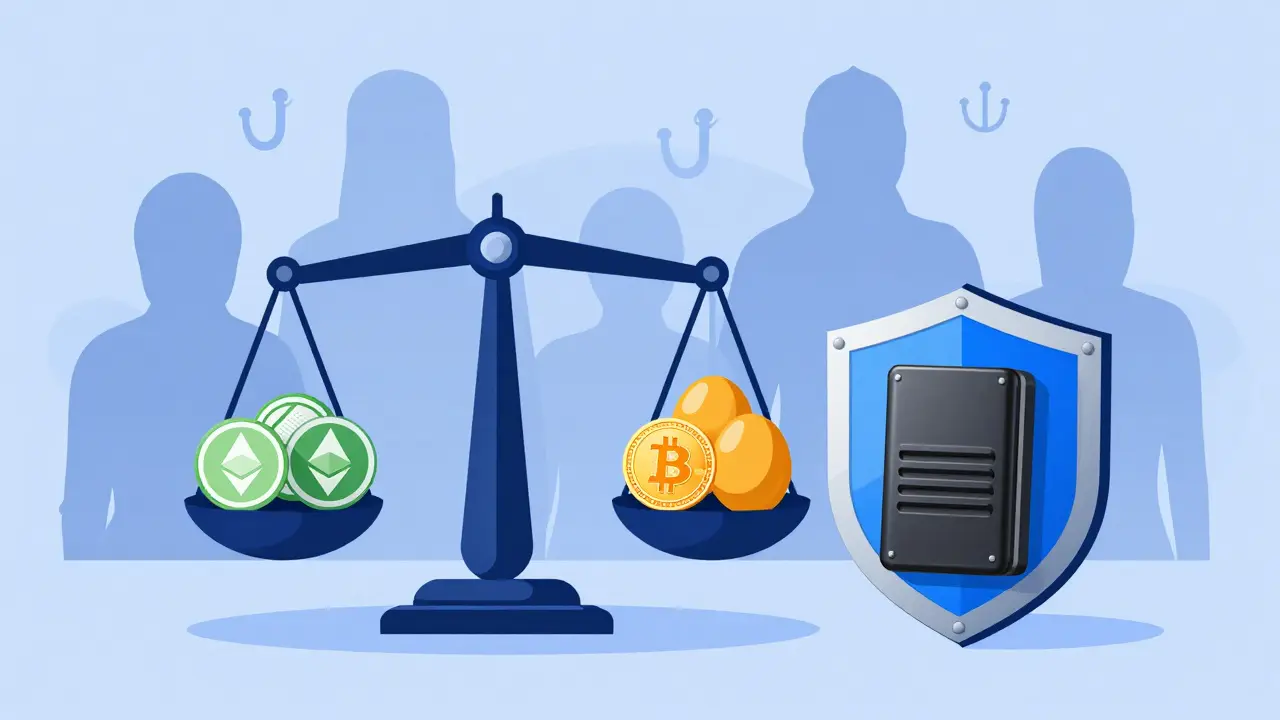
Diversification: Don't Put All Eggs in One Basket
Portfolio Diversification is the practice of spreading investments across different assets to reduce risk is non-negotiable in crypto. The correlation between different cryptocurrencies can be high, but it isn't perfect. By spreading your capital, you reduce the impact of any single failure.
| Asset Class | Allocation Range | Risk Level |
|---|---|---|
| Bitcoin & Ethereum | 50-70% | Lower (Relative) |
| Major Altcoins | 20-30% | Moderate |
| Small-Cap / High-Risk | 1-5% | High |
| Stablecoins / Cash | 5-10% | Low |
Never allocate more than 5-10% to any single cryptocurrency. Small-cap tokens are particularly dangerous. Limit these to 1-2% of your total portfolio. If they go to zero, it hurts, but it doesn't destroy your account. If they moon, you still have upside. This balance protects you from black swan events while keeping you exposed to growth opportunities.
Understanding Specific Crypto Risks
Cryptocurrency markets carry unique dangers that traditional finance does not. Understanding these helps you prepare better.
- Market Volatility: Bitcoin can swing 4-5% daily. Major stock indices typically move 1-2%. Prepare for larger swings.
- Technical Risks: Smart contract bugs or protocol failures can render an asset worthless overnight. Always research the code and team behind a project.
- Operational Security: Exchange hacks and phishing attacks are real threats. Over $3.8 billion was stolen from exchanges in 2022 alone. Use hardware wallets like Ledger or Trezor for long-term storage.
- Regulatory Changes: Government bans or new laws can crash prices instantly. Stay informed about global regulatory trends, such as the EU's MiCA regulation.
Unlike bank accounts, crypto holdings have no FDIC insurance. You are solely responsible for your security. Treat your private keys like cash-keep them safe, and never share them.
Leverage: The Silent Account Killer
Leverage allows you to borrow money to increase your position size. It sounds attractive, but it is incredibly dangerous. A 10x leverage means a 10% move against you liquidates your entire position. Most experienced traders warn against using leverage above 3:1. For beginners, the advice is simpler: avoid it entirely until you have consistent profitability without it. FOMO (fear of missing out) drives many to over-leverage, leading to total account loss. Stick to spot trading until you master risk management.
Psychological Discipline: Mastering Emotions
Your biggest enemy isn't the market; it's yourself. Fear and greed drive poor decisions. During euphoric bull runs, you might ignore stop-losses, thinking prices will only go up. During crashes, panic selling locks in losses. Successful traders develop routines. They stick to their plans regardless of market noise. Join communities like r/CryptoCurrency or TradingView to learn from others' mistakes. But remember, every trader's journey is personal. Build your own discipline through practice and journaling.
Tools for Better Risk Management
You don't need complex software to start. Basic tools suffice:
- Exchange Features: Use built-in stop-loss and take-profit orders.
- Calculators: Use online position size calculators to remove math errors.
- Tracking Apps: Tools like CoinTracker help monitor portfolio performance.
- Hardware Wallets: Essential for securing large amounts off-exchange.
As the market matures, AI-driven risk assessment tools are emerging. However, understanding the fundamentals remains crucial. No algorithm replaces sound judgment.
What is the 1% rule in crypto trading?
The 1% rule states that you should never risk more than 1% of your total trading capital on any single trade. This protects your account from significant drawdowns and ensures longevity in the market.
How do I calculate my position size?
Use the formula: Position Size = (Account Balance x Risk Percentage) / Stop-Loss Distance. For example, with a $10,000 account, 1% risk ($100), and a 5% stop-loss, your position size is $2,000.
Is leverage safe for beginners?
No, leverage is highly risky for beginners. It amplifies both gains and losses. A small adverse price movement can liquidate your entire position. It is recommended to avoid leverage until you have proven consistency in spot trading.
What is the best way to store crypto safely?
For long-term holdings, use a hardware wallet like Ledger or Trezor. These devices store your private keys offline, protecting them from online hacks and malware. Never leave large amounts on exchanges.
How does diversification help in crypto?
Diversification spreads risk across multiple assets. If one coin fails, others may perform well, balancing your portfolio. Aim for 50-70% in major coins like Bitcoin and Ethereum, and limit high-risk assets to small percentages.
What are smart contract risks?
Smart contracts are self-executing code on blockchains. Bugs or vulnerabilities in this code can be exploited by hackers, leading to total loss of funds. Always invest in projects with audited and reputable codebases.
Should I use stop-loss orders?
Yes, always use stop-loss orders. They automate your exit strategy, preventing emotional decision-making and limiting losses. Set them at technical support levels rather than arbitrary prices.
How does regulatory news affect crypto prices?
Regulatory announcements can cause immediate and drastic price changes. Bans or strict regulations can crash markets, while favorable laws can boost prices. Stay updated on global regulatory developments to anticipate these shifts.
 Finance
![What is [Fake] Test (TST) Coin? Warning and Analysis](/uploads/2026/04/thumbnail-what-is-fake-test-tst-coin-warning-and-analysis.webp)