
The era of regulatory guesswork in European cryptocurrency markets is over. If you are running or planning to launch a Crypto-Asset Service Provider (CASP) that provides services like custody, exchange, or trading platforms for digital assets within the European Union, the rules have fundamentally changed. The Markets in Crypto-Assets Regulation, commonly known as MiCA Markets in Crypto-Assets Regulation that is the comprehensive EU legal framework governing crypto-assets and service providers, is now fully in force. For businesses, this means a single license can unlock access to all 27 member states. But it also means strict capital requirements, rigorous anti-money laundering protocols, and new environmental reporting duties.
You might be wondering if the hassle is worth it. The short answer is yes, if you plan to operate at scale. Before MiCA, navigating 27 different national regimes cost firms an average of €350,000 per jurisdiction. Today, that fragmentation is gone. However, the bar for entry has been raised significantly. This guide breaks down exactly what you need to know to get licensed, where to apply, and how to survive the compliance checks in 2026.
Who Needs a CASP License?
Not every person holding Bitcoin needs a license. MiCA specifically targets "legal persons or other undertakings" whose business is providing crypto-asset services on a professional basis. If you fall into any of these categories, you are likely a CASP:
- Custody and Administration: Holding private keys or managing wallets for third parties.
- Trading Platforms: Operating venues where crypto-assets are traded against each other or fiat currencies.
- Exchange Services: Converting crypto-assets to fiat money (like EUR or USD) or vice versa.
- Order Execution: Executing buy/sell orders on behalf of clients.
- Placing Crypto-Assets: Issuing or placing tokens in the market.
- Advice: Providing individualized recommendations on crypto-investments.
If your activity fits here, you cannot operate without authorization from a National Competent Authority (NCA). Personal investors or small-scale traders are exempt, but once you start doing this "on a professional basis," the regulator takes notice.
The Golden Ticket: Passporting Rights
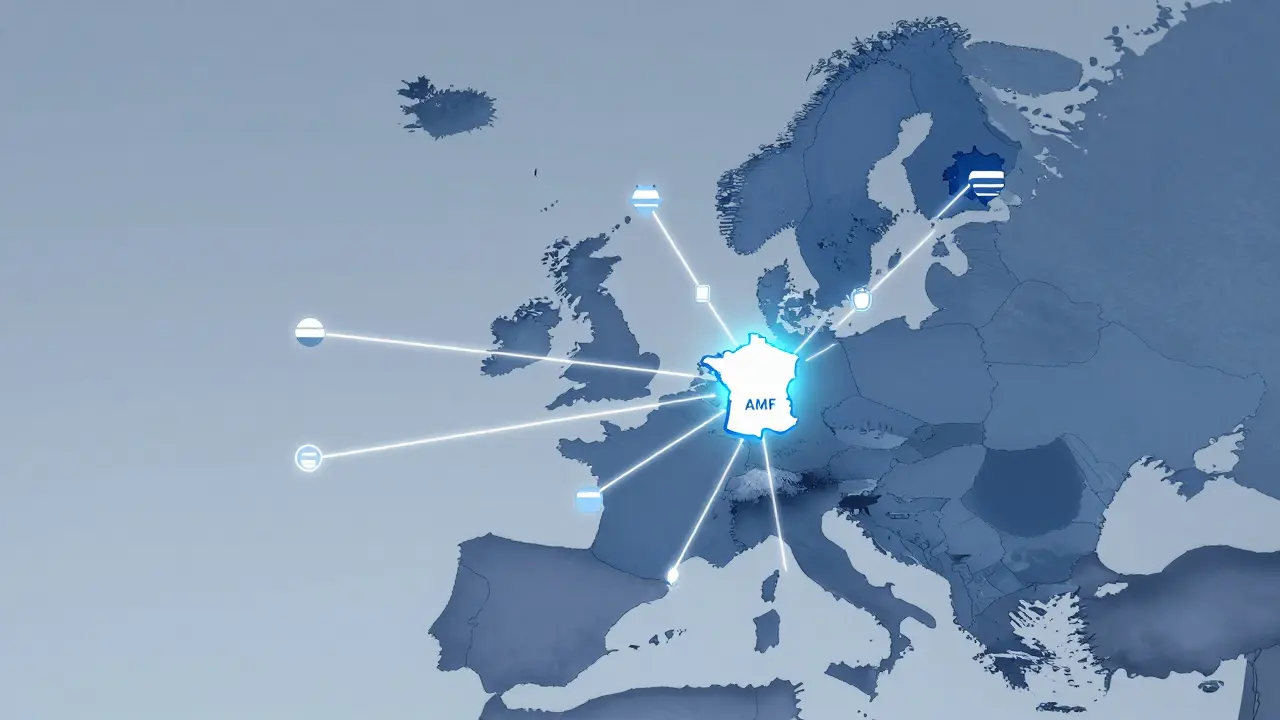
The biggest advantage of MiCA is the passporting mechanism. In the past, a French company wanting to serve German customers needed a separate German license. Now, one license covers the whole bloc.
Here is how it works in practice:
- Choose Your Home State: You must establish a registered office in one EU member state. This becomes your "home country" for regulatory purposes.
- Get Authorized: Apply to that country’s NCA (e.g., AMF in France, BaFin in Germany).
- Notify ESMA: Once approved, the home authority notifies the European Securities and Markets Authority (ESMA).
- Expand: You can then provide services in any other EU country via "right of establishment" (opening a branch) or "cross-border services" (serving clients remotely).
This system reduced compliance costs by an estimated 40-60% compared to the pre-MiCA landscape. Kraken, for example, secured authorization through France’s AMF in March 2025 and expanded to all EU markets within 30 days. That speed was impossible just two years ago.
Capital Requirements and Financial Health
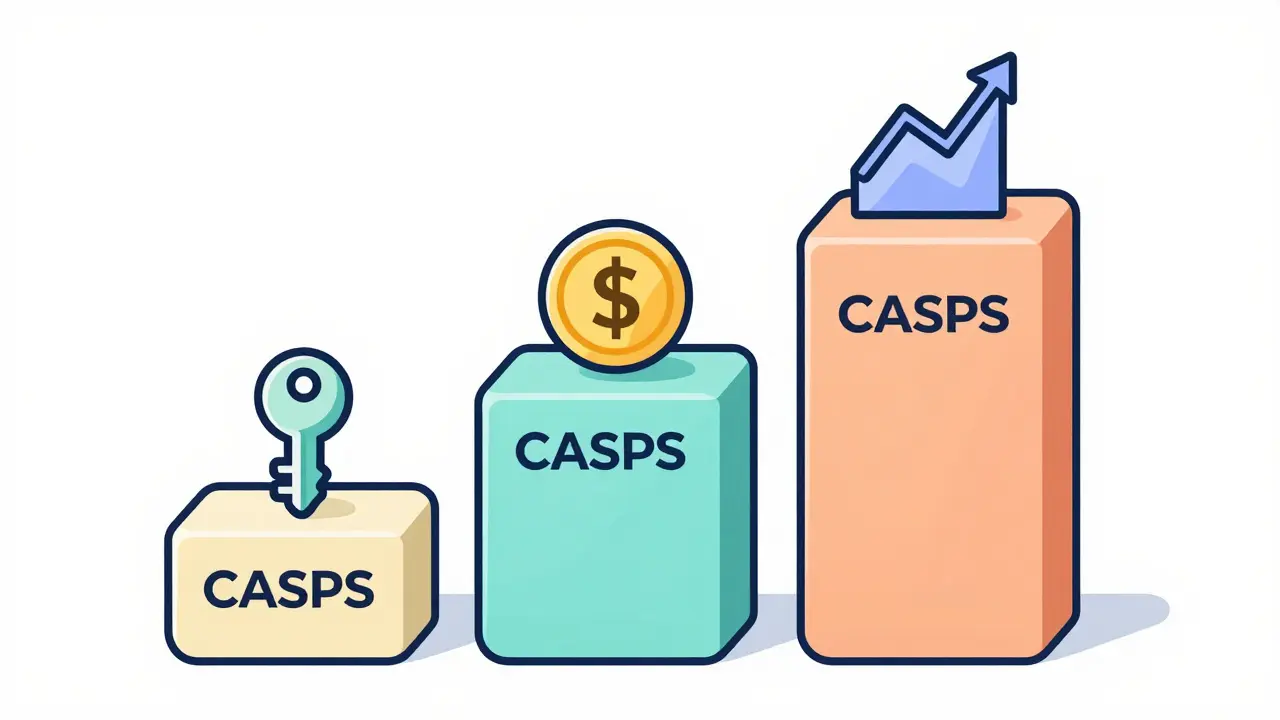
Regulators want to ensure you can absorb shocks. MiCA sets minimum initial operational capital levels based on the services you offer. These are not suggestions; they are hard limits defined in Article 52 of the regulation.
| Service Type | Minimum Capital Requirement |
|---|---|
| Custody and Administration | €125,000 |
| Exchange Services (Crypto-to-Fiat) | €150,000 |
| Operating Trading Platforms | €730,000 |
Note that these figures are just the starting line. If you run multiple services, the requirements stack. Additionally, you must maintain adequate ongoing capital to cover risks. Regulators will scrutinize your liquidity plans and stress-test scenarios during the application process.
Choosing the Right Jurisdiction
While the license is pan-European, the experience of getting it depends heavily on your chosen home state. Some NCAs are faster, more predictable, and better staffed than others.
As of mid-2026, three jurisdictions stand out for their processing volume and clarity:
- France (AMF): Known for clear guidance. By July 2025, they had processed 42 applications with 15 approvals. They tend to favor well-capitalized firms with robust governance.
- Germany (BaFin): Highly respected for detailed documentation. Users rated their guidance 4.5/5 in surveys. Processing times average around 6 months, which is relatively fast.
- Lithuania (Bank of Lithuania): A popular choice for startups due to lower overhead costs, though processing can take longer (up to 9 months in some cases).
Avoid jurisdictions with inconsistent interpretations. Malta’s MFSA, for instance, received low marks (2.8/5) for clarity in recent KPMG surveys. Choosing the wrong regulator can delay your launch by months or even result in rejection due to ambiguous compliance gaps.
The "Significant CASP" Trap
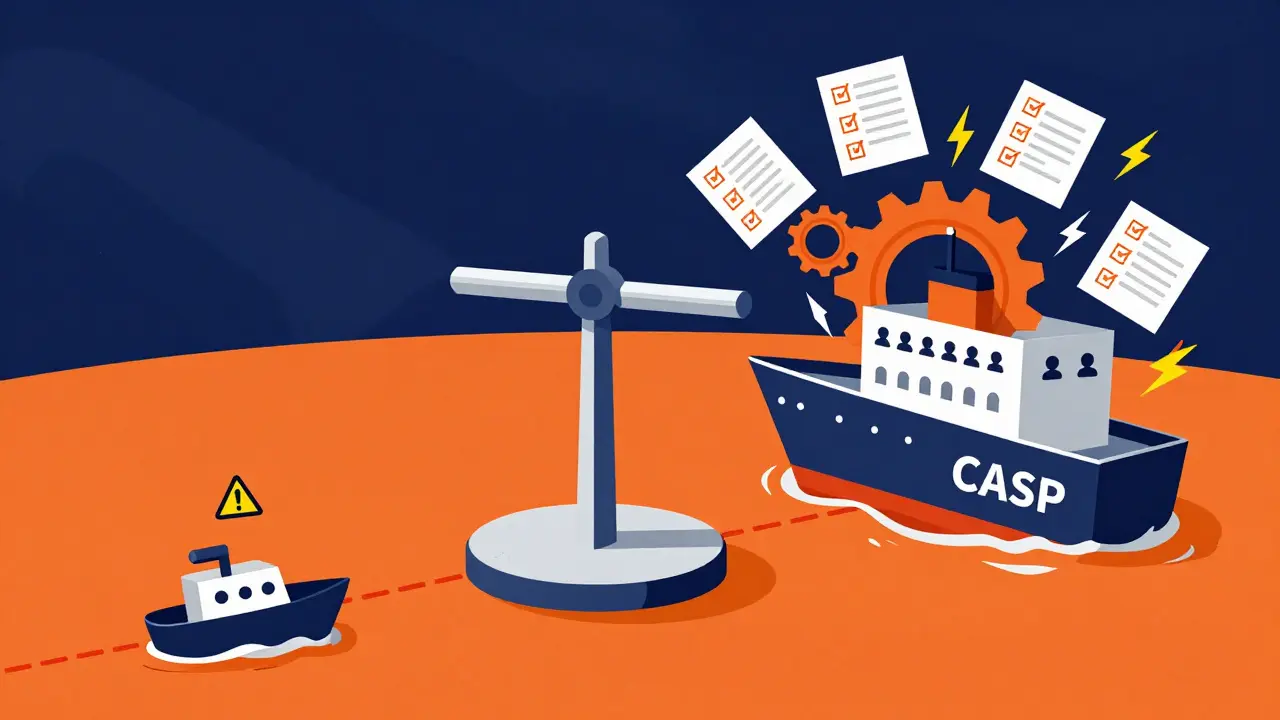
There is a tiered supervision model in MiCA. If your platform serves more than 15 million EU residents annually, you are classified as a "significant CASP" (sCASP). This status brings heightened scrutiny.
sCASPs face additional burdens:
- Quarterly Stress Testing: Regular simulations of market crashes or cyberattacks.
- Mandatory Third-Party Audits: Independent verification of your operations.
- Real-Time Transaction Monitoring: Advanced systems to detect suspicious activity instantly.
- Direct ESMA Oversight: Closer coordination with EU-level regulators.
For most startups, staying below the 15-million-user threshold is a strategic goal during the first few years. Crossing it triggers a massive increase in compliance costs and operational complexity.
Environmental Impact Reporting
This is one of the most controversial aspects of MiCA. You must disclose energy consumption metrics for the crypto-assets you support. The European Commission requires this using the EU Blockchain Observatory methodology.
Critics argue this stifles innovation, particularly for proof-of-work assets like Bitcoin. Professor Angela Walch of the University of Luxembourg called it a "green mirage" in her 2025 paper, noting it ignores advancements in proof-of-stake efficiency. However, the rule is law. You need to build a function dedicated to calculating and publishing these metrics. Mid-sized exchanges estimate annual compliance costs for this alone between €200,000 and €500,000.
Application Process: What to Expect
Getting licensed is not a quick fix. Deloitte’s 2025 report shows firms typically need 9-12 months for full preparation. Here is the realistic timeline:
- Preparation (Months 1-6): Hire compliance staff (5-7 FTEs recommended), set up EU management structures, and implement AML/KYC systems meeting EBA standards.
- Documentation (Months 6-9): Draft business plans, risk frameworks, and environmental reports. Ensure you have proof of capital availability.
- Submission (Month 9-10): Submit to your chosen NCA. Expect immediate requests for clarification.
- Review (Months 10-15): Regulators review your application. Average processing time ranges from 6 months (Germany) to 11 months (Estonia).
- Authorization (Month 15+): Receive your license and begin operations.
Total costs range from €750,000 for basic custody to €2.5 million for full trading platforms. Do not underestimate the learning curve. 73% of applicants underestimated organizational complexity in ESMA’s 2024 survey.
Common Pitfalls to Avoid
Many applications fail not because the business is bad, but because the paperwork is weak. Watch out for these errors:
- Non-EU Management: You must have at least one director resident in the EU. Remote directors from offshore havens are rejected.
- Weak AML Protocols: Generic anti-money laundering policies are insufficient. You need specific, tested procedures compliant with the 6th AML Directive.
- Inadequate Security: Data security must meet NIS2 Directive standards. Basic firewalls won’t cut it.
- Poor Environmental Data: Guessing energy metrics leads to rejection. Use verified methodologies.
Future Outlook: MiCA 2.0 and Beyond
Regulation evolves. The European Commission proposed MiCA 2.0 in June 2025 to address decentralized finance (DeFi) and NFTs using a "functional approach." While DeFi protocols currently struggle with MiCA’s requirement for identifiable legal entities, future updates may create pathways for them.
Additionally, the Anti-Money Laundering Authority (AMLA) became operational in June 2026, taking direct supervision of cross-border CASPs. This centralizes oversight and reduces fragmentation further. Keep an eye on real-time transaction monitoring mandates starting January 2026, which will require significant tech investments.
How much does it cost to get a CASP license in the EU?
Total authorization costs range from €750,000 for basic custody services to €2.5 million for full trading platform authorization. This includes legal fees, compliance staffing, technology upgrades, and regulatory filing fees.
Can I operate a crypto exchange in the EU without a physical office?
No. MiCA requires CASPs to establish a registered office within an EU member state and employ at least one director resident in that country. Purely remote or offshore structures are not permitted.
Which EU country is best for applying for a MiCA license?
France (AMF) and Germany (BaFin) are currently top choices due to their clear guidance and faster processing times (around 6 months). Lithuania is also popular for cost reasons but may have longer wait times.
What happens if I exceed 15 million users?
You become a "significant CASP" (sCASP). This triggers stricter rules, including quarterly stress tests, mandatory third-party audits, real-time transaction monitoring, and closer supervision by ESMA.
Does MiCA cover Decentralized Finance (DeFi)?
Currently, MiCA struggles with DeFi because it requires identifiable legal entities. Most DeFi protocols avoid EU entry due to this. However, the proposed MiCA 2.0 aims to address this gap with a functional regulatory approach.
 Finance