


You send money from London to Manila, and it takes three days. The bank charges you a hidden spread on the exchange rate that eats up 4% of your hard-earned cash. By the time the recipient sees the funds, they’ve lost significant value to inefficiency. This isn't just an annoyance; for businesses operating internationally, it’s a leak in their financial hull. In 2026, cross-border crypto payment alternatives are no longer just for tech enthusiasts or speculators. They have matured into a robust infrastructure capable of settling transactions in minutes rather than days, often at a fraction of the cost of traditional banking rails.
The core problem with legacy systems like SWIFT is structural. Money doesn’t actually move instantly; messages do. Banks then settle these messages through a network of correspondent accounts, each adding fees and delays. Stablecoins-digital currencies pegged to fiat assets like the US Dollar or Euro-bypass this middleman layer. By using blockchain technology, you can achieve settlement finality in under ten minutes. But how does this work in practice? And more importantly, is it safe enough for your business operations today?
Why Traditional Banking Fails Cross-Border Needs
Let’s look at the numbers. According to the World Bank’s recent data, the global average cost of sending remittances remains stubbornly high at around 6.4%. For many developing nations, which rely heavily on inbound flows, this tax on poverty is unsustainable. Traditional banks justify these costs through compliance checks, multiple intermediary banks, and opaque foreign exchange spreads. You rarely know exactly what rate you’re getting until the money lands.
In contrast, blockchain-based solutions offer transparency. When you use a stablecoin transfer, the exchange rate is visible upfront. There are no hidden correspondent bank fees because there are no correspondent banks. The transaction goes directly from sender to receiver, mediated only by the blockchain network and liquidity providers. This shift changes the economic model entirely. Instead of paying for a network of relationships, you pay for code execution and liquidity access.
Speed is another critical factor. A standard wire transfer might take 2-5 business days. If you send on Friday afternoon, don’t expect the money to arrive before Tuesday. Crypto networks operate 24/7/365. Whether it’s Christmas morning or 3 AM on a Wednesday, if the network is live, your transaction processes. For exporters needing to lock in currency rates or suppliers requiring immediate payment confirmation, this immediacy is a competitive advantage.
The Stablecoin Sandwich: How It Works
The most common method for moving value across borders without holding volatile crypto assets is called the "stablecoin sandwich." Don’t let the name confuse you; it’s a straightforward three-step process that minimizes risk while maximizing efficiency.
- Fiat-to-Stablecoin Conversion: You deposit local currency (e.g., GBP) into a regulated platform. The platform converts this immediately into a stablecoin like USDC or EURC.
- Blockchain Transfer: The stablecoin is sent over a blockchain network (like Ethereum, Solana, or Polygon) to the recipient’s wallet or the destination country’s liquidity provider. This step takes seconds to minutes and costs cents.
- Stablecoin-to-Fiat Off-Ramp: The receiving partner converts the stablecoin back into the local currency (e.g., PHP) and deposits it into the recipient’s local bank account.
This structure allows you to avoid holding Bitcoin or Ethereum, whose prices can swing wildly during transit. By sticking to stablecoins pegged 1:1 to major currencies, you isolate yourself from market volatility. The primary risks shift from price fluctuation to technical execution and regulatory compliance.
For example, a UK-based importer buying goods from Vietnam might use this method. They convert pounds to USDC, send it via the Solana network for near-instant settlement, and have their Vietnamese supplier receive VND in their local bank account within an hour. Compare this to the typical five-day wait and 3% fee hit from a traditional bank, and the savings become obvious.
Comparing Infrastructure: Speed, Cost, and Reliability
Not all blockchains are created equal. Choosing the right network depends on your volume and speed requirements. Here is how the leading options stack up against traditional banking metrics.
| Metric | Traditional Wire (SWIFT) | Stablecoin on Ethereum | Stablecoin on Solana/Polygon |
|---|---|---|---|
| Average Settlement Time | 2-5 Business Days | 10-15 Minutes | 2-5 Seconds |
| Average Transaction Fee | $25-$50 + FX Spread (2-4%) | $1-$5 + Network Gas | <$0.01 + Network Gas |
| Availability | Banking Hours Only | 24/7 | 24/7 |
| Transparency | Low (Hidden Intermediaries) | High (On-chain tracking) | High (On-chain tracking) |
| Regulatory Certainty | Very High | Medium-High (Varies by Jurisdiction) | Medium-High (Varies by Jurisdiction) |
As the table shows, the cost difference is stark. While Ethereum offers high security, its gas fees can spike during congestion. Layer-2 solutions or alternative chains like Solana provide cheaper, faster alternatives but require careful selection of compatible wallets and exchanges. For high-volume B2B payments, the slight increase in operational complexity is often worth the massive reduction in fees.

Navigating Regulatory Landscapes
If you’re thinking about switching to crypto rails, regulation is your biggest hurdle. Unlike traditional banking, where rules are standardized globally via SWIFT standards, crypto regulations are fragmented. As of mid-2026, over 35 countries have distinct frameworks for stablecoins.
In the European Union, the Markets in Crypto-Assets (MiCA) regulation has provided clarity. It requires issuers to hold fully reserved assets and undergo regular audits. This has boosted confidence among institutional players. In the US, the GENIUS Act and subsequent guidance from the SEC have clarified the status of payment stablecoins, distinguishing them from securities. However, other regions remain gray areas. Countries like Nigeria and India have imposed restrictions on crypto usage for payments, forcing users to navigate complex compliance landscapes.
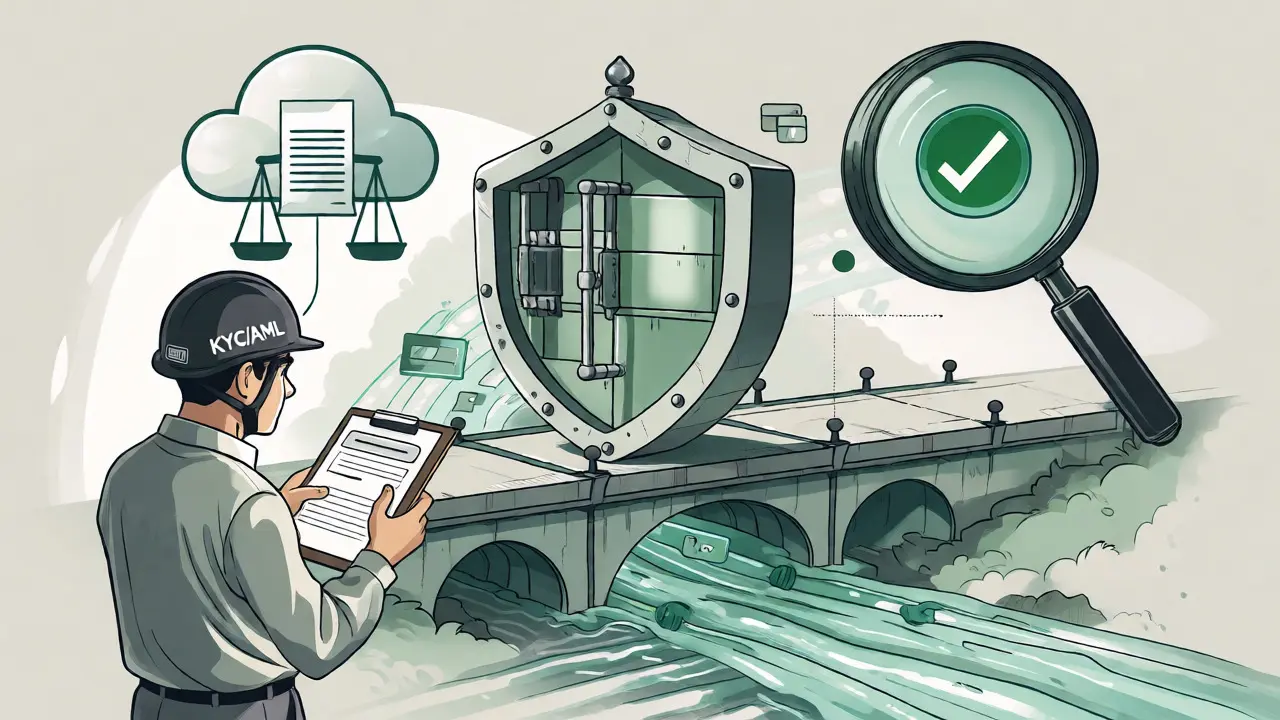
Before adopting these tools, verify the legal status in both the origin and destination countries. Using a regulated service provider helps mitigate this risk. Look for platforms licensed by reputable bodies such as the UK’s Financial Conduct Authority (FCA), Germany’s BaFin, or Singapore’s MAS. These licenses ensure that the provider adheres to anti-money laundering (AML) and know-your-customer (KYC) standards, protecting you from potential freezes or seizures.
Risks You Must Manage
It’s not all smooth sailing. Moving away from insured bank deposits introduces new types of risk. The first is de-pegging. While rare for major stablecoins like USDC, there have been instances where the price deviated slightly from $1 due to liquidity crunches or issuer solvency concerns. Always diversify your holdings across different issuers if you hold balances for extended periods.
Secondly, consider the "last-mile" problem. Getting money out of crypto and into a local bank account in emerging markets can be tricky. Not every bank accepts transfers from crypto exchanges. Some may flag incoming wires from unknown entities as suspicious, causing delays. Building relationships with local off-ramp partners who understand the flow is crucial. Major providers now integrate directly with local banking APIs to smooth this process, but gaps remain in less developed financial ecosystems.
Finally, there is the risk of human error. Sending crypto to the wrong address is irreversible. Unlike a wire transfer, which can sometimes be recalled, a mistaken blockchain transaction is gone forever. Implement strict verification protocols for wallet addresses and start with small test transactions when setting up new corridors.
Who Should Make the Switch?
Cross-border crypto payments aren’t a one-size-fits-all solution. They shine brightest for specific user groups:
- Freelancers and Gig Workers: If you earn in USD/EUR but live in a country with weak banking infrastructure, stablecoins allow you to retain value and withdraw locally when needed, avoiding double conversion fees.
- E-commerce Merchants: Accepting crypto payments reduces chargeback fraud and speeds up capital turnover. Platforms like PayPal and Shopify now offer integrated crypto checkout options that automatically convert sales to fiat, removing volatility risk for the seller.
- Importers and Exporters: Businesses dealing with suppliers in Asia, Latin America, or Africa benefit most from the speed and cost savings. The ability to settle invoices instantly improves cash flow management.
- Remittance Senders: Families sending money home for daily expenses save significantly on fees. Even a 2% saving adds up substantially over years of monthly transfers.
Conversely, large corporations with deep treasury departments and existing SWIFT integrations may find the transition disruptive unless volumes justify the integration costs. For them, hybrid models-using crypto for urgent, smaller payments and SWIFT for bulk settlements-are becoming common.
Getting Started: A Practical Checklist
Ready to try it out? Follow these steps to minimize friction:
- Choose a Regulated Provider: Select an exchange or payment processor licensed in your jurisdiction (e.g., Coinbase, Kraken, or specialized B2B firms like BVNK).
- Complete KYC Verification: Expect identity checks similar to opening a new bank account. Have your passport and proof of address ready.
- Select the Right Stablecoin: Use USDC for broad acceptance or local currency-stablecoins (like EURC) if available and preferred for regulatory reasons.
- Test with a Small Amount: Send $50 to your own wallet or a trusted friend’s account in the target country. Verify the time taken and any fees deducted.
- Monitor Exchange Rates: Even though stablecoins are pegged, the fiat-to-stablecoin conversion rate includes a spread. Shop around for the best entry/exit points.
- Keep Records: Save transaction hashes and receipts for tax purposes. Crypto transactions are taxable events in many jurisdictions.
By taking these measured steps, you can dip your toes into the water without risking your entire financial operation. The technology is ready; the question is whether your comfort level with digital assets aligns with the tangible benefits of faster, cheaper global money movement.
Are cross-border crypto payments safe?
Yes, when using regulated providers and established blockchains. The main risks are operational (sending to the wrong address) and regulatory (changing laws), not necessarily technical failures. Major stablecoins are backed by reserves audited regularly, providing a safety net similar to bank deposits, though without government insurance schemes like FSCS or FDIC.
Do I need to understand blockchain technology to use these services?
No. Most modern payment platforms abstract away the complexity. You interact with a familiar interface, entering recipient details and amounts. The underlying blockchain mechanics happen automatically in the background, much like how you don't need to understand TCP/IP to send an email.
How do taxes work with cross-border crypto payments?
Tax treatment varies by country. Generally, converting fiat to crypto is considered a disposal event, potentially triggering Capital Gains Tax if the value changes. However, since stablecoins are pegged, gains are minimal. Consult a local tax advisor, as some jurisdictions treat stablecoin transfers differently from volatile cryptocurrencies.
What happens if the recipient's bank rejects the crypto-derived deposit?
This is known as an off-ramp failure. Reputable providers usually hold the funds and retry or offer alternative payout methods (like mobile money). It’s crucial to choose a provider with strong local partnerships in the destination country to minimize rejection rates.
Is Bitcoin used for these transfers instead of stablecoins?
Rarely. Bitcoin’s volatility makes it unsuitable for direct settlement of invoices or remittances where exact value preservation is required. Stablecoins are the standard bridge asset because they maintain a 1:1 parity with fiat currencies, ensuring the recipient receives the intended amount.
 Finance