
You want to trade cryptocurrency in Brazil? You can. But the days of wild west anonymity are over. If you are moving money around digital assets in Latin America's largest economy right now, you are playing by a strict set of rules written by the Central Bank of Brazil (BCB). The regulator has tightened its grip significantly since the initial laws passed in 2022. By mid-2026, the landscape is defined not just by permission to operate, but by heavy-handed restrictions on how much you can move, what you can hold, and how much data you must surrender.
This isn't about banning crypto. It is about control. The BCB wants every transaction visible, traceable, and taxed. For the average user or business owner, this means navigating a maze of registration requirements, foreign exchange caps, and new reporting tools like DeCripto. Missing a step doesn't just mean a fine; it can mean your account gets frozen or your funds stuck overseas.
The Legal Backbone: From Law to Strict Enforcement
To understand where we stand in 2026, you have to look at the foundation laid three years ago. Federal Law No. 14.478/2022, known as the Brazilian Virtual Assets Law (BVAL), gave the government the power to regulate the space. It didn't ban anything, but it did say that if you touch crypto, you answer to the state.
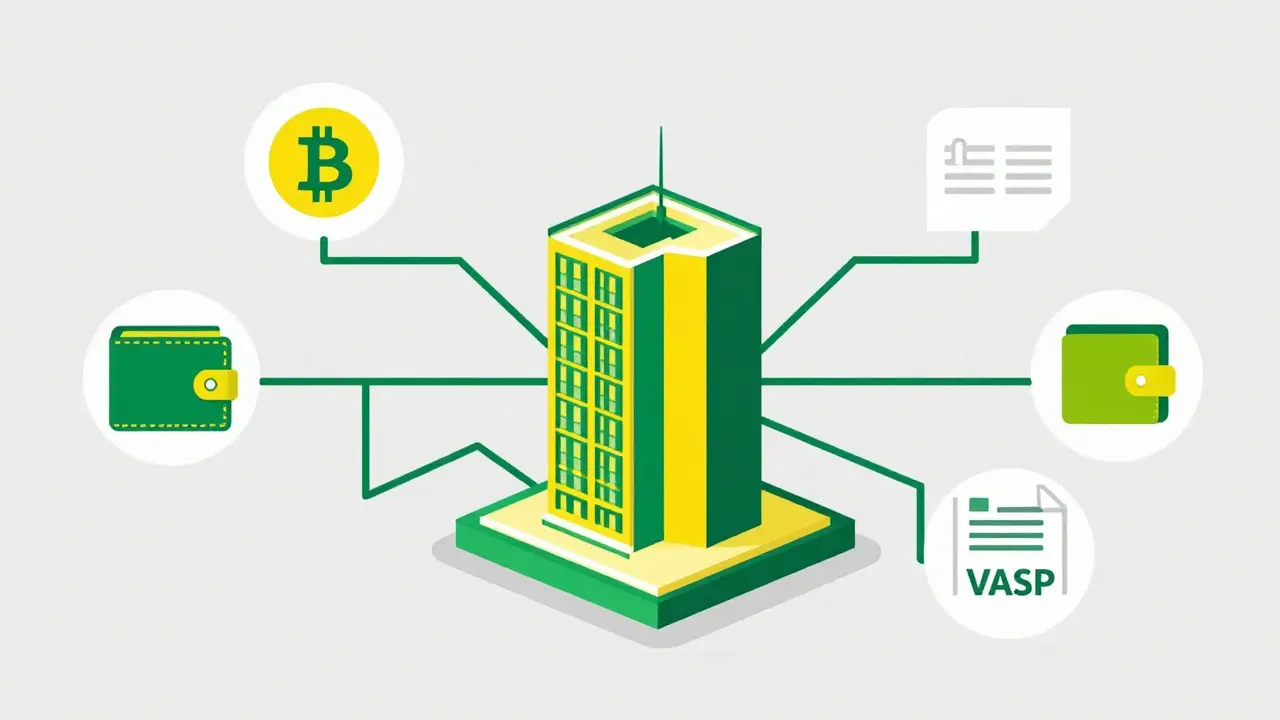
The Central Bank of Brazil took the lead role through Decree No. 11,563/2023. They became the gatekeeper for all Virtual Asset Service Providers (VASPs). This includes exchanges, wallet providers, and brokers. There is no such thing as an unlicensed crypto shop operating legally here anymore. Every provider had to register with the BCB and prove they could handle Anti-Money Laundering (AML) and Know Your Customer (KYC) protocols.
By 2025, the transition period ended. The provisional rules were replaced by hard regulations. The BCB declared cryptoassets a strategic priority in their 2025-2026 agenda, which sounds positive until you read the details. Priority means scrutiny. It means the central bank is watching every move to ensure market stability and prevent fraud. The goal is integration into the national financial system, not separation from it.
The $10,000 Foreign Exchange Cap: A Major Hurdle
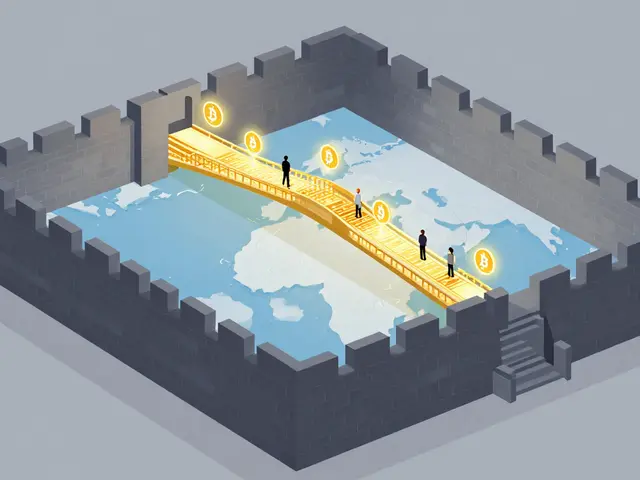
If there is one rule that changed everything for traders in 2025 and carried into 2026, it is the foreign exchange restriction. The BCB introduced a strict cap on international transfers. You cannot move more than $10,000 USD equivalent out of Brazil without jumping through massive hoops.
Why does this matter for crypto? Because most major trading pairs involve US Dollars, Euros, or other foreign fiat currencies. When you buy Bitcoin on a global exchange using Brazilian Reais (BRL), you are technically engaging in a currency conversion. The BCB views large-scale crypto trading as a way to bypass traditional forex controls. So, they clamped down.
| User Type | Restriction Impact | Required Action |
|---|---|---|
| Retail Trader | Capped at $10k monthly outgoing value | Use domestic-only platforms or split transactions carefully (risk of flagging) |
| Institutional Investor | Requires special authorization for amounts >$10k | File detailed justification with BCB; expect delays |
| Crypto Exchange | Must block unauthorized cross-border flows | Implement real-time monitoring systems to stop transfers exceeding limits |
This cap forces a shift in behavior. Many Brazilians who used to trade on global giants like Binance or Coinbase are moving to local platforms that stay within the domestic circuit. These local exchanges prioritize BRL-to-crypto pairs and minimize the need for foreign currency conversion. It keeps the money inside the country, which is exactly what the BCB wants.
DeCripto: The End of Anonymous Transactions
Introduced in March 2025, DeCripto (Declaration of Crypto Assets) is the tool that makes the restrictions work. Think of it as a tax return for your blockchain activity, but mandatory and real-time.
Under DeCripto, every VASP must report detailed transaction data to the authorities. This isn't just a summary at the end of the year. It requires exchanges to integrate specialized compliance modules that track every deposit, withdrawal, and trade. If you send Bitcoin to a friend, the exchange records it. If you sell Ethereum for cash, the exchange reports it.
For users, this means zero privacy. The Financial Activities Control Council (COAF), Brazil's financial intelligence unit, receives this data to hunt for suspicious patterns. COAF works alongside the Brazilian Revenue Service (RFB), which enforces capital gains taxes. If you profit from your crypto trades, the RFB expects a cut. DeCripto ensures they know exactly how much you made.
The burden falls heavily on the exchanges. They have spent millions upgrading their tech stacks to meet these reporting standards. If an exchange fails to report correctly, they lose their license. That’s why you see stricter KYC checks when you sign up for services now. They aren't being difficult; they are terrified of losing their BCB registration.
Stablecoins Under Fire
Here is a twist that caught many off guard. Stablecoins-digital tokens pegged to stable assets like the US Dollar-are huge in Brazil. In fact, they account for roughly 90% of all crypto transaction volume in the country. People use them to protect their savings from inflation in the Real.
The BCB sees this as a threat to monetary sovereignty. If everyone holds US-pegged stablecoins instead of Reais, the central bank loses some control over the money supply. Consequently, the BCB has implemented specific restrictions on stablecoin operations. While not banned outright, the rules for issuing and trading them are becoming incredibly tight.
Expect to see fewer options for popular stablecoins like Tether (USDT) or USD Coin (USDC) on local platforms. The BCB is pushing for regulated alternatives that align with national interests. This creates friction for users who rely on stablecoins for daily payments or as a safe haven during market volatility.
DREX: The Government's Alternative
While restricting private crypto, the BCB is building its own version. Enter DREX (Digital Real Experiment). Don't confuse this with a typical Central Bank Digital Currency (CBDC) like a digital dollar for consumers. DREX is different.
DREX is a distributed-ledger-based infrastructure designed for institutional finance. It allows banks to tokenize deposits, loans, and government securities. It runs on a private blockchain, accessible only to authorized financial institutions. The pilots launched in late 2025 involved major Brazilian banks testing how to move assets instantly and securely without traditional clearinghouses.
For the average person, DREX won't be a wallet app you download next week. It is backend infrastructure. However, it signals the BCB's long-term strategy: embrace the technology of blockchain, but keep the control within the traditional banking sector. They want efficiency without decentralization.

Navigating the Regulatory Maze: Who Does What?
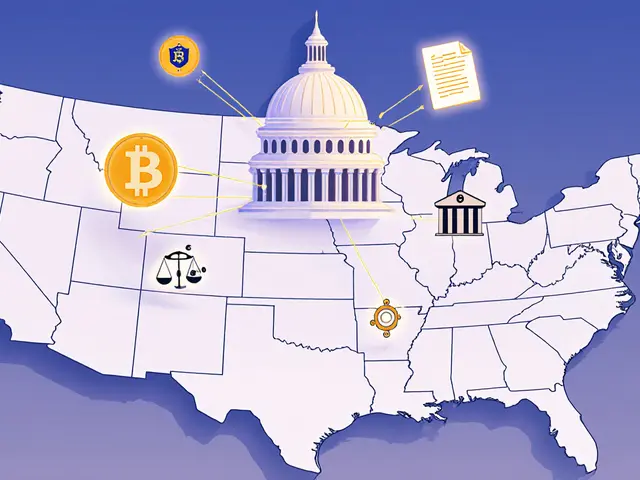
The BCB isn't working alone. The regulatory framework involves a coordinated effort between several powerful bodies. Understanding who handles what helps you avoid mistakes.
- Central Bank of Brazil (BCB): The main boss. They authorize VASPs, set operational standards, and enforce forex caps.
- Securities and Exchange Commission (CVM): If your crypto token acts like a stock (security), the CVM regulates it. They are expected to launch public consultations on tokenization frameworks by late 2025, affecting projects that offer investment contracts.
- COAF: The police force of finance. They analyze the data from DeCripto to find money laundering and terrorist financing.
- RFB: The tax collector. They ensure you pay capital gains tax on your profits. Failure to declare crypto income can lead to severe penalties.
This multi-agency approach means there are multiple ways to get in trouble. You might satisfy the BCB's registration rules but fail to file correctly with the RFB. Or you might comply with COAF but violate CVM securities laws. Complexity is the enemy here.
What This Means for You in 2026
If you are holding crypto in Brazil today, you are in a legally recognized but highly monitored environment. The "wild west" era is dead. Here is how to adapt:
- Stick to Registered Platforms: Only use exchanges registered with the BCB. Unregistered offshore platforms may block your access or freeze your funds due to the new forex and compliance rules.
- Respect the $10k Cap: Do not try to structure transactions to evade the international transfer limit. The monitoring systems are sophisticated. Getting flagged will cost you more time and money than staying under the limit.
- Keep Impeccable Records: With DeCripto, the government knows your balance. Make sure your personal tax filings match what the exchanges report. Discrepancies trigger audits.
- Watch Stablecoin Rules: Be aware that liquidity for certain stablecoins may dry up on local exchanges. Diversify your holdings or be prepared to move assets domestically rather than internationally.
- Expect More Rules: The BCB's agenda for 2025-2026 is active. New guidelines on asset tokenization and stablecoins are coming. Stay informed through official channels, not just social media rumors.
The Brazilian government is betting that regulation will bring legitimacy and institutional investment to the crypto market. Early signs suggest they might be right. Institutional players are entering the space because the rules are clear. But for the individual user, the freedom to move money anonymously across borders is gone. The trade-off is security and legal protection, but the price is transparency and constraint.
Is cryptocurrency legal in Brazil in 2026?
Yes, cryptocurrency is legal in Brazil. However, it is strictly regulated. All service providers must be registered with the Central Bank of Brazil (BCB), and users must comply with anti-money laundering (AML) and tax reporting requirements.
What is the $10,000 crypto transfer limit in Brazil?
The Central Bank of Brazil imposed a cap on international transfers, limiting individuals to sending approximately $10,000 USD equivalent per month abroad. This affects crypto exchanges that facilitate cross-border transactions, forcing users to stay within domestic circuits or seek special authorization for larger amounts.
Do I need to pay taxes on my crypto profits?
Yes. The Brazilian Revenue Service (RFB) enforces capital gains taxes on cryptocurrency profits. Through the DeCripto reporting system, exchanges share your transaction data with authorities, so you must declare your gains in your annual tax return to avoid penalties.
What is DeCripto and why does it matter?
DeCripto is the Declaration of Crypto Assets, a mandatory reporting tool introduced in 2025. It requires crypto exchanges to report detailed transaction data to regulators in real-time. It matters because it eliminates anonymity, ensuring that all crypto activities are tracked for tax and anti-money laundering purposes.
Can I still use stablecoins like USDT in Brazil?
You can, but with increasing restrictions. Stablecoins make up 90% of Brazil's crypto volume, but the BCB is tightening rules on their issuance and trading to protect the Brazilian Real. Expect limited availability on local exchanges and stricter compliance checks for stablecoin transactions.
What is DREX and will it replace Bitcoin?
No, DREX is not a replacement for Bitcoin. It is a private blockchain infrastructure developed by the Central Bank of Brazil for institutional use, such as tokenizing bank deposits and government securities. It is designed for efficiency within the traditional banking sector, not for public retail trading.
Which agency regulates crypto securities in Brazil?
The Securities and Exchange Commission of Brazil (CVM) regulates cryptoassets that qualify as securities. While the BCB handles general virtual asset service providers, the CVM oversees public offerings and trading of tokens that represent investment contracts or equity.
 Finance