
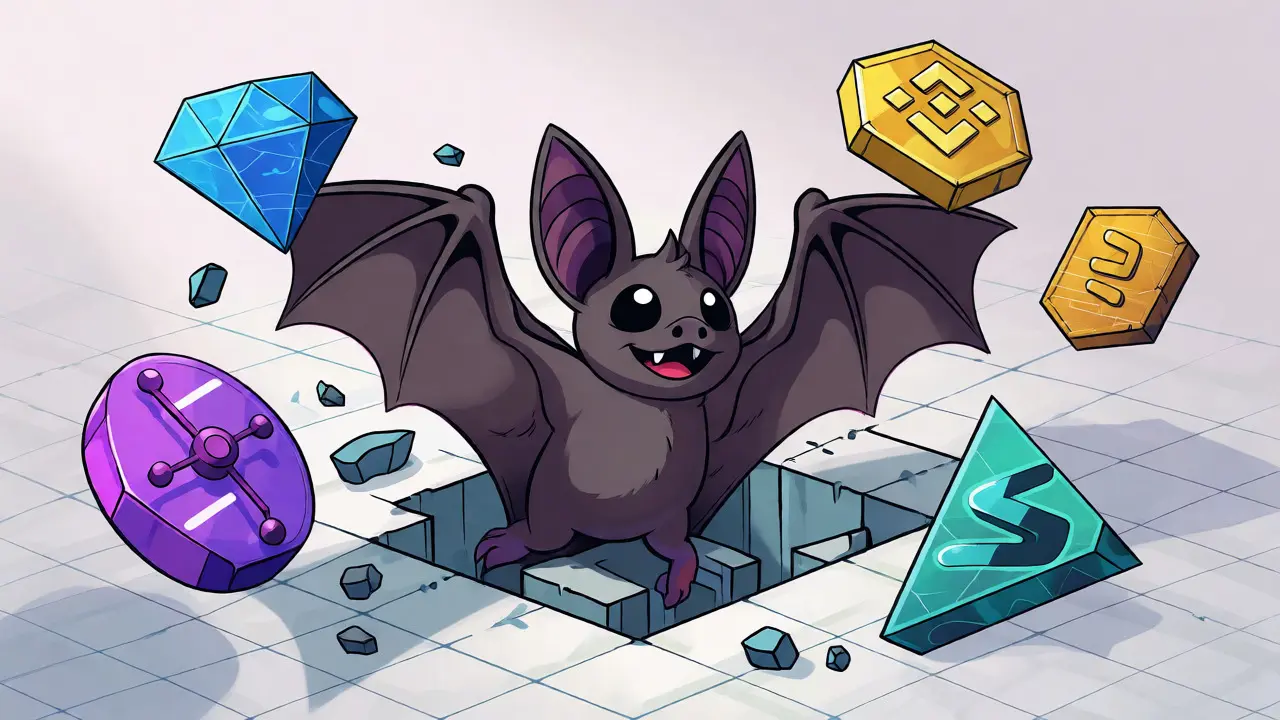
Have you ever stumbled upon a cryptocurrency so small it barely registers on major trackers, yet carries the name of a famous cartoon character? That’s BOPPY, a fragmented ecosystem of meme tokens centered around a bat character created by artist Matt Furie. It’s not one single coin with a unified roadmap. Instead, it’s a collection of tokens sharing the same ticker across different blockchains like Ethereum, Binance Smart Chain, Base, and Solana. If you’re seeing headlines about "Boppy The Bat" or trying to figure out why your portfolio tracker shows conflicting prices for BOPPY, you aren’t alone. The data is messy, the market cap is tiny, and the project lacks a traditional whitepaper.
This article cuts through the noise. We’ll break down what BOPPY actually is, where it comes from, how its multi-chain presence works, and the serious risks involved in trading such a microcap asset. Whether you’re a curious observer or a high-risk speculator, understanding the mechanics behind this niche token is crucial before you swap any ETH for those billions of units.
The Origins: Art Meets Blockchain
To understand BOPPY, you first need to know who made it. The central figure isn’t a faceless dev team; it’s Matt Furie, the American illustrator best known for creating Pepe the Frog and the comic book series "The Night Riders". In his work, particularly within the lore of "The Night Riders," a character named Boppy-a stylized bat-appears prominently. Unlike many meme coins that invent characters specifically for crypto hype, BOPPY leverages existing intellectual property and artistic recognition.
However, here is the critical disconnect: there is no official corporate entity, foundation, or registered company running BOPPY as a unified product. Aggregator sites like CoinCarp and CoinPaprika describe it simply as a "cryptocurrency project centered around a cartoon bat character." This means the token functions primarily as a community-driven meme asset. There are no public names of founders beyond the attribution to Furie as the creator of the source material. No formal governance structure exists. You won’t find a detailed technical whitepaper explaining consensus mechanisms or unique utility features. It’s art, turned into a token, driven by community sentiment rather than protocol innovation.
A Fragmented Ecosystem: One Ticker, Many Chains
If you search for BOPPY on different platforms, you might think you’re looking at the same asset. You’re often wrong. The ticker "BOPPY" is used by several distinct smart contracts deployed on separate blockchains. This fragmentation creates significant confusion regarding supply, price, and liquidity.
- Ethereum (ERC-20): This is the most prominent version, often referred to as "Boppy The Bat." It uses the standard ERC-20 interface. According to data from Coinbase and CoinMarketCap in mid-2026, the total supply is an astronomical 420.69 trillion tokens. Trading happens primarily on decentralized exchanges (DEXs) like Uniswap V2.
- Binance Smart Chain (BEP-20): A variant listed since at least July 2021, this version operates on BSC. It has a reported total supply of 1 billion tokens, vastly smaller than its Ethereum counterpart. PancakeSwap V2 serves as its main trading venue.
- Base Chain: A newer entry, this token exists on the Base network (an Ethereum Layer 2). It supports ERC-20 standards but interacts with the Base ecosystem’s lower gas fees. Supply here is fixed at 100 million.
- Solana (SPL): Listed on Solana’s infrastructure, this token relies on SPL token standards. It offers faster transaction speeds compared to Ethereum mainnet. Data from early 2025 showed a price around 0.000144 EUR per token.
Because these are separate contracts, they do not interact with each other. Buying BOPPY on Ethereum does not give you exposure to the Solana version. They have different supplies, different liquidity pools, and completely different price histories. When analysts talk about "BOPPY," they must specify which chain they mean, otherwise the comparison is meaningless.
| Feature | Ethereum (ERC-20) | Binance Smart Chain (BEP-20) | Base Chain | Solana (SPL) |
|---|---|---|---|---|
| Total Supply | ~420.69 Trillion | 1 Billion | 100 Million | Variable/Low Liquidity |
| Primary Exchange | Uniswap V2 | PancakeSwap V2 | Uniswap V3 | Various DEXs |
| Network Fees | High (Gas-heavy) | Moderate | Low | Very Low |
| Market Cap (Est.) | $66K - $73K | Data Inconsistent | Negligible | Negligible |
Price Volatility and Market Reality
Let’s look at the numbers, because they reveal the true nature of this asset. As of mid-2026, the Ethereum-based BOPPY trades at fractions of a cent. Specifically, quotes hover around 0.0000000009 USD per token. Don’t let the zeros scare you off; with a supply of over 400 trillion, even a microscopic price movement translates to a noticeable shift in market capitalization.
At the time of recent snapshots, the market cap for the Ethereum version sat between $66,000 and $73,000. To put that in perspective, Bitcoin’s market dominance alone dwarfs thousands of assets like BOPPY combined. On CoinGecko, BOPPY ranked roughly #5156 among all tracked cryptocurrencies. On CoinMarketCap, it hovered near #3057. These rankings place it firmly in the "microcap" or even "nano-cap" category.
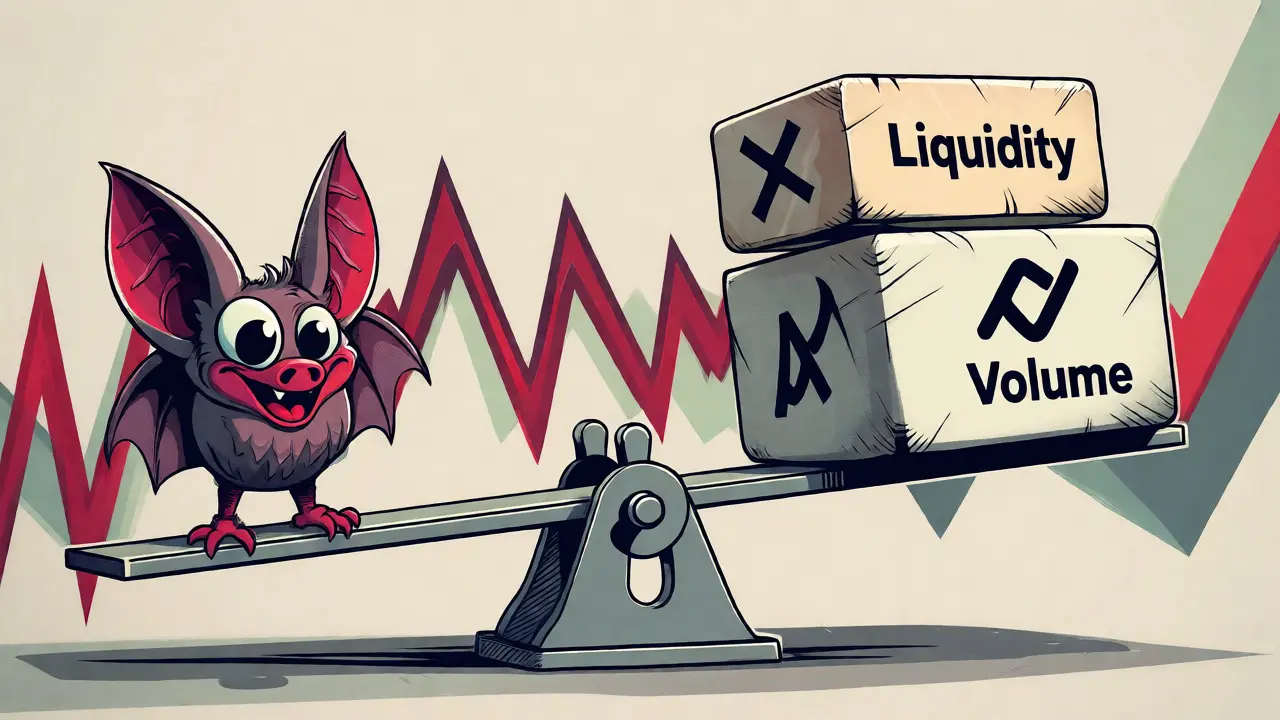
Volatility is extreme but deceptive. Because daily trading volume is low-often under $1,000 for the Ethereum pair-a single large buy order can spike the price by double digits, only for it to crash back down minutes later. Conversely, thin liquidity means selling a large position can be difficult without significantly impacting the price yourself. Some trackers, like CoinCodex, occasionally report a market cap of $0.00 due to data gaps, while others show inconsistent figures. Always cross-reference multiple sources before making decisions.
How to Buy and Store BOPPY
You won’t find BOPPY on major centralized exchanges like Coinbase Pro or Binance.com for direct fiat purchases in most regions. Instead, you need to navigate the Decentralized Finance (DeFi) landscape. Here is the typical workflow for acquiring the Ethereum version:
- Get a Wallet: Install a non-custodial wallet like MetaMask or Trust Wallet. Ensure it supports the specific blockchain you intend to use (e.g., Ethereum for ERC-20).
- Fund Your Wallet: Purchase the native currency of the target chain. For Ethereum BOPPY, you need Ether (ETH). For BSC, you need BNB. For Solana, you need SOL.
- Connect to a DEX: Go to Uniswap (for Ethereum/Base) or PancakeSwap (for BSC). Connect your wallet.
- Find the Contract Address: This is vital. Do not just search "BOPPY." Verify the contract address on a reputable aggregator like CoinMarketCap or CoinGecko. For the main Ethereum token, the address is often cited as
0xe79031B5aaEb3eE8D0145e3d75B81B36BFfe341d. - Swap: Trade your ETH for BOPPY. Be mindful of slippage settings; given the low liquidity, setting a higher slippage tolerance (e.g., 1-2%) may prevent failed transactions.
Storage is straightforward once acquired. Since it’s a standard token, it lives in your wallet alongside other assets. Remember, if you hold the BSC version, it won’t appear automatically in an Ethereum wallet unless you bridge it or add the correct network configuration.
Risks: Why Caution is Essential
Investing in BOPPY is akin to buying a lottery ticket printed on napkin paper. The risks are substantial and multifaceted.
First, liquidity risk is paramount. With daily volumes sometimes dipping below $500, exiting a position can be hard. If the community interest fades, buyers vanish quickly, leaving holders with tokens they cannot sell at a fair price.
Second, data inconsistency plagues this project. Different aggregators report wildly different prices and supplies. Some sites claim it isn’t listed on any exchange, while others show active trading. This lack of standardized reporting suggests poor maintenance of metadata, which often correlates with low project activity.
Third, no utility or roadmap exists. There are no announced staking programs, NFT integrations, or governance votes. The value proposition rests entirely on meme culture and the recognition of Matt Furie’s art. If the meme cycle moves on to the next animal or character, BOPPY could lose relevance overnight.
Finally, regulatory ambiguity looms. As an unregistered security-like asset operating globally, its legal status depends on local laws. There are no compliance frameworks mentioned in official listings, meaning investors bear the full burden of regulatory uncertainty.
Final Verdict: Niche Appeal for Speculators
BOPPY is not a technological breakthrough. It doesn’t solve a complex financial problem or offer novel scalability solutions. It is a cultural artifact wrapped in code. Its primary appeal lies in its connection to Matt Furie’s universe and the speculative thrill of hunting for gems in the deepest trenches of the crypto market.
For the average investor, BOPPY represents high risk with no guaranteed return. For the die-hard meme coin enthusiast, it offers a chance to participate in a niche community centered around established pop-culture IP. Just remember: verify the contract address, check the liquidity depth, and never invest more than you can afford to lose completely.
Is BOPPY the same coin on every blockchain?
No. While they share the ticker "BOPPY," the tokens on Ethereum, Binance Smart Chain, Base, and Solana are separate smart contracts with different supplies, liquidity pools, and trading venues. They are not interoperable by default.
Who created the BOPPY cryptocurrency?
The character Boppy was created by artist Matt Furie. However, there is no publicly documented founding team or corporate entity responsible for launching the specific cryptocurrency tokens. It appears to be a community-driven initiative leveraging Furie's artwork.
Where can I buy BOPPY crypto?
You typically cannot buy BOPPY directly with credit cards on major centralized exchanges. You must use decentralized exchanges (DEXs) like Uniswap (for Ethereum/Base versions) or PancakeSwap (for BSC versions) after funding a compatible wallet with ETH, BNB, or SOL.
What is the total supply of BOPPY?
It varies by chain. The Ethereum version has a massive supply of approximately 420.69 trillion tokens. The Binance Smart Chain version has a supply of 1 billion, and the Base version has 100 million. Always check the specific contract details for the version you are trading.
Is BOPPY a good investment?
This is subjective and risky. BOPPY is a microcap meme coin with low liquidity and no fundamental utility. It is highly volatile and suitable only for speculative traders who understand the risks of illiquid assets. It is not generally recommended for conservative long-term portfolios.
 Finance