
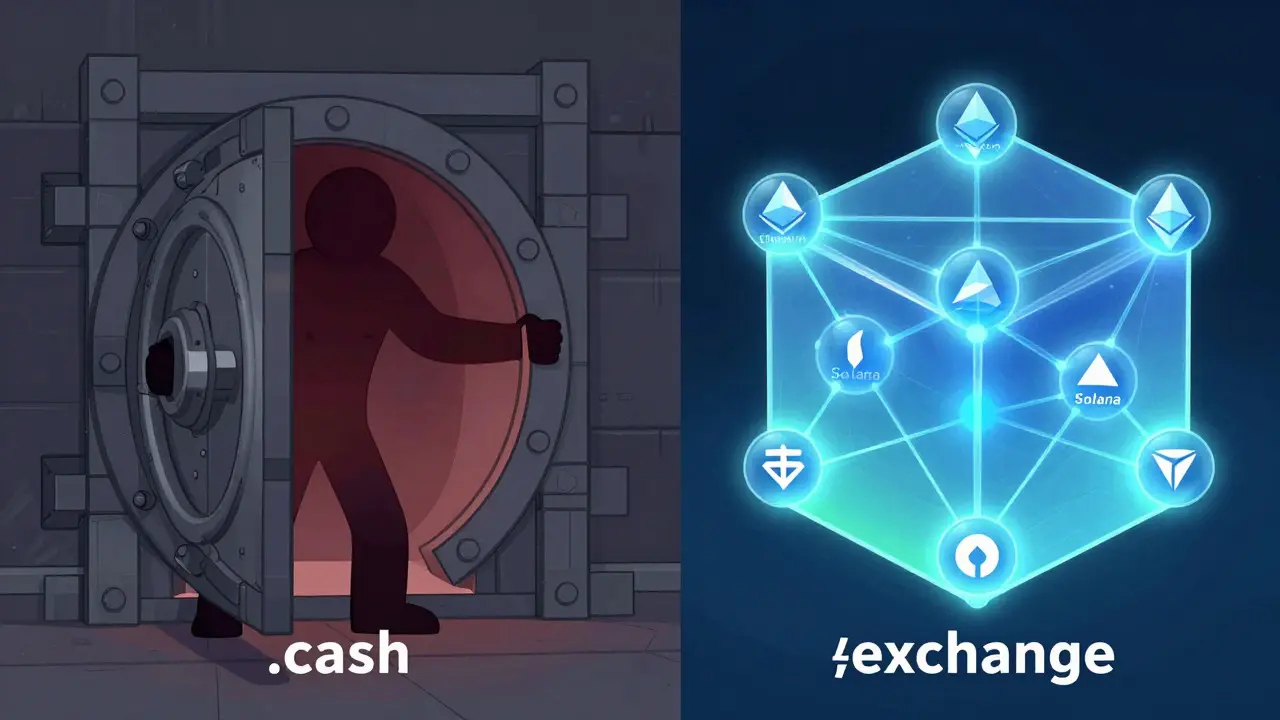
There is a massive problem with searching for "Tsunami" in the crypto world right now. You aren't looking for one company; you are likely staring at two completely different platforms that share a name but operate like oil and water. One is Tsunami.cash, a centralized service that has been generating serious trust issues since late 2024. The other is Tsunami.exchange, a decentralized protocol built across multiple blockchains like Cardano and Solana. If you mix them up, you could lose money to hidden fees or get stuck in a liquidity trap. This review breaks down exactly which platform you are dealing with, what the risks are in 2026, and whether either of them deserves your capital.
The Two Faces of Tsunami
First, let's clear up the confusion. In the cryptocurrency space, names can be misleading. When you see "Tsunami," you need to check the URL immediately. Are you on .cash or .exchange? These are not just branding choices; they represent fundamentally different ways of handling your money.
Tsunami.cash operates as a traditional centralized exchange (CEX). This means you send your funds to their wallet, and they promise to swap it for another currency. It’s like walking into a physical currency booth at an airport. You hand over cash, they give you euros. Simple, right? Except in this case, the booth has a reputation for holding onto your cash while the exchange rate changes against you. According to user records from BestChange.com dating back to July 2024, this platform facilitates fiat-to-crypto and crypto-to-crypto conversions without much transparency.
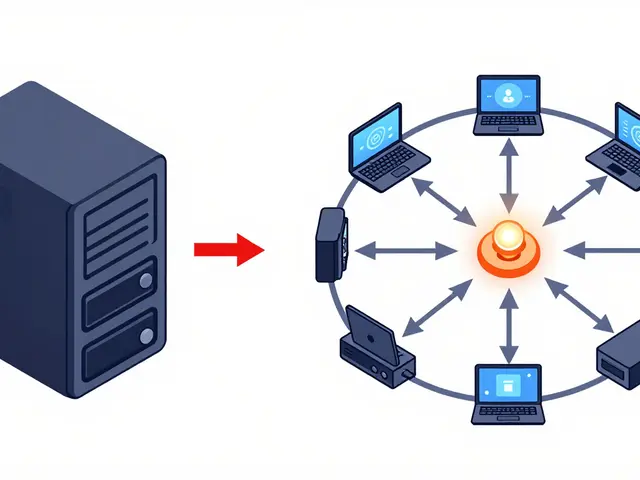
Tsunami.exchange is a decentralized exchange (DEX). Here, you never hand over custody of your funds. Instead, your wallet connects directly to smart contracts on networks like Ethereum, Solana, or Cardano. It’s more like using an automated teller machine where the code dictates the trade, not a human manager. As of late 2025, this platform was highlighted in technical comparisons for its multi-chain architecture, aiming to compete with giants like Uniswap by offering cross-chain compatibility.
Tsunami.cash: The Centralized Risk
If you are considering Tsunami.cash, proceed with extreme caution. The data from 2024 through 2025 paints a worrying picture for anyone looking for a reliable fiat-on-ramp or quick swap service. The core issue isn't just bad luck; it appears to be systemic.
Users have reported significant processing delays. Imagine you want to buy Bitcoin. You initiate the transaction, and the site tells you it will take a few minutes. But then it takes 15 to 45 minutes. During that window, the market moves. By the time your transaction completes, the rate has shifted. Reports indicate unexpected rate increases of 3-7% during these delays. That’s money vanishing from your pocket because the exchange held your funds longer than necessary.
Let's look at the specifics:
- No API Access: Unlike major exchanges, Tsunami.cash lacks documented API access, making it useless for automated traders or bots.
- Opaque Fees: There is no clear fee structure listed on their website. You often don't know the final cost until after the fact.
- Trust Issues: A staggering 67% of recent reviews on BestChange.com cite financial losses due to these processing tactics. One user, Viacheslav, noted in October 2025 that following the site's advice led to paying more for the same amount of crypto because the official rate had increased during the delay.
Industry analysts have been blunt. BestChange.com’s own editorial team stated in October 2025: "This looks very suspicious. Either the site has serious technical issues or they intentionally delay exchanges to make users lose money. In both cases, it's not trustworthy." With the SEC cracking down on unregistered exchanges in Q3 2025, targeting 78% of such entities, Tsunami.cash fits the profile of a high-risk operation that may face regulatory shutdown within the next 12-18 months.
Tsunami.exchange: The Decentralized Alternative
On the flip side, Tsunami.exchange represents the modern DeFi (Decentralized Finance) approach. Launched with a focus on accessibility, it aims to bridge gaps between different blockchain ecosystems. Instead of relying on a central server, it uses smart contracts to execute trades atomically across networks.
Here is why some developers and advanced traders are watching this platform:
- Multi-Chain Support: It integrates with Cardano, Ethereum, and Solana. This is crucial because most DEXs are locked into one ecosystem. Raydium, for example, is Solana-exclusive. Tsunami.exchange tries to offer a unified interface for all three.
- Wallet Compatibility: It works with over 12 wallets, including MetaMask, Ledger, and Phantom. This flexibility allows you to keep your assets in cold storage while trading.
- Governance Token: The platform utilizes a TSN token for governance, meaning holders can vote on protocol upgrades. This aligns with the decentralization ethos of Web3.
However, being "new" and "multi-chain" comes with its own set of challenges. The biggest hurdle is liquidity. In September 2025, CoinGecko data showed Uniswap processing $18.7 billion in volume. Tsunami.exchange, being newer, has significantly lower liquidity. Low liquidity means higher slippage-when you buy a large amount, the price jumps up before your order fills, costing you more.
Furthermore, the learning curve is steeper. While SourceForge reviewers called it "accessible," you still need to understand gas fees, network confirmations, and private key security. If you lose your seed phrase, there is no customer support to call. No admin response, no email ticket. Just gone.
Head-to-Head Comparison
| Feature | Tsunami.cash | Tsunami.exchange |
|---|---|---|
| Type | Centralized Exchange (CEX) | Decentralized Exchange (DEX) |
| Custody | Platform holds your funds | You hold your funds (Non-custodial) |
| Networks | Proprietary internal ledger | Ethereum, Solana, Cardano |
| Fees | Hidden/Variable (3-7% slippage reported) | Transparent network gas fees + protocol fee |
| KYC Required? | Yes (for fiat deposits) | No |
| Mobile App | Web-based only | iOS, Android, Desktop |
| Trust Score (2025 Data) | Low (High complaint rate) | Moderate (New, limited data) |
Market Context and Future Outlook
To understand where these platforms are heading, we have to look at the broader market trends in 2025 and 2026. The centralized exchange sector is under immense pressure. The global CEX market is valued at $58.2 billion, but regulators are cleaning house. The Financial Action Task Force (FATF) issued warnings in October 2025 about "exchange services with delayed processing as a revenue extraction mechanism." This sounds exactly like the complaints leveled against Tsunami.cash.
In contrast, the DEX market is projected to reach $17.2 billion by 2026, according to Grand View Research. This growth is driven by institutional interest, partly fueled by the "Crypto ETF Tsunami" described by MarketMinute, where over 100 crypto ETFs entered the market in 2025. Institutions want transparency and self-custody options, which benefits protocols like Tsunami.exchange.
However, competition is fierce. The top five DEXs (Uniswap, PancakeSwap, Curve, Balancer, Sushiswap) control 82% of the monthly trading volume. For Tsunami.exchange to survive, it needs to prove that its multi-chain integration offers a unique advantage that single-chain competitors cannot match. Currently, its survival probability through 2026 is estimated at 60-70%, contingent on achieving meaningful liquidity differentiation.
Practical Advice: Should You Use Them?
So, what should you do? Here is my straightforward assessment based on the current data.
Avoid Tsunami.cash for now. Unless you have no other option to convert fiat to crypto in your specific region, the risks outweigh the convenience. The lack of transparent fees, the history of processing delays, and the negative expert consensus make it a poor choice. If you must use it, treat every transaction as a small experiment. Never deposit large sums. Monitor the exchange rate manually during the processing time, and be prepared to dispute charges if your bank allows it.
Approach Tsunami.exchange with intermediate knowledge. If you are comfortable managing a hardware wallet like Ledger or a software wallet like MetaMask, this platform offers legitimate utility. Its multi-chain support is a genuine feature that saves you from bridging assets manually between networks. However, always start with small amounts to test the slippage and gas fees. Check the liquidity pools before trading obscure tokens. And remember: in DeFi, you are your own bank. Double-check every address and contract interaction.
Final Thoughts
The name "Tsunami" suggests power and force, but in the crypto world, it currently signals confusion. Tsunami.cash is a legacy-style centralized service struggling with trust and transparency in an era of strict regulation. Tsunami.exchange is a promising but unproven decentralized tool trying to carve out a niche in a crowded DEX market. Know which one you are clicking on. Your portfolio depends on it.
Is Tsunami.cash safe to use in 2026?
Safety is questionable. While the site operates, user reviews from 2024-2025 highlight frequent processing delays and hidden fees that result in financial loss. Regulatory scrutiny on similar unregistered centralized exchanges has increased significantly, raising the risk of sudden shutdowns or frozen funds.
What is the difference between Tsunami.cash and Tsunami.exchange?
Tsunami.cash is a centralized exchange where the platform holds your funds and handles the swap, requiring KYC. Tsunami.exchange is a decentralized exchange (DEX) where you connect your own wallet (like MetaMask) and trade directly via smart contracts across multiple blockchains like Solana and Ethereum.
Does Tsunami.exchange support Bitcoin?
As a multi-chain DEX focusing on Ethereum, Solana, and Cardano, direct Bitcoin support may be limited to wrapped versions (like WBTC) or cross-chain bridges. Always verify the specific asset pairs available in the pool before attempting a trade, as native Bitcoin transactions are not standard on EVM or Solana-based DEXs.
Why are there so many negative reviews for Tsunami.cash?
The primary complaint is "rate manipulation" through delay. Users report that transactions take 15-45 minutes to process, during which the exchange rate fluctuates unfavorably. Critics suggest this is an intentional tactic to extract extra value from users, leading to a 67% negative review rate on monitoring sites.
Is Tsunami.exchange regulated?
Like most decentralized exchanges, Tsunami.exchange is not regulated in the traditional sense. It operates via smart contracts on public blockchains. This means there is no central authority to appeal to if something goes wrong, but also no KYC requirements. Users are responsible for their own compliance with local tax and financial laws.
 Finance