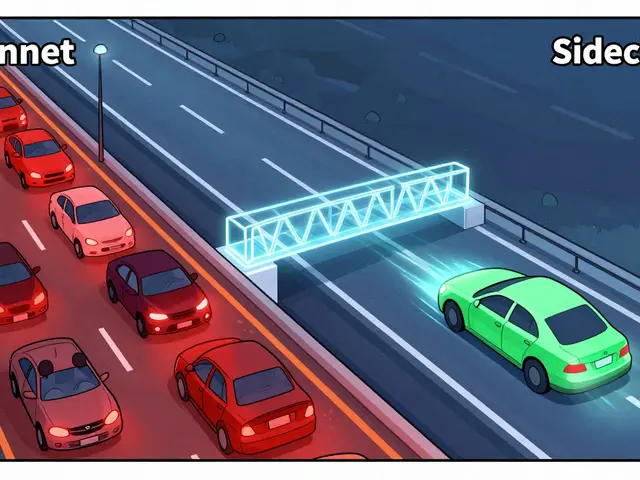

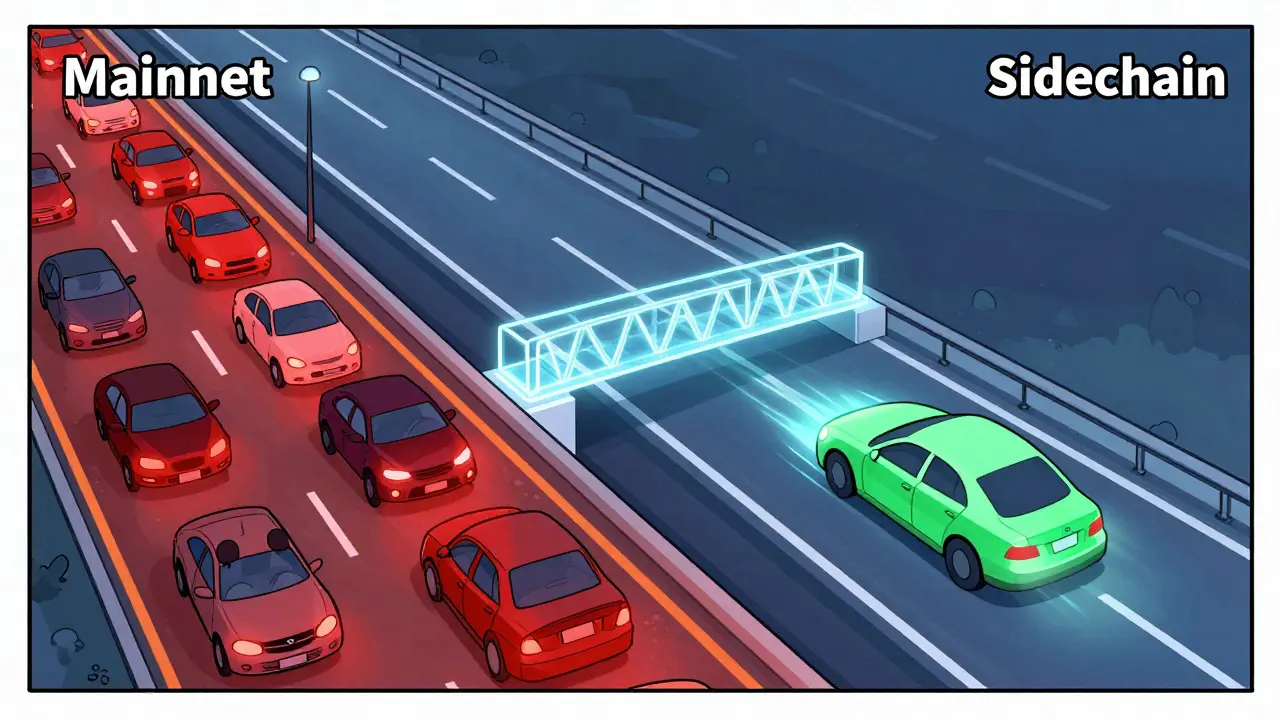
Imagine trying to run a marathon on a crowded city street. That’s what using the Ethereum mainnet felt like during peak congestion in recent years. You wanted to move value quickly, but the network was clogged, fees were skyrocketing, and your transaction sat in limbo for minutes-or even hours. Enter Sidechains, which are independent blockchains that run parallel to a main blockchain, connected via a two-way peg mechanism. They offer a clear lane off the busy highway, allowing you to transact faster and cheaper while still keeping your assets tied to the security of the main network.
But sidechains aren’t just a temporary fix for slow networks. As we move through 2026, the role of sidechains is shifting dramatically. They are evolving from general-purpose scaling tools into specialized application hubs. If you’re a developer, investor, or crypto enthusiast, understanding this shift is crucial. The future isn’t just about moving more transactions; it’s about building better, safer, and more integrated ecosystems.
What Are Sidechains and Why Do They Matter?
To understand where sidechains are going, we first need to look at what they actually do. A sidechain is its own blockchain with its own rules, consensus mechanisms, and governance. However, it maintains a connection to a parent chain-like Bitcoin or Ethereum-through a cryptographic bridge known as a two-way peg. This allows users to lock their assets on the mainnet and receive equivalent tokens on the sidechain, use them there, and then unlock the original assets when they return.
The concept wasn’t born yesterday. It was first detailed in a 2014 paper titled 'Enabling Blockchain Innovations with Pegged Sidechains' by industry veterans including Adam Back and Pieter Wuille. Their goal was simple: solve scalability without compromising the core security of the main network. Today, this architecture powers millions of daily interactions. For instance, Polygon PoS, a prominent Ethereum-compatible sidechain, processes roughly 3.5 million transactions every day. Meanwhile, Bitcoin’s Liquid Network, developed by Blockstream, handles around 5,000 daily transactions, primarily for institutional asset transfers.
Why does this matter? Because sidechains allow for innovation that the mainnet simply can’t support. They enable custom block times, different consensus algorithms, and unique smart contract capabilities. For example, Rootstock, a Bitcoin sidechain, achieves block times of 100 milliseconds compared to Bitcoin’s 10-minute blocks. This speed makes decentralized finance (DeFi) applications possible on Bitcoin, something that was previously unimaginable.
The Trade-Off: Speed vs. Security
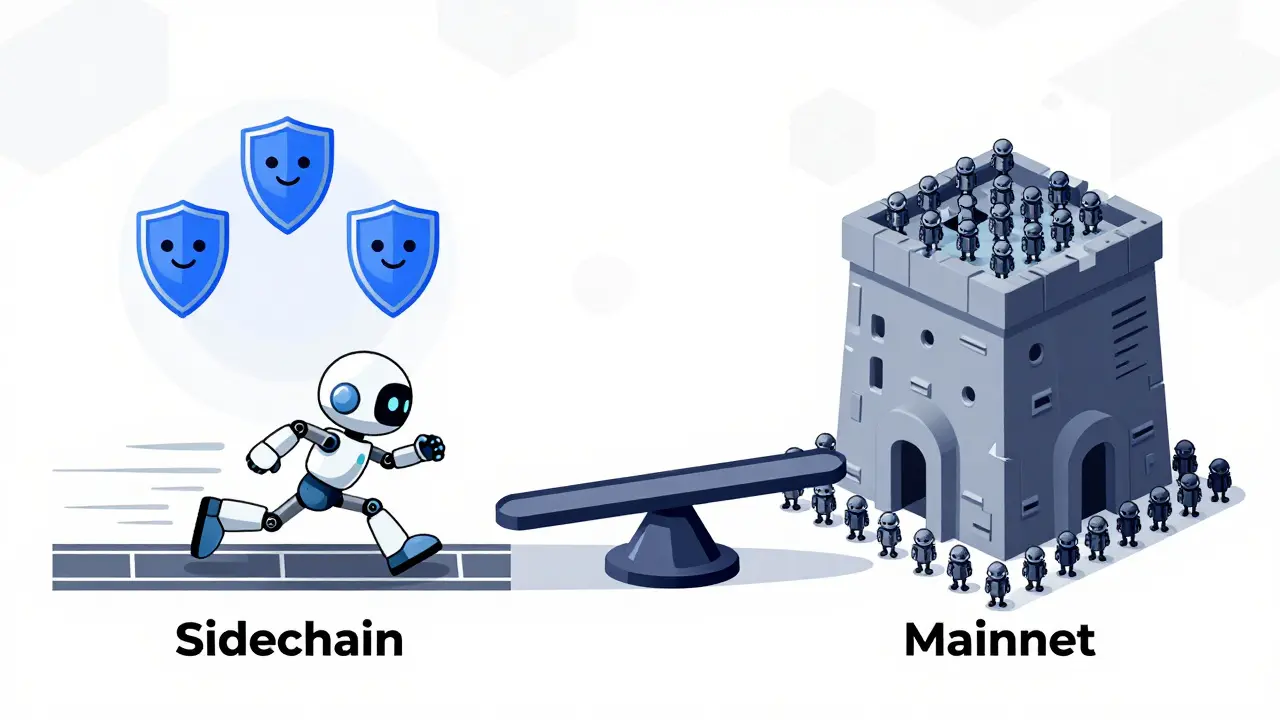
Here’s the catch: sidechains don’t inherit the full security of the mainnet. This is the most critical distinction between sidechains and other scaling solutions like rollups. When you use a sidechain, you’re trusting its specific set of validators. According to a 2023 Messari report, 78% of modern sidechains use Proof-of-Stake (PoS) consensus, relying on a relatively small group of nodes to secure the network.
Let’s put that in perspective. Ethereum has over 800,000 nodes securing its mainnet. Polygon, one of the largest sidechains, operates with only about 100 validating nodes. That’s a 1,000x difference in security model. Vitalik Buterin, co-founder of Ethereum, has noted that sidechains provide only 30-40% of the security assurance of the mainnet, whereas optimistic rollups can achieve 95%+ security inheritance.
This security gap creates real risks. In August 2022, the Nomad bridge hack resulted in a loss of $600 million. While Nomad was a bridge protocol, the vulnerability lay in the communication between chains-a weakness inherent to sidechain architectures. Chainalysis identified sidechain-mainnet bridges as the single largest attack surface in blockchain infrastructure, accounting for 72% of all bridge-related hacks despite handling only 35% of cross-chain volume.
| Solution Type | Security Model | Transaction Speed | Customization | Primary Use Case |
|---|---|---|---|---|
| Sidechains | Independent validators (lower security) | Fast (e.g., 2.1s for Polygon) | High (custom consensus/rules) | Specialized apps, enterprise privacy |
| Optimistic Rollups | Mainnet inheritance (high security) | Very Fast | Low (must follow mainnet rules) | General DeFi, high-value transfers |
| State Channels | Mainnet inheritance (high security) | Instant (off-chain) | Very Low | Microtransactions, payments |
So, if sidechains are less secure, why use them? Flexibility. Sidechains can implement features that mainnets cannot. They can prioritize privacy, handle complex smart contracts efficiently, or integrate with traditional financial systems. For enterprises needing private transaction processing or supply chain tracking, this customization is worth the trade-off in security.
The Shift Toward Specialization
The era of general-purpose sidechains is ending. As Ethereum moves toward its rollup-centric roadmap, sidechains are finding their niche in vertical specialization. Sandeep Nailwal, co-founder of Polygon, predicted that sidechains would process 50% of all blockchain transactions by 2025 through this very strategy. And the data supports it.
We’re seeing a rise in app-specific chains. Immutable X focuses entirely on NFTs and gaming, offering gas-free minting and instant trades. ConsenSys Quorum targets enterprise clients with private permissioned ledgers. Rootstock brings smart contracts to Bitcoin. These chains aren’t trying to replace Ethereum; they’re extending its reach into areas where the mainnet struggles.
This specialization addresses a key user complaint: complexity. Developers no longer want to migrate entire dApps to a generic sidechain. They want environments tailored to their needs. A gaming studio doesn’t care about DeFi liquidity pools; they care about low-latency asset transfers and seamless user onboarding. A specialized sidechain provides exactly that.
Bridging the Gap: Hybrid Architectures
The biggest challenge for sidechains remains interoperability. Moving assets between chains should feel seamless, not like a bureaucratic ordeal. Currently, cross-chain transfers take anywhere from 7-15 minutes for Ethereum-compatible chains to 4-12 hours for Bitcoin-based ones. User feedback reflects this frustration: a 2023 poll on r/ethfinance found that 68% of users had experienced failed cross-chain transactions, with many citing wait times as unacceptable.
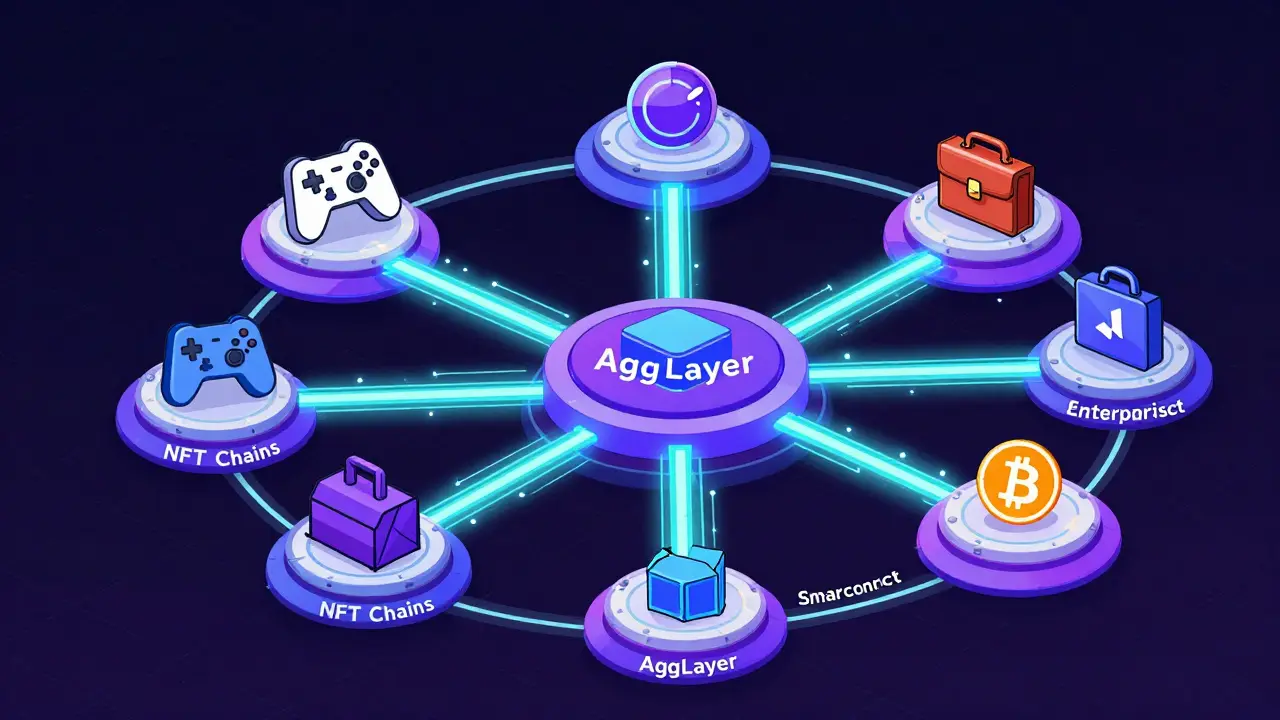
To solve this, the industry is moving toward hybrid models. Polygon’s AggLayer, announced in late 2023, aims to connect over 100 sidechains with shared security. By pooling resources and using fraud proofs, these hybrid architectures attempt to combine the flexibility of sidechains with the security guarantees of rollups. Academic research from UC Berkeley suggests that 65% of new sidechain implementations will incorporate fraud proofs by 2025 to mitigate trust assumptions.
Another promising development is BIP-300, a proposal for Bitcoin that introduces 'merged mining.' This would allow Bitcoin miners to simultaneously validate sidechain transactions, effectively inheriting Bitcoin’s massive hash rate security. If implemented, this could eliminate the primary security concern holding Bitcoin sidechains back.
Enterprise Adoption and Regulatory Realities
While retail users debate gas fees, enterprises are quietly adopting sidechain technology. Everest Group’s 2023 survey revealed that 43 of the Fortune 100 companies have implemented sidechain solutions, primarily for supply chain management and identity verification. These organizations value the ability to process transactions privately and efficiently without exposing sensitive data to a public ledger.
However, regulation looms large. The SEC’s September 2023 'Framework for Digital Asset Security' explicitly stated that sidechain tokens may be considered securities depending on their economic function. This creates compliance hurdles for projects. Developers must now design sidechains with regulatory clarity in mind, ensuring that tokenomics and governance structures align with legal requirements.
Implementation isn’t cheap or easy either. Deloitte reports that enterprise sidechain integration takes 8-12 weeks on average, with security audits being the primary bottleneck. Specialist developers command salaries up to $145,000 annually, reflecting the high demand for expertise in cryptographic proofs and bridge mechanics.
What Does the Future Hold?
By 2028, Messari predicts an 80% consolidation in the sidechain landscape. General-purpose chains will fade, replaced by a network of specialized, interconnected application chains. Gartner forecasts the sidechain market to grow from $1.2 billion in 2023 to $8.7 billion by 2027, driven by enterprise adoption and improved interoperability protocols.
The key takeaway? Sidechains aren’t dying; they’re maturing. They are becoming the specialized limbs of the blockchain body, handling specific tasks with precision while relying on the mainnet for ultimate settlement and security. For users, this means faster, cheaper, and more tailored experiences. For developers, it means greater freedom to innovate within secure boundaries.
If you’re building on blockchain today, ask yourself: do I need the raw power of the mainnet, or do I need the agility of a sidechain? The answer will determine not just your tech stack, but your product’s success in the next decade of web3.
Are sidechains safer than Layer-2 rollups?
Generally, no. Sidechains rely on their own independent validator sets, which are typically smaller than the mainnet's node count. Rollups, especially optimistic and zero-knowledge rollups, inherit the security of the underlying mainnet (like Ethereum). This means rollups offer significantly higher security guarantees, often cited at 95%+ inheritance compared to sidechains' 30-40%.
What is the main advantage of using a sidechain?
The primary advantage is customization. Sidechains can implement their own consensus mechanisms, block times, and smart contract languages. This allows for optimized performance for specific use cases, such as high-frequency trading, gaming, or private enterprise transactions, which might be too expensive or slow on the mainnet.
How long does it take to transfer assets between a sidechain and mainnet?
Transfer times vary significantly. For Ethereum-compatible sidechains like Polygon, it typically takes 7-15 minutes due to the required block confirmations. For Bitcoin-based sidechains like Liquid Network, the process can take 4-12 hours because of Bitcoin's slower block time and stricter confirmation requirements.
Will sidechains disappear as rollups become dominant?
Not necessarily, but their role will change. General-purpose sidechains may decline, but specialized application chains will thrive. Sidechains offer flexibility that rollups currently lack, particularly for private transactions and highly customized logic. The future likely involves a hybrid ecosystem where both coexist.
What is Polygon's AggLayer?
AggLayer is a technology initiative by Polygon designed to connect multiple sidechains and ZK-rollups into a single, unified liquidity layer. It aims to provide shared security and seamless interoperability, allowing assets and data to move instantly between different chains without the friction of traditional bridges.
 Finance