
Trading cryptocurrency derivatives often feels like choosing between speed and security. You either pay high gas fees on Ethereum or lose out on advanced order types on simpler chains. Until recently, you couldn't use your entire portfolio as collateral without converting everything first. That friction changes when you look at Quanto. This platform emerged in late 2024 specifically to solve the liquidity lock-in problem. As we settle into 2026, understanding exactly how this decentralized exchange handles your assets matters more than just chasing trading volume numbers.
You likely clicked here because you want to know if Quanto is safe enough to deposit funds or if it’s another bridge-to-nowhere project. The short answer involves balancing its unique collateral flexibility against shallow liquidity depth compared to industry giants. This isn't just another copy-paste DEX. It rethinks how collateral works on Solana, allowing volatile tokens to do work they usually cannot. But using a meme coin to secure a massive leveraged position brings specific risks you need to understand before connecting your wallet.
The Core Value Proposition: Any Asset Collateral
The defining feature that separates Quanto is a perpetual decentralized exchange operating on the Solana blockchainQuanto DEX from competitors is its approach to asset locking. Traditional exchanges like Binance or even centralized derivatives platforms require you to convert assets into USDT or BUSD before opening a trade. This step burns money in transaction fees and slippage every single time you switch positions.
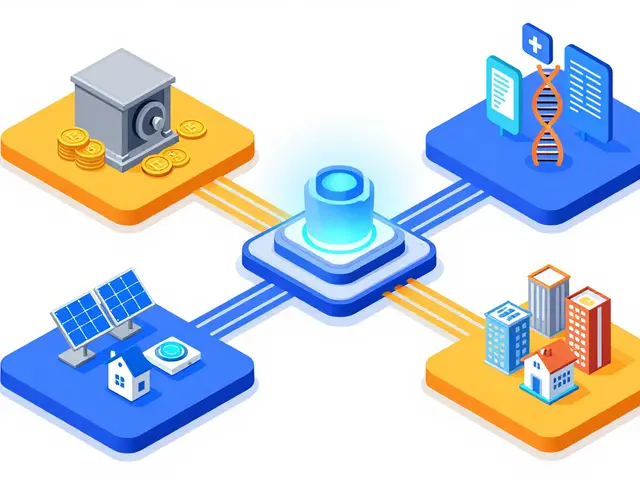
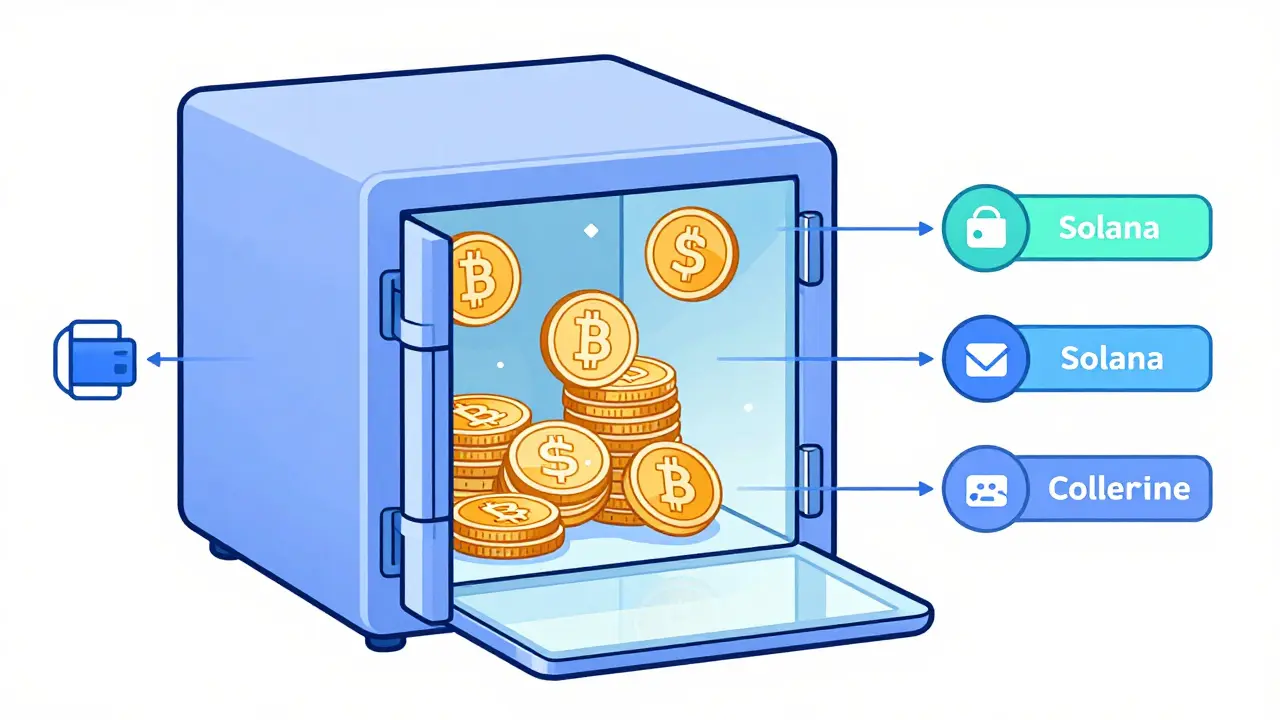
Quanto removes this middleman step entirely. You can deposit Solana ecosystem tokens directly. If you hold SOL, Wrapped ETH, or even a volatile meme coin like WIF, these assets act as margin instantly. In practice, this means if the market dips, you aren't forced to sell your holdings into stablecoins just to cover a balance requirement. Your upside potential remains active in the volatile asset while your downside is covered by the same asset acting as security.
This flexibility relies heavily on the underlying engineering. Because the platform sits natively on
Fee Structure and Token Utility
Cost efficiency is the battleground for DEX survival. Quanto sets the bar competitively low to attract volume away from legacy platforms. The fee schedule breaks down to 0.02% for makers and 0.05% for takers. To put this in perspective, competitors on slower chains often charge double these rates just to compensate for latency costs. On top of trading fees, the network interaction costs on Solana average around $0.00025 per trade, making it negligible compared to the EVM chain congestion.
The native governance token, QTOA utility and governance token that powers the Quanto protocol economy, adds a layer of ownership for active users. Holding QTO isn't just speculative; it unlocks direct discounts on trading fees. Depending on your tier, discounts range from 5% up to 15%. More importantly, 70% of all collected trading fees are permanently burned via the protocol. This deflationary pressure on supply has historically driven token value during periods of high activity.
If you plan to trade actively, holding QTO acts like a rebate card. However, keep in mind that the governance aspect is still maturing. While 1 QTO equals 1 vote on protocol changes, the scope of what voters can decide directly varies. Early adopters found that voting power correlates most strongly with parameter adjustments regarding collateral acceptability lists.
Liquidity Reality: How It Compares to Giants
No review is honest without addressing the elephant in the room: liquidity depth. While Quanto solves the collateral friction, it does not yet match the sheer capital density of older players. Market analysis places Quanto's daily volume significantly below heavyweights like Hyperliquid or Aster. Specifically, Hyperliquid maintains approximately $15 million in order book depth per major pair, whereas Quanto averages around $1.2 million.
| Feature | Quanto | Hyperliquid | Aster |
|---|---|---|---|
| Base Chain | Solana | Ethereum L2 | BNB Chain |
| Collateral Type | Any Asset (Volatile) | HYPE / Stable | USDC / HBAR |
| Maker Fee | 0.02% | 0.025% | 0.03% |
| Taker Fee | 0.05% | 0.075% | 0.10% |
| Max Leverage | 100x | 100x | 50x |
This disparity limits your execution size. If you are trading large positions exceeding $50,000, you may face significant slippage on Quanto that you wouldn't see on larger books. For small-to-mid-sized retail traders under $10,000 per trade, the impact is minimal. The platform excels in niche trading scenarios involving Solana-native tokens that aren't available elsewhere. Trying to force institutional-grade block trades onto Quanto simply hasn't been the design goal yet.
Risk Management and Volatility
The "any collateral" model introduces a specific type of systemic risk known as correlated asset failure. Imagine you are shorting SOL using other meme coins as collateral. If the whole Solana ecosystem crashes simultaneously, your collateral value drops faster than your profit can realize, triggering premature liquidations. Experts like Dr. Elena Rodriguez noted in her 2024 assessment that this creates dangerous leverage pathways during extreme volatility spikes.
To mitigate this, the protocol introduced 'Collateral Shield' mechanisms following a major incident in late 2024 where over $380,000 in protocol losses occurred due to cascading liquidations. The system now automatically restricts highly volatile assets from being used as collateral during flash crash events. Users need to monitor their collateral ratios more frequently-keeping a buffer above the standard 110% health factor, ideally maintaining 105%+ at all times. This discipline is harder to maintain when your own portfolio value fluctuates wildly.
Getting Started: Setup and Execution
If you decide the benefits outweigh the risks, onboarding takes roughly 23 minutes for a complete setup. You don't need a complex account creation process. Simply install a Solana-compatible wallet like Phantom Wallet or Backpack. Connect it to the interface, select your desired asset pair, and fund the position directly from your wallet balance. There is no KYC (Know Your Customer) verification required.
- Fund your wallet with SOL or any accepted token.
- Navigate to the perp trading dashboard.
- Select the specific asset you want to hold as collateral.
- Set your leverage multiplier (capped at 100x).
- Verify the liquidation price calculator before submitting.
The documentation supports this journey across twelve languages, accessible through the project's GitHub repository. Community support is active on Telegram with average response times hovering around 22 minutes for technical queries. However, rely primarily on the public documentation rather than community promises during execution errors.

Frequently Asked Questions
Is Quanto suitable for beginners?
It depends on your experience with non-custodial wallets. The trading interface is intuitive, but managing volatile collateral requires advanced risk management skills. If you are new to crypto, starting with stablecoin-collateralized platforms might be safer.
Can I use Bitcoin as collateral on Quanto?
No, Quanto currently operates natively on Solana. You can use wrapped versions of Bitcoin (WBTC) bridged to Solana, or other Solana-native assets like SOL, USDC, or meme coins directly available on the chain.
What happens to my funds if the QTO token dumps?
Since Quanto is non-custodial, your principal trading assets stay in your connected wallet or smart contract state, not locked in the token. A token dump affects your potential fee rebates and governance power but does not directly seize your trading margin.
Does Quanto offer API access for bots?
Yes, the platform provides REST and WebSocket APIs for algorithmic trading. Documentation indicates high reliability metrics, suitable for executing automated strategies like grid trading or arbitrage loops across different pairs.
Is Quanto regulated under MiCA?
As a decentralized exchange without a central corporate entity, Quanto operates in a regulatory gray area. Its non-custodial nature offers some legal insulation under frameworks like MiCA, though local jurisdiction laws still apply to the user interface interactions.
Final Thoughts on Viability
Quanto occupies a specific niche in the crowded perpetual DEX market. It wins on flexibility and cost but loses on raw capital depth. If your primary goal is to hedge exposure to specific Solana assets without paying conversion fees, it is arguably the best tool available. However, if you are moving significant capital or prioritizing maximum liquidity stability over innovation, sticking to larger aggregators or L2 solutions like Hyperliquid remains the prudent choice.
The technology stack proves robust, utilizing proven components like Serum's matching engine. Yet, remember that in crypto, "proven" changes quickly. The roadmap suggests future integration with Ethereum and Arbitrum by mid-2025 timelines to expand asset support. Watch for those developments closely, as they could fundamentally alter the risk profile and accessibility of the platform for non-Solana holders. Until then, treat it as a powerful specialized instrument rather than a general-purpose trading terminal.
 Finance