

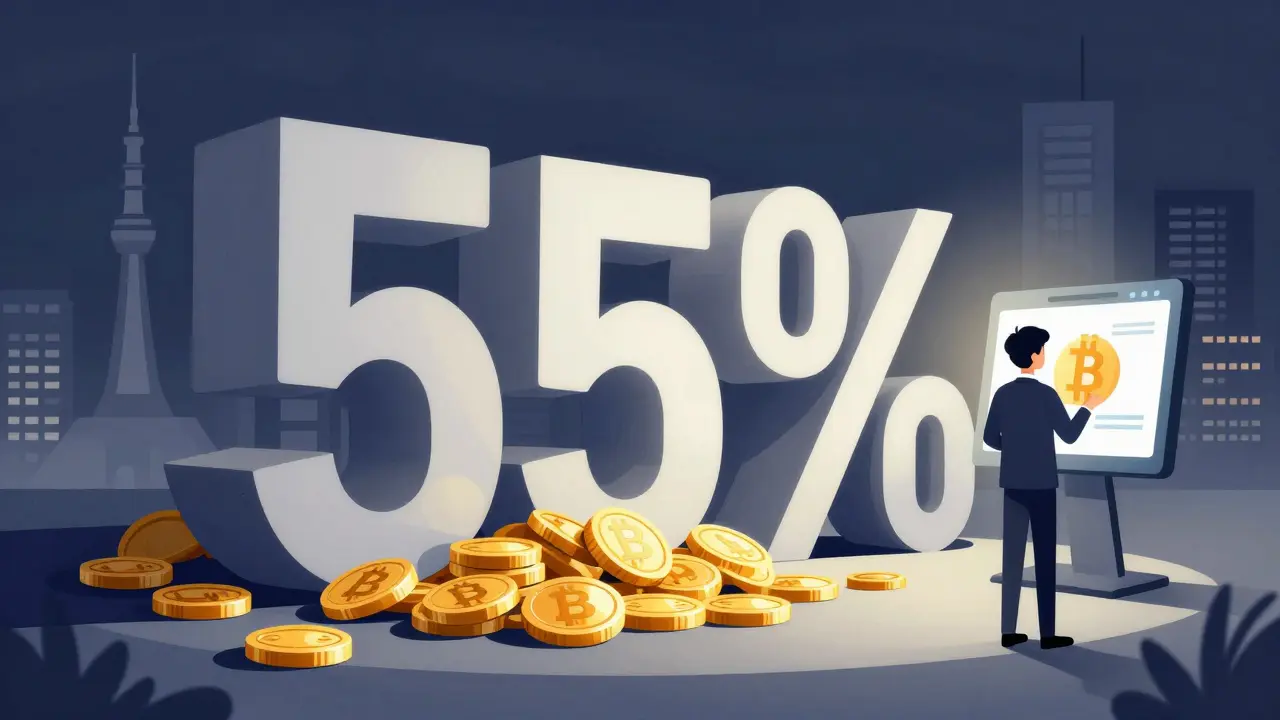
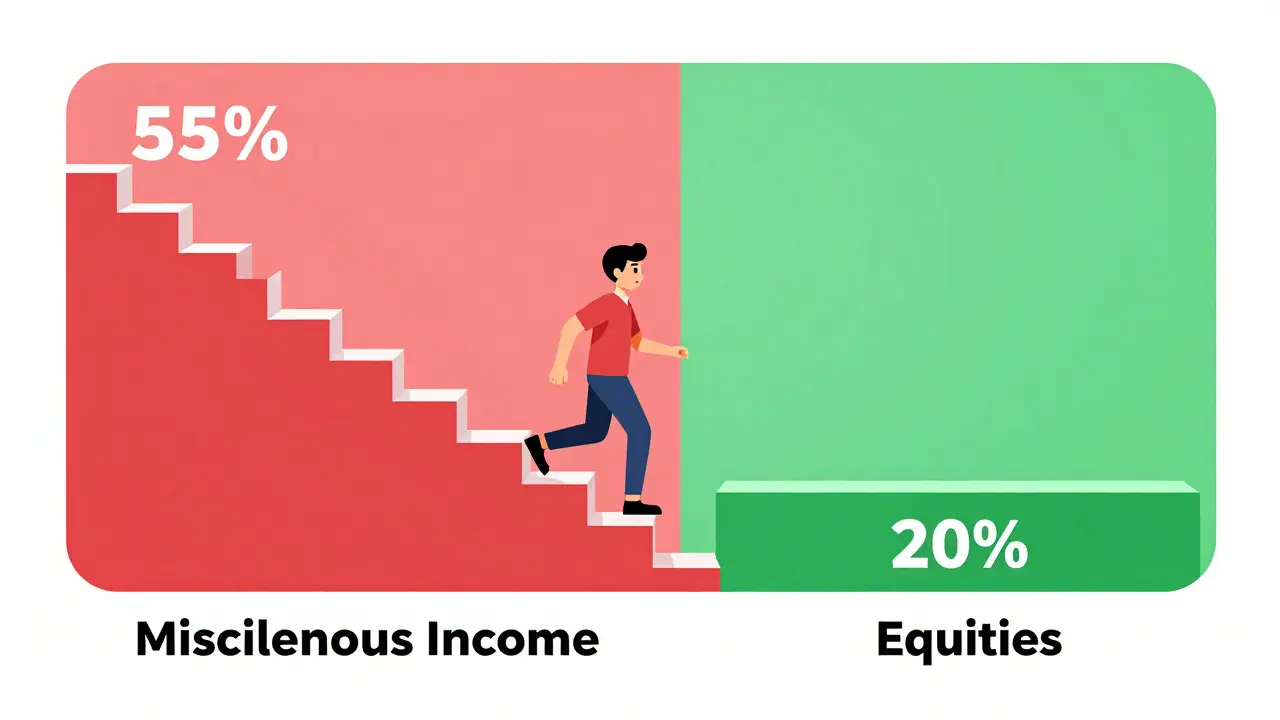
To understand why this matters, we have to look at how Japanese cryptocurrency tax is a system where digital asset gains are categorized as miscellaneous income and taxed at progressive rates . Unlike stocks, which enjoy a flat tax, crypto has been treated more like a side hustle or a lottery win. This creates a massive gap: if you make a lot of money in crypto, you pay significantly more than someone making the same profit in the stock market. If you're a high earner, that 55% hit is a combination of national income tax and local inhabitant taxes.
How the Current Tax System Actually Works
For those currently filing, the process is straightforward but painful. The National Tax Agency (NTA) treats your crypto as property. This means you aren't taxed when you simply buy and hold your assets, but the moment you "dispose" of them, the tax clock starts ticking. A disposal event isn't just selling for Yen; it's also trading one coin for another or using Bitcoin to buy a coffee. Every single one of these moves is a taxable event.
The tax burden is split into two main parts. First, there is the national income tax, which scales from 5% to 45% based on how much you earn. Then, there is the inhabitant tax, which is a flat 10% (split between your prefecture and municipality). When you add those together, you hit that dreaded 55% ceiling. If your total gains exceed 200,000 JPY, you're legally required to file a tax return between February 16 and March 15 of the following year.
| Asset Type | Tax Category | Tax Rate | Holding Period Benefit? |
|---|---|---|---|
| Cryptocurrencies | Miscellaneous Income | 15% to 55% (Progressive) | No |
| Listed Stocks | Separate Self-Assessment | Flat 20% | Yes |
| Non-Residents | Flat Rate | 20% | No |
The Great Shift: Moving Toward a Flat 20% Rate
The government finally noticed a worrying trend: investors were leaving. Data showed a 32% drop in domestic trading volume as people moved their capital to Singapore or Dubai. To stop the bleed, the Liberal Democratic Party (LDP) pushed for a massive reform to implement a flat 20% tax rate by 2026. This change is designed to align crypto with how equities are taxed, removing the "miscellaneous income" penalty for high earners.
This is a game-changer for the Japanese cryptocurrency tax environment. By capping the rate at 20%, Japan is attempting to transform itself into a global Web3 hub. This isn't just about lower taxes; the new framework also introduces loss carry-forward provisions. Previously, if you lost money this year, you couldn't use that loss to offset your taxes next year. Now, a three-year carry-forward rule allows investors to manage their risk without being punished by the tax office during a market crash.
Compliance and the Role of CAESPs
One thing that hasn't changed is the scrutiny. Japan is a member of the Financial Action Task Force (FATF), meaning they are incredibly strict about money laundering and reporting. Every single exchange operating in the country must be a registered Crypto-Asset Exchange Service Provider (CAESP). These providers are required to perform strict KYC (Know Your Customer) checks and share investor data directly with the NTA.
Because the NTA requires precise tracking of every transaction, doing this by hand is nearly impossible. Most traders now rely on specialized software to calculate their cost basis. The complexity is so high that a majority of retail investors now seek professional tax assistance just to avoid accidental evasion. If you're trading across multiple wallets and exchanges, keeping a detailed ledger is no longer optional-it's a survival requirement.
Comparing Japan to the Global Stage
When you look at the rest of the world, Japan's previous 55% rate looked like an anomaly. In the United States, the system differentiates between short-term and long-term holdings, with long-term rates as low as 0% to 20%. In contrast, Japan previously taxed a coin held for ten years the same as a coin held for ten minutes. This lack of a "holding period" incentive made long-term investing mathematically unattractive compared to other countries.
By moving to 20%, Japan is catching up to the "mature market" standard. While it's still not a "tax haven" like Portugal or Singapore, it removes the primary barrier that caused talent and capital to flee to Hong Kong or the UAE. The goal is clear: reclaim a larger slice of the global crypto market, which has shrunk from 8.2% of the global share in 2021 to just 3.7% in 2024.

Common Pitfalls and How to Avoid Them
Even with the new 20% rate, there are traps that can land you in hot water with the NTA. The biggest mistake is forgetting that "crypto-to-crypto" trades are taxable. If you swap Ethereum for Solana, you have effectively sold your ETH at the current market price and bought SOL. You owe tax on any gain from that ETH at the moment of the swap.
Another common error is ignoring staking rewards. When you earn rewards through Staking or liquidity providing in DeFi, those rewards are typically treated as income at the time they are received. If you wait until you sell those rewards two years later to calculate the tax, you might find yourself underpaying, which can lead to heavy penalties during an audit.
Is the 55% tax rate still active in 2026?
The transition to a flat 20% rate was targeted for fiscal year 2026. While the progressive system (up to 55%) was the standard for years, the new reforms aim to align crypto with equity taxes. You should check the latest NTA guidance for the specific date the 20% flat rate becomes the legal standard for your specific filing period.
Do I have to pay tax if I only hold my crypto?
No. In Japan, simply buying and holding cryptocurrency is not a taxable event. Taxation only occurs when you dispose of the asset, which includes selling it for fiat, trading it for another cryptocurrency, or using it to purchase goods and services.
What is the reporting threshold for crypto gains?
Generally, individuals are required to report cryptocurrency gains if they exceed 200,000 JPY. If your total miscellaneous income from crypto is below this amount, you may not be required to file a separate return, though you should verify this with a tax professional based on your total annual income.
Can I deduct losses from previous years?
Under the new reform package, Japan has introduced a three-year loss carry-forward provision. This allows you to use losses from previous years to offset gains in the current year, a significant improvement over the old system where losses expired at the end of the calendar year.
How does Japan tax non-residents?
Non-permanent residents typically face a simplified flat tax of 20% on cryptocurrency income earned within Japan, rather than the complex progressive brackets applied to permanent residents.
Next Steps for Investors
If you are currently trading in Japan, your priority should be documentation. Start by exporting all your transaction histories from every exchange you use. Don't rely on the exchange to keep these records forever; download your CSV files monthly. If you've had significant losses over the last few years, consult a tax accountant to see if you can apply the new loss carry-forward rules to your 2026 filings.
For those considering moving capital back into Japanese exchanges, the 20% flat rate makes the domestic market much more attractive. However, keep in mind that the reporting requirements remain strict. Use a reputable CAESP and ensure your KYC is up to date to avoid any disruptions in your account access during the tax season.
 Finance




Suvoranjan Mukherjee
April 8, 2026 AT 19:49This shift to a 20% flat rate is absolutely massive for the Web3 ecosystem in Japan! The capital flight to Dubai and Singapore was a huge red flag, but aligning crypto with equities is a total game-changer. The loss carry-forward provision is the real MVP here because the volatility in this market makes the old "use it or lose it" system a total nightmare. Really exciting to see the LDP finally catching up to the global standard! 🚀
david head
April 10, 2026 AT 19:20Finally some good news for the bulls 🙌
Arwyn Keast
April 11, 2026 AT 03:10Typical bureaucratic inertia. They wait until the liquidity has already migrated to offshore havens before introducing a basic separate self-assessment regime. The regulatory arbitrage was blindingly obvious for years, yet the NTA insisted on treating digital assets as mere miscellaneous income. Absolute shambles.
vijendra pal
April 12, 2026 AT 20:25Brooo 55% is just insane!! 😂 Who would even keep money there? Glad they finally fixed it but i bet some people still dont know how to file. Use a good tool or just pay a pro lol 📈🔥
June Coleman
April 13, 2026 AT 08:48Oh sure, because the government just *loves* giving us money back. I'm sure the transition to 20% will be totally seamless and not involve any weird loopholes that only benefit the ultra-rich. Just wonderful.
JERRY ORTEGA
April 14, 2026 AT 12:18just a heads up for anyone new to this... those crypto-to-crypto swaps are where people usually mess up. you dont see the cash hitting your bank so it feels like nothing happened but the tax man sees it as a sale. definitely keep those CSVs updated
Sonya Bowen
April 14, 2026 AT 14:06Precision is key. Documentation avoids audits.
Matthew Wright
April 16, 2026 AT 01:12I've always wondered about the CAESP reporting... is the data sharing real-time, or is it a batch upload at the end of the quarter??? Either way, it makes the manual ledger approach basically obsolete...
Bruce Micciulla Agency
April 17, 2026 AT 14:39the fundamental flaw here is that the market perceives a 20 percent flat tax as a win while ignoring the fact that the NTA is simply tightening the surveillance net via CAESPs making it virtually impossible to hide assets in a way that was viable back in 2017 and if you actually analyze the capital flow you see that the 32 percent drop wasnt just about tax rates but about a systemic failure to integrate DeFi protocols into the legal framework which means we are just trading a high tax for high surveillance
akash temgire
April 18, 2026 AT 16:27The reporting threshold of 200,000 JPY remains a critical detail for retail traders.
Alexandra Lance
April 20, 2026 AT 15:25Lol a 20% tax? That's just the government admitting they can't stop the blockchain. I bet the NTA is actually using this as a honeypot to track every single wallet movement before the Great Reset happens 🙄🤡
Emily 2231
April 22, 2026 AT 05:02The NTA is merely a tool for globalist surveillance and the 20 percent rate is a lure to bring the dissidents back into the system where they can be monitored more effectively no one believes this is about investment growth
Lauren Gilbert
April 22, 2026 AT 22:28It is quite fascinating to consider how the perception of value shifts when a government decides to legitimize a digital asset by taxing it like a stock, as it suggests that we are moving away from the wild-west era of cryptocurrency and into a more structured, almost corporate phase of existence where the rebellious nature of decentralized finance is slowly being absorbed into the very machinery of the state it was meant to bypass, which makes me wonder if the spirit of crypto is lost when it becomes this compliant.
Sharhonda Walker
April 24, 2026 AT 00:17Just a remidner that staking rewardes are taxed as income immediatly! dont wait untill the end of the year to track them or youll be in big trouble with the audit
Siddharth Bhandari
April 24, 2026 AT 17:15For those using DeFi, be careful with liquidity pools. The wrapping and unwrapping of tokens can often be interpreted as a disposal event by the NTA.
alex rodea
April 25, 2026 AT 11:32Glad they made it easier! Keep going everyone!
Manisha Sharma
April 26, 2026 AT 13:38The sheer audacity of thinking a 20% rate is a "gift" is laughable. In my country we understand true economic sovereignty, whereas Japan is just playing catch up with a broken system and a misplaced sense of pride in their regulatory rigor lol
Krystal Moore
April 28, 2026 AT 12:32I literally can't believe people were paying 55%! That is actual robbery! I would have moved to a desert island way before that happened. Like, who just accepts that??
Adriana Gurau
April 28, 2026 AT 19:58Typical retail excitement over a minor adjustment. 🙄 It's still a tax. Get over it.
gladys christine
April 30, 2026 AT 14:46Slaying those taxes!!! Finally we can breathe again omg 💖
Patty Levino
May 1, 2026 AT 17:56If you're feeling overwhelmed by the bookkeeping, just take it one month at a time. Exporting your CSVs now will save you so much stress in March.
Robert Coskrey
May 2, 2026 AT 03:47I believe this is a very positive development, and it will likely lead to increased domestic adoption...!!!
Brooke Herold
May 3, 2026 AT 19:19Interesting to see Japan finally embracing the Web3 vision.
Carol Prates
May 5, 2026 AT 18:56Omg imagine the drama when the first big audit hits because someone thought they could hide their ETH in a cold wallet and the NTA finds it anyway! I'm here for the chaos lol!