


When you walk into a doctor’s office, your medical records should follow you-no matter which hospital, clinic, or pharmacy you visit. But in reality, they don’t. Your records are stuck in silos, locked behind incompatible systems, often requiring fax machines and paper forms to move from one provider to another. That’s not just inefficient-it’s dangerous. A 2023 study found that 34% of medication errors in U.S. hospitals stem from incomplete or outdated patient data. Enter blockchain: not as a magic fix, but as a trusted layer that helps different systems talk to each other without giving up control or security.
MedRec: Putting Patients in Charge of Their Records
Developed by MIT researchers in 2016, MedRec was one of the first real attempts to use blockchain for electronic health records. Instead of storing your full medical history on the blockchain, MedRec stores only cryptographic hashes-digital fingerprints-that point to where your actual records are kept. Think of it like a library catalog: the book stays in the library, but the catalog tells you exactly where to find it and who last accessed it. What makes MedRec different is that you control access. Every time a doctor adds a new note, your phone or app gets a notification. You can approve or deny that provider’s request to view your record. No more blanket consent forms. No more hidden data sharing. This system runs on Ethereum, which means it’s public and transparent. But that also means it’s slow-only about 15 transactions per second. That’s fine for logging who accessed your records, but not for handling thousands of daily lab results or prescriptions. Doctors using MedRec at Beth Israel Deaconess Medical Center reported that while it improved communication, it added about seven minutes per patient during the early rollout. Why? Because every new record required patient approval. It forced a cultural shift: providers had to ask permission, not assume access. That’s hard in fast-paced clinics. But for patients, especially those with chronic conditions seeing multiple specialists, it was a game-changer.Change Healthcare: Fixing the Claims Mess
If you’ve ever waited months to get paid for a medical service-or worse, been denied for a reason you didn’t understand-you’ve felt the pain of the U.S. claims system. Change Healthcare launched its blockchain network in January 2018 to fix this. The system doesn’t store your medical records. It logs every step of a claim: submission, review, denial, appeal, payment. Each of these steps becomes a verified transaction on the blockchain. Before blockchain, a claim could bounce between insurers, providers, and clearinghouses for weeks. Now, anyone with permission can see the exact status in real time. Hospitals report that claim disputes are resolved 40% faster. One hospital cut its accounts receivable days from 42 to 28. That’s $1.2 million in cash flow recovered annually for a mid-sized facility. But here’s the catch: Change Healthcare didn’t replace existing billing systems. It added a trust layer on top. The actual claim data still lives in legacy databases. The blockchain just confirms that the data hasn’t been tampered with. That’s smart. It avoids the massive cost of ripping out old software. But it also means hospitals need custom middleware to connect their systems. That adds $15,000 to $50,000 per installation. And the API documentation? Many admins say it’s lacking real-world examples for complex denials.Avaneer Health: The Consortium That Changed the Game
Avaneer Health is different. It’s not a startup. It’s a joint venture between CVS Health, Anthem, Cleveland Clinic, and PNC Bank. These aren’t small players-they’re giants. And they built Avaneer because they were tired of competing against each other’s data systems. Avaneer runs on Hyperledger Fabric, a permissioned blockchain. That means only approved organizations can join. No public access. No mining. No energy waste. It’s fast-3,500 transactions per second-and handles 15 million monthly transactions for provider directories, claims, and eligibility checks. Response times for 95% of queries are under 200 milliseconds. In January 2024, Avaneer launched Direct Data Exchange, which verifies patient insurance eligibility in real time across 180 million lives. Before, a front desk clerk had to call an insurer or wait for a portal update. Now, it’s instant. That reduces no-shows and front-office delays. But Avaneer isn’t perfect. Critics say it’s just another walled garden. If only big insurers and hospital systems are in the network, what about small clinics or rural providers? Without open standards, Avaneer risks becoming a new kind of monopoly. The key to its long-term success? Opening up to smaller players while keeping control over who can join.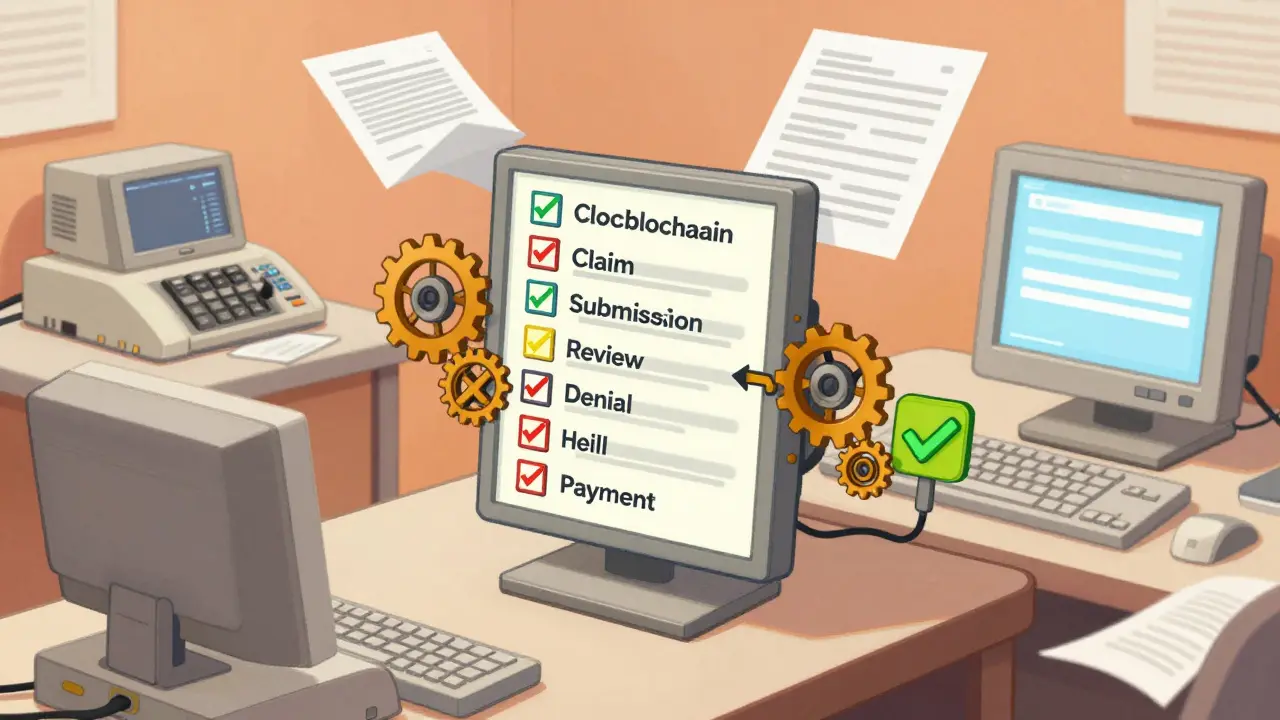
Patientory: Monetizing Data, One Patient at a Time
Patientory is the only platform that lets you earn money from your health data. It’s HIPAA-compliant, encrypted with AES-256, and used by over 3,000 healthcare facilities. But here’s the twist: patients can choose to share anonymized data with researchers, pharmaceutical companies, or public health agencies-and get paid for it. Users earn $120 to $300 per year through these exchanges. That’s not a lot, but it’s real money. And it turns patients from passive data subjects into active participants. In pilot programs, 72% of users said they felt more in control of their health. The catch? Patientory requires stable internet-minimum 10 Mbps. That’s fine in cities, but in rural areas, it’s a barrier. Also, while the app is easy for patients, staff training takes 60 to 80 hours. One hospital CIO on Reddit said it took eight months and $150/hour for three blockchain specialists to get it running. But they cut data breaches from 12 per year to just two. In early 2024, Patientory added AI to its platform. Now, blockchain-secured data feeds into machine learning models that predict chronic disease risks. Early results show a 22% improvement in accuracy for conditions like diabetes and heart failure. That’s not just convenience-it’s prevention.CoralHealth: Stopping Medication Errors Before They Happen
Medication errors kill over 250,000 people in the U.S. every year. CoralHealth tackles this head-on with a mobile app that uses blockchain to track prescriptions from doctor to pharmacy. When a doctor writes a prescription, the app checks it against your full medication history, allergies, and known drug interactions. If there’s a conflict, it triggers an alert. In a pilot at Johns Hopkins Hospital, CoralHealth reduced medication errors by 47%. Pharmacists love it. One wrote: “I caught a dangerous interaction between a blood thinner and a new antidepressant that the doctor missed.” But CoralHealth doesn’t connect to most pharmacy benefit managers (PBMs). That means it only works for 62% of prescriptions-those paid out-of-pocket or through direct provider networks. If your insurance uses a PBM that doesn’t integrate, the system can’t verify your formulary or prior authorization status. That’s a big limitation. Still, the app has a 4.2/5 rating on the Apple App Store. Patients appreciate the simplicity. Most become comfortable using it within two weeks. For a tool that prevents life-threatening mistakes, that’s a win.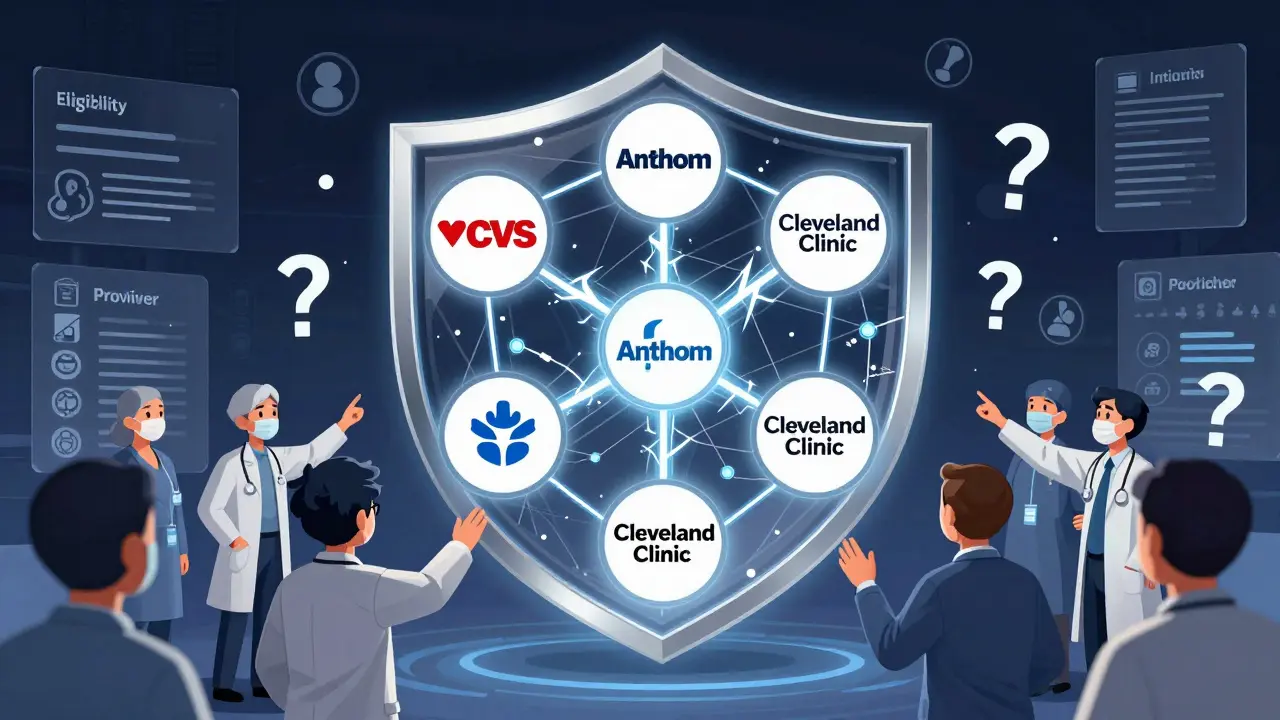
 Finance





Bill Sloan
January 15, 2026 AT 19:27Deb Svanefelt
January 16, 2026 AT 01:10CHISOM UCHE
January 16, 2026 AT 10:11Callan Burdett
January 16, 2026 AT 20:57ASHISH SINGH
January 18, 2026 AT 12:15Alexandra Heller
January 19, 2026 AT 05:32Haley Hebert
January 20, 2026 AT 22:27Kelly Post
January 21, 2026 AT 02:40Jill McCollum
January 22, 2026 AT 04:20myrna stovel
January 22, 2026 AT 04:52Lauren Bontje
January 24, 2026 AT 04:47Andre Suico
January 25, 2026 AT 09:40Anna Gringhuis
January 26, 2026 AT 03:51Bryan Muñoz
January 26, 2026 AT 14:41Hannah Campbell
January 27, 2026 AT 21:42Stephen Gaskell
January 28, 2026 AT 23:35Pat G
January 29, 2026 AT 03:52Alexis Dummar
January 30, 2026 AT 13:47Chidimma Okafor
January 31, 2026 AT 04:01