

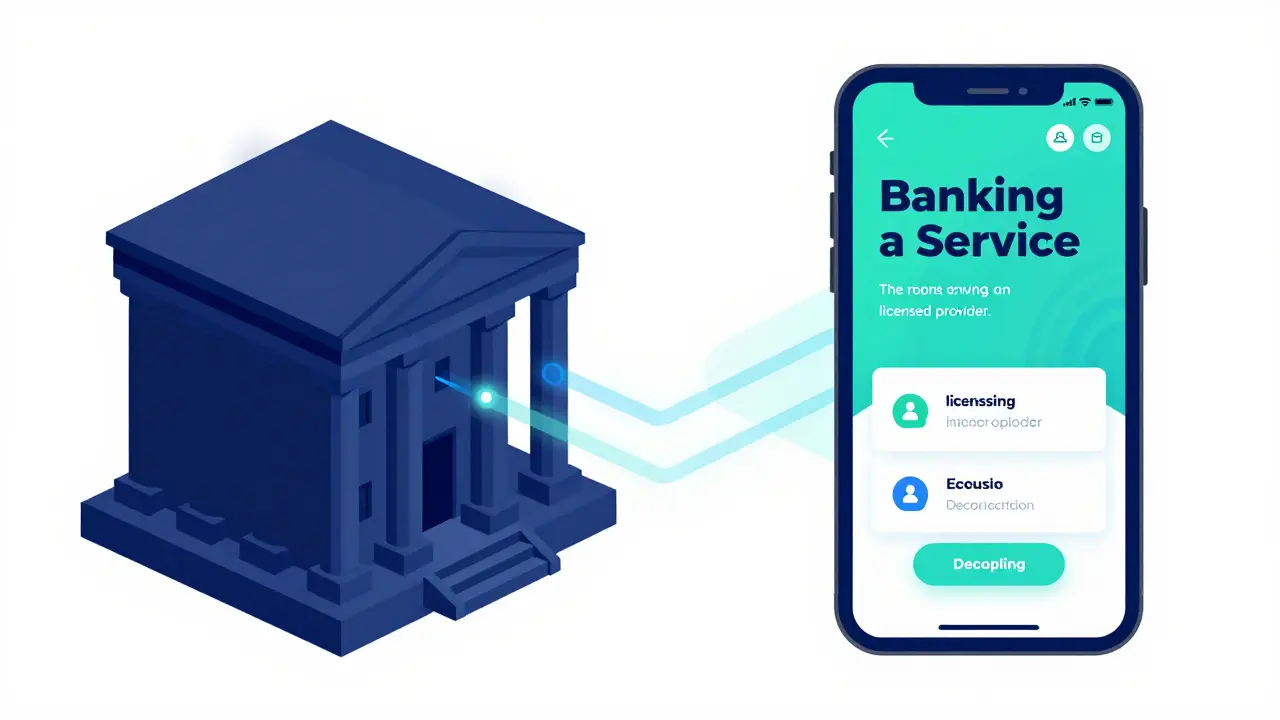
Imagine wanting to launch a financial app-maybe a high-yield savings tool or a niche business wallet-but you don't have a banking license, millions in capital, or a direct line to the central bank. In the past, that was a dead end. Today, Banking as a Service is a financial model where licensed banks provide their regulated infrastructure via APIs to non-bank companies. Also known as BaaS, this system allows brands to embed financial products directly into their user experience without the regulatory nightmare of starting a bank from scratch. It's the hidden engine powering a massive shift toward BaaS use cases that make money move faster and more intuitively than ever before.
The Core Mechanics of BaaS
At its heart, BaaS is about decoupling the banking license from the customer interface. Instead of a traditional bank owning the entire stack-from the vault to the mobile app-the process is split. A licensed bank (the provider) handles the regulatory compliance and ledger, while a fintech or brand (the distributor) handles the user interface and customer acquisition.
This is made possible through RESTful APIs and GraphQL interfaces. For example, when you open an account in a non-bank app, that app sends a request to the BaaS provider's API. The provider then performs a KYC (Know Your Customer) check and opens a real, regulated account in the background. This architecture allows a company to go to market significantly faster-Gartner noted a 68% faster time-to-market for BaaS implementations compared to traditional infrastructure projects.
Real-World BaaS Use Cases and Applications
BaaS isn't just for "neobanks." It's being woven into almost every industry. Here are the most impactful ways it's being used today:
Embedded Finance for Non-Financial Brands
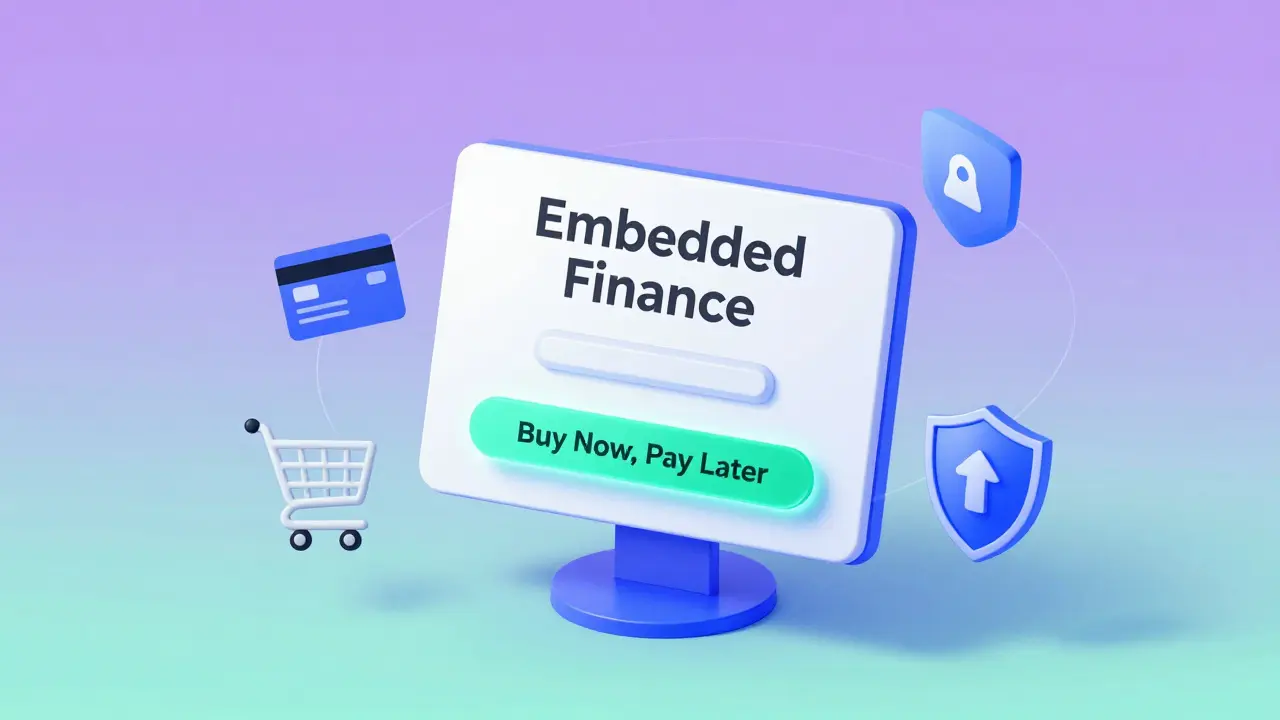
This is the "invisible banking" trend. Think of a retail giant that wants to offer a "Buy Now, Pay Later" (BNPL) option or a branded debit card. Instead of partnering with a third-party payment processor that takes the customer away from their site, the brand uses BaaS to build the financial product directly into their checkout flow. This keeps the customer in their ecosystem and provides a seamless experience.
Niche Audience Banking
BaaS allows companies to build financial products for specific groups that traditional banks ignore. A great example is Raisin, which created a European savings marketplace. By leveraging Starling Bank's infrastructure, they could offer savings accounts to hundreds of thousands of users without needing their own banking charter.
SME Lending and Credit Automation
Small and medium enterprises (SMEs) often struggle to get loans because traditional underwriting is slow. BaaS providers like Tuum offer specialized lending modules that can process thousands of loan applications per second. By integrating these APIs, a B2B software company (like an invoicing platform) can offer instant credit lines to its users based on their real-time cash flow data.
Digital Wallets and Neobanking
Almost every modern "challenger bank" started with some form of BaaS or a deep partnership. Chime, for instance, uses partnerships with The Bancorp Bank and Stride Bank to provide FDIC-insured accounts. This allows them to focus entirely on a superior mobile app while the partner banks handle the heavy lifting of federal regulation.
| Feature | Traditional Bank | BaaS Provider | Embedded Finance |
|---|---|---|---|
| Licensing | Self-owned | Provides license to others | Rents license via BaaS |
| Time to Market | Years | Months | Weeks/Months |
| Customer Ownership | Direct | Indirect (via partner) | Direct (Brand owned) |
| Primary Goal | Stability/Deposit growth | Infrastructure scale | User experience/Retention |
The High Cost of "Easy" Integration
Vendors often promise a "plug-and-play" experience, but the reality is grittier. Integrating a BaaS platform isn't as simple as adding a plugin to a website. According to developer surveys, a full integration typically takes 6 to 9 months and requires a dedicated team of 3 to 5 engineers. Why? Because you aren't just moving data; you're moving money.
Developers frequently struggle with webhook delivery failures, which can lead to reconciliation nightmares. If a user's account is funded but the webhook fails to notify the app, the user sees a zero balance while their money is actually sitting in the bank. This creates a massive trust gap that a slick UI can't fix.
Then there's the regulatory mapping. If you're a company operating in both the UK and the US, you can't use a single API configuration. You have to adapt to the UK's FCA requirements and then map those to a patchwork of US state-by-state regulations. This is where many projects stall, as the compliance overhead often outweighs the technical build.
Risks and the Regulatory Tightrope
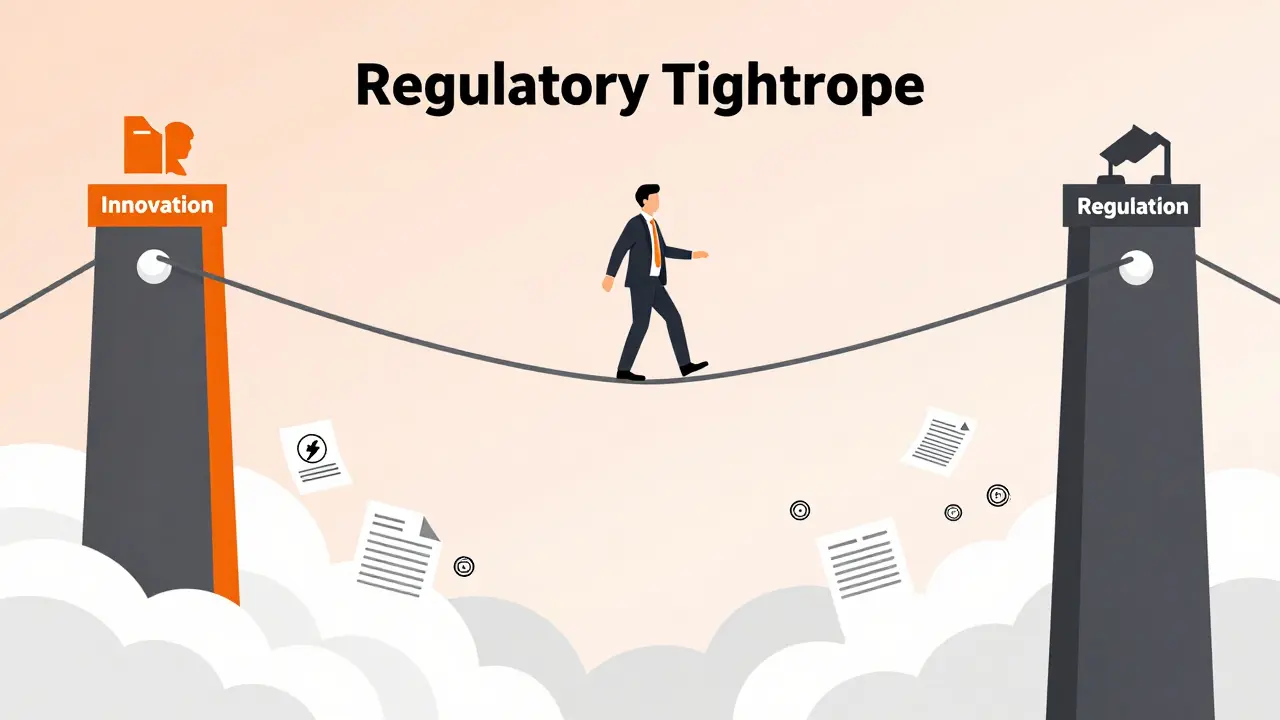
The rapid growth of BaaS has caught the eye of regulators, and not always in a good way. The FDIC has raised alarms about consumer protection risks in over 60% of reviewed BaaS arrangements. The primary issue is transparency. When a user signs up for a "wallet" via a brand, they often don't realize their money is actually held by a third-party bank. If that bank fails or freezes the account, the user often doesn't know who to call.
We've seen this play out in legal battles, such as the Uber driver lawsuit in California, where drivers alleged insufficient disclosure about the banking partners powering their cashout features. For companies, this means that a "hands-off" approach to compliance is dangerous. You might be renting the license, but the regulator still expects you to protect the consumer.
Furthermore, the EU's Digital Operational Resilience Act (DORA) is forcing BaaS providers to prove their systems can withstand severe disruptions. For smaller BaaS players, the cost of this "resilience testing" could be a barrier that pushes the market toward a few dominant, enterprise-grade providers.
How to Choose a BaaS Partner
If you're looking to implement a financial product, don't just look at the API documentation. Look at the business model. Pricing varies wildly. Some providers, like Starling Bank, might charge an annual base fee plus a per-account fee. Others, like Treasury Prime, may use revenue-sharing models where they take 15-25% of your transaction fees.
Ask yourself these three questions before signing:
- Is the API sandbox realistic? Ensure the test environment mimics real-world failures (like timed-out transactions), not just "happy path" successes.
- Who owns the compliance relationship? Clarify exactly which part of the AML (Anti-Money Laundering) process the bank handles and where your responsibility starts.
- What is the SLA for support? In finance, a 4-hour response window is an eternity. Look for providers with 15-minute response SLAs for critical failures.
What is the difference between BaaS and Embedded Finance?
BaaS is the infrastructure-the actual plumbing and licenses provided by a bank. Embedded Finance is the application of that infrastructure. For example, BaaS is the API that allows a company to open a bank account; Embedded Finance is the "Apply for a Loan" button inside a Shopify store.
Do I need a banking license to use BaaS?
No, that is the primary advantage of BaaS. The BaaS provider is a licensed bank that "rents" its regulatory umbrella to you. However, you are still responsible for adhering to consumer protection laws and ensuring your platform doesn't facilitate fraud.
Is BaaS secure for end-users?
Generally, yes, as long as the provider is a licensed bank with a recognized charter. Funds are typically protected by government schemes like the FDIC in the US or the FSCS in the UK. The risk usually lies in the "intermediary layer"-the app you're using-and whether they handle your data securely.
How much does it cost to implement BaaS?
Costs vary by provider. Some use a SaaS model with annual fees (e.g., £20,000/year) and per-user costs. Others use revenue-sharing models. You must also factor in the cost of 3-5 developers for 6-9 months to handle the integration and compliance mapping.
Which industries benefit most from BaaS?
E-commerce, logistics, and B2B SaaS companies benefit most. Any business that handles a high volume of payments or manages funds for its users can use BaaS to increase retention and create new revenue streams through financial services.
Next Steps for Implementation
If you're a product manager, start by mapping your "financial user journey." Don't ask what the API can do; ask what your user needs to happen in 30 seconds or less. If you're a developer, dive into the sandbox immediately. Test the edge cases-what happens when a payment is partially refunded? What happens during a network timeout? This will tell you more about the provider than any marketing slide deck ever will.
For those in highly regulated sectors, your first hire shouldn't be a coder, but a compliance officer who understands the intersection of fintech and local law. The technical build is the easy part; the regulatory alignment is where the real work happens.
 Finance



Prachi Bhadarge
April 15, 2026 AT 01:28Oh sure, just "plug and play" the banking system, right? Like it's just adding a Shopify plugin and not dealing with the absolute chaos of financial reconciliation. The sarcasm from the sales reps is real when they tell you it'll take a few weeks, then you're six months deep in webhook hell and still can't move a dime.
Andrew Southgate
April 15, 2026 AT 14:07I really appreciate the breakdown of the integration timeline here because so many startups go into this blindly and then realize they don't have the engineering bandwidth to handle it properly. It is honestly so wonderful to see a realistic view of the 6 to 9 month window, because while it sounds daunting, it actually gives a team the chance to build a robust foundation that won't crumble the moment you hit a spike in traffic, and if you just rush the KYC process, you're basically inviting every fraudster on the internet to party in your ledger, which is a nightmare nobody wants to deal with after the launch party!
Trudy Morse
April 16, 2026 AT 14:34The decoupling of the license from the UI is just a digital manifestation of the separation of form and function. We're essentially commoditizing trust. It's a basic shift in how we perceive value in the financial ether.
Abhinav Chaubey
April 18, 2026 AT 06:20Typical Western perspective. India has been doing this at scale with UPI and a massive digital stack long before these BaaS providers started charging exorbitant fees for "infrastructure." We don't need to rent licenses when we build ecosystems that actually serve the population instead of just a few niche business wallets for the elite.
Michelle Stanish
April 19, 2026 AT 21:54BaaS is just overcomplicating things. A normal bank account works fine.
Mike Kempenich
April 20, 2026 AT 10:29The point about the FDIC alarms is a bit concerning, but I'm sure the industry will iron it out. It's just growing pains. Most of these companies actually want to do the right thing, they're just moving faster than the regulators can keep up with.
Ian Chait
April 22, 2026 AT 00:53Wake up people!! This is just a way for the big banks to hide their risk in "fintech" shells. Its a shell game. The DORA act is just a front for more surveillance of the money flow. Total control via API... sounds like a dystopia to me, especially with the way the UK is handling these so-called "partnerships" lol.
Nishant Goyal
April 23, 2026 AT 01:38Very helpful guide. The breakdown of BaaS vs Embedded Finance is clear.
Evan Iacoboni
April 24, 2026 AT 07:40The regulatory mapping between the UK and US sounds like a total disaster for any dev team. I want to know why the API specs aren't standardized yet. It's 2024, why are we still mapping state-by-state regulations manually?
Kim Smith
April 26, 2026 AT 06:20I wonder if we're just moving toward a world where the idea of a "bank" is just a ghost in the machine and we only ever interact with the skin of the app... like a digital veil where we don't even know where our money actually exists in physical space anymore, which is kind of trippy if you think about it too long while staring at a screen in a dark room at 3am, just floating in the cloud of someone else's ledger lol.
Sean Douglas
April 27, 2026 AT 09:32The sheer audacity of these providers to claim "plug-and-play" while knowing full well it's a six-month descent into madness is absolutely heartbreaking! My soul weeps for the developers currently trapped in a cycle of failed webhooks and missing balances! It's a tragedy of epic proportions!
Tracy Sperandio
April 28, 2026 AT 10:55This is an absolute powerhouse of a breakdown! The agility you get from renting a license is just electrifying for new entrepreneurs who want to disrupt the stale, dusty halls of traditional banking. Let's get these niche wallets moving and shake things up!
siddharth narula
April 29, 2026 AT 14:41One must consider the ethical dimensions of displacing traditional trust with algorithmic efficiency. 🧐 Is the user truly protected when the interface is a marketing veneer? We must strive for a higher moral ground in financial architecture. 🙏
Adedamola Oyebo
April 30, 2026 AT 00:21The SLA point is critical!! 15 minutes is the only acceptable window for critical failures!!
Yuhan Mo
April 30, 2026 AT 21:25From a technical standpoint, the latency involved in these multi-hop API calls can be a significant bottleneck for high-frequency transactions. The middleware abstraction layer often introduces overhead that can impact the overall throughput of the ledger updates.
Karen Mogollon Gutierrez
May 2, 2026 AT 19:38I find it absolutely appalling that the FDIC is raising alarms about 60% of these arrangements! This is a systemic failure of the highest order! How are consumers expected to trust their life savings to a "branded wallet" that might just be a thin layer of code over a failing bank? It is a scandal!
Kevin Lư
May 3, 2026 AT 01:06Honestly, who even cares if the bank is a third party? If the app looks good and the money is there, it's fine. You guys are stressing way too much over the "plumbing." Just let us use the apps in peace.
nathan jones
May 4, 2026 AT 17:59Pretty straightforward. Makes sense why a lot of apps are doing this now.
Chintu Parikh
May 4, 2026 AT 18:47I am in complete agreement with the author's assessment of the implementation phase. It would be a privilege to collaborate with others on optimizing these regulatory mappings to ensure a seamless transition for all stakeholders involved!
Robert Preston
May 5, 2026 AT 21:49The advice to hire a compliance officer first is the most important part of this entire post. I've seen too many teams build a beautiful product only to have it shut down by a regulator in week two because they didn't understand the AML requirements of a specific jurisdiction.
Jeff Barlett
May 7, 2026 AT 08:53Why would I want a "niche business wallet" anyway? Just use a spreadsheet and a regular bank account like a normal person. This whole BaaS thing feels like a solution looking for a problem.
Vicky Duffala
May 9, 2026 AT 00:28This is the future baby! 🚀 We're basically turning money into software. I love how this empowers a creator to just build a cool experience without needing to beg a bank manager for a loan. It's all about that energy of innovation! 🌟
Kaitlyn Wu
May 9, 2026 AT 13:14We need to ensure that the "inclusive" part of these niche banks actually reaches underserved communities and isn't just another way for brands to extract more fees from people who can't afford them.
Adam Mann
May 10, 2026 AT 14:08It is just so wonderful to think about all the different people who can now start their own little financial projects and help their local communities get better tools for saving and growing their money, and even though it takes a while to set up the technical stuff, the end result of helping someone manage their life better is just so rewarding that the hard work of the developers is totally worth it in the long run!