

Have you ever stumbled upon a cryptocurrency with a name that sounds incredibly official, only to find it’s trading on the absolute edge of obscurity? That is exactly what happens when you look into NewYork Exchange, often referred to by its ticker symbol NYE. It promises a bridge between traditional commodities and blockchain technology, yet it sits at rank #7539 or lower on major global trackers. If you are wondering whether this is a hidden gem or a trap, you need to look past the marketing and dig into the messy reality of its data.
This isn't just another quick overview. We are going to break down why the numbers for NYE don't make sense across different platforms, who is actually behind this project, and what the real risks are if you decide to buy in. By the end of this, you will know exactly where NYE stands in the crowded crypto landscape of 2026.
The Core Concept: Commodities Meets Blockchain
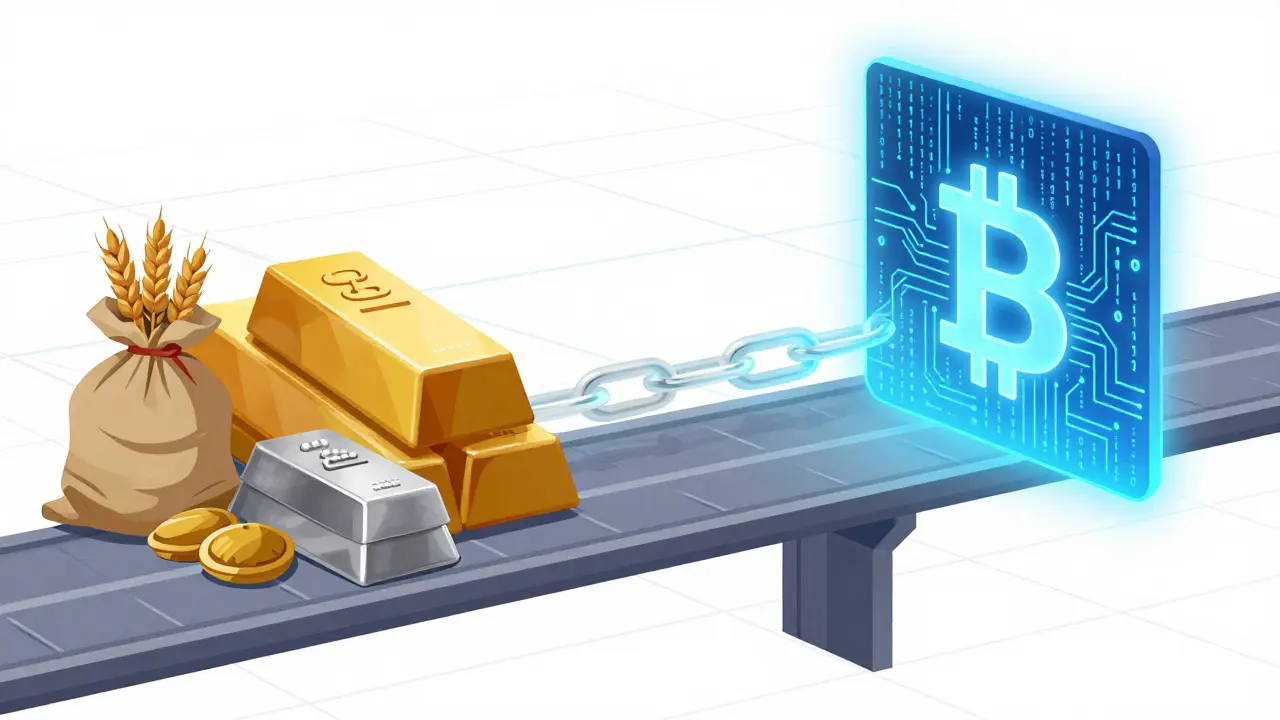
At its heart, NewYork Exchange (NYE) is an open-source platform launched in 2019 designed to facilitate commodity-linked transactions using smart contracts. The pitch is straightforward but ambitious. The team wants to use the NYE token to enable transparent investments and efficient trading of traditional physical assets-like metals or agricultural products-on a decentralized ledger.
Imagine buying a fraction of gold or silver without dealing with a bank or a broker. Instead, you use NYE tokens, and smart contracts handle the ownership transfer automatically. This concept of "tokenizing" real-world assets is hot right now. However, NYE has been around since 2019, long before the current wave of Real World Asset (RWA) projects took off. The question remains: did they execute on this vision, or is it just a promise?
The technical description from aggregators like CoinMarketCap highlights "distributed processing" and "smart contracts" as key features. Bitget adds that it provides a "decentralized and secure means of exchanging value." These are standard buzzwords for almost any blockchain project. What makes NYE specific is its focus on commodities. But here is the catch: there is very little public documentation detailing *which* commodities are actually supported, how settlement works (physical delivery vs. cash), or which partners are involved. Without these details, the "commodity exchange" narrative feels more like a label than a functioning utility.
Tokenomics: The Supply Confusion
If you want to understand the value of any crypto, you have to look at its supply. For NYE, this is where things get confusing. Different data sources give you completely different pictures of how many tokens exist and how many are actually circulating.
| Platform | Total Supply | Circulating Supply | Max Supply |
|---|---|---|---|
| Coinbase | ~600,000,000 | 0 | 600,000,000 |
| Bitget | ~600,000,000 | Not Specified | 600,000,000 |
| Crypto.com | ~600,000,000 | Not Tradable | 600,000,000 |
| CoinMarketCap | ~600,000,000 | 398.81 Million (Self-reported) | 600,000,000 |
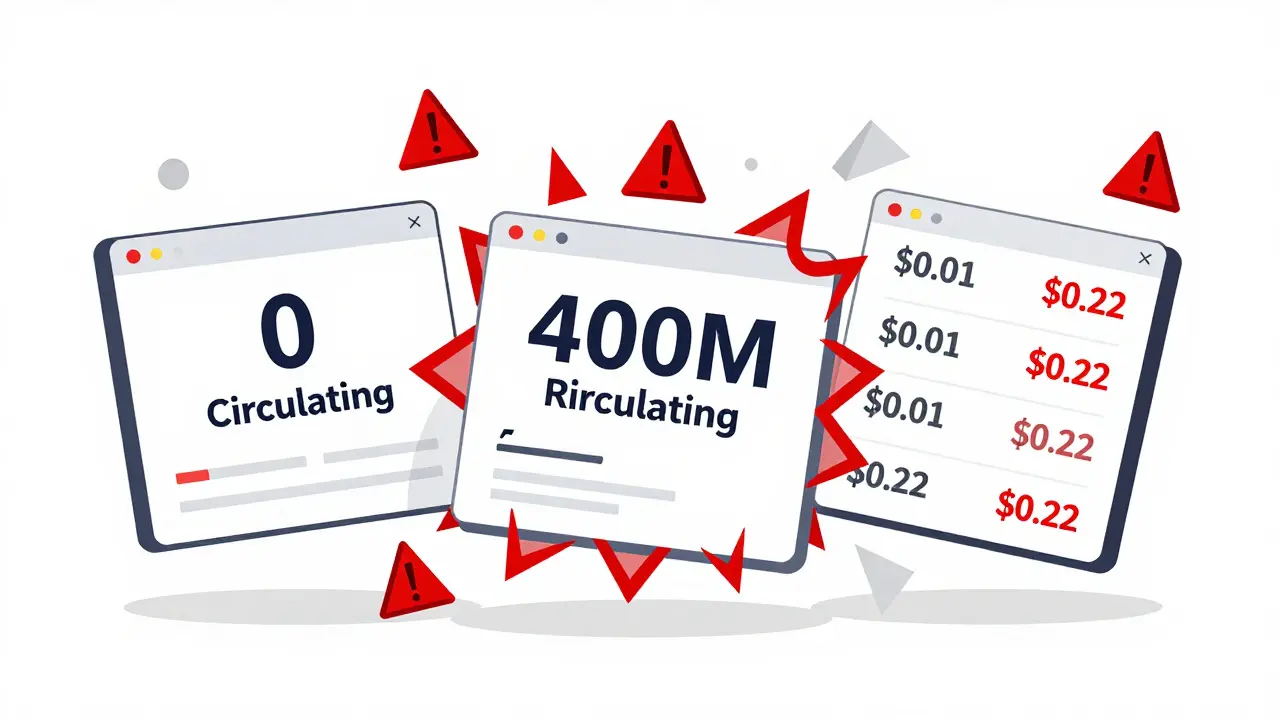
Notice the discrepancy? Coinbase and Crypto.com effectively show zero circulation or no tradability, while CoinMarketCap claims nearly 400 million tokens are in your hands. Why does this matter? Because circulating supply determines the market cap. If only 1 million tokens are truly liquid, the price can skyrocket with a tiny amount of money. If 400 million are floating around, it takes billions to move the needle. This inconsistency is a red flag for investors. It suggests poor data integration or, worse, a lack of transparency from the project itself.
The maximum supply is capped at 600 million NYE. This is a fixed number, meaning no new tokens can be minted after this point. In theory, this creates scarcity. But scarcity only matters if people actually want the token. Right now, the demand side of that equation looks very weak.
Price and Liquidity: A Thin Market
Let's talk about the most important metric for traders: the price. As of June 2026, trying to pin down the exact price of NYE is frustrating. Here is what different sources reported recently:
- Binance Aggregator: ~$0.0128 per NYE with a daily volume of just $5.25.
- Crypto.com: ~$0.0100 per NYE with no volume data.
- Coinbase: Listed at $0.0653 but with a calculated market cap of $0 due to zero circulating supply records.
- CryptoSlate (June 10, 2026): $0.22 per NYE with a market cap of $1.78 million and $467 in daily volume.
Do you see the problem? The price ranges from one cent to twenty-two cents depending on where you look. That is not a healthy market; that is a fragmented one. The daily trading volumes are shockingly low. On some days, less than $10 worth of NYE changes hands globally. Compare that to Bitcoin, which trades hundreds of billions daily, or even mid-tier altcoins that trade millions.
Low liquidity means high risk. If you buy $100 worth of NYE, you might be the biggest buyer in the room. When you try to sell, you could crash the price because there are no other buyers waiting in the order book. This is typical for micro-cap coins ranked below #5000. You are not investing in a liquid asset; you are holding a speculative ticket with limited exit routes.
Who Is Behind NewYork Exchange?
In crypto, anonymity is common, but accountability is rare. For NYE, the veil is partially lifted. Coinbase lists the team as having four members, with Christopher Kolb named as the CEO. That is it. No other names, no LinkedIn profiles, no detailed bios of the developers or advisors.
This small, largely anonymous team structure is concerning for a project that claims to handle "transparent investments" and "commodities." Usually, projects dealing with real-world assets require significant legal and operational infrastructure. Where are the lawyers? The compliance officers? The commodity experts? The absence of this information leaves a big gap in trust.
Governance is another mystery. There is no mention of a DAO (Decentralized Autonomous Organization) or on-chain voting mechanisms. It appears decisions are made centrally by the four-member team. While centralization isn't inherently bad-many successful projects start centralized-it means you have no say in how the protocol evolves. You are relying entirely on Christopher Kolb and his team to act in the best interest of token holders.
Technical Architecture and Security
Technically, NYE operates as a blockchain-based digital currency. Bitget confirms that it uses a public ledger to record transactions, ensuring immutability. CoinMarketCap mentions the use of smart contracts for investment facilitation. However, critical technical details are missing.
We don't know if NYE is an ERC-20 token on Ethereum, a BEP-20 token on BNB Chain, or a native coin on its own independent blockchain. The GitHub repository exists, which is good for open-source verification, but the code hasn't been widely audited by third-party security firms. There are no public audit reports from firms like CertiK or SlowMist available in mainstream searches. For a project handling financial transactions, the lack of visible security audits is a significant oversight.
Performance metrics like transactions per second (TPS) and block times are also undocumented. Without these benchmarks, it's hard to judge if the network is fast enough for actual commodity trading or if it's just a slow, experimental chain.
Risks and Red Flags
If you are considering adding NYE to your portfolio, you need to weigh these serious risks:
- Data Inconsistency: The conflicting supply and price data across major exchanges suggests the token is either poorly integrated or actively manipulated in small venues.
- Liquidity Trap: With daily volumes often under $500, getting your money out quickly without slippage is nearly impossible.
- Regulatory Uncertainty: There is no clear statement on whether NYE is classified as a utility token or a security. Given its link to commodities and investments, it could fall under strict securities laws in the US and EU, posing a legal risk to the project.
- Lack of Adoption: Despite launching in 2019, there are no case studies, user reviews, or evidence of widespread commercial use. The "commodity exchange" feature seems theoretical rather than active.
- Micro-Cap Volatility: Ranked #7539+, NYE is highly susceptible to pump-and-dump schemes or abandonment by developers.
Bitget notes that the value of NYE is "not widely recognized by the market." They speculate that a bull market might bring growth, but this is generic marketing copy, not analysis. In reality, most micro-caps fade away during bull runs as capital flows to established leaders like Ethereum, Solana, or emerging AI tokens.
Is NYE Worth Your Attention?
For the average investor, the answer is likely no. NewYork Exchange (NYE) lacks the liquidity, transparency, and technological clarity required for a safe investment. It occupies a strange middle ground: too obscure to be a viable store of value, but too branded to be a complete scam. It is a "zombie" project-still alive, still listed, but barely moving.
If you are a developer interested in studying how open-source commodity protocols fail or succeed, the GitHub repo offers some educational value. If you are looking for profit, the risks far outweigh the potential rewards. The market cap is negligible, the volume is non-existent, and the team is silent. In the crypto world, silence is rarely a good sign.
Instead of chasing micro-caps with broken data feeds, consider looking at established projects in the Real World Asset (RWA) sector that have clear partnerships, audited code, and actual trading volume. Projects like Ondo Finance or MakerDAO are doing similar work but with institutional-grade transparency. NYE serves as a cautionary tale: a catchy name and a 2019 launch date do not guarantee success in the brutal crypto market.
Can I buy NewYork Exchange (NYE) on Coinbase?
While Coinbase tracks the price and data for NYE, it currently lists the circulating supply as zero, which often means direct trading pairs may not be active or easily accessible for retail users. You should check the specific trading page on Coinbase to see if a buy/sell button is available, as listings can change rapidly.
What is the total supply of NYE tokens?
The maximum total supply of NewYork Exchange (NYE) is capped at 600,000,000 tokens. However, reports on how many of these are currently in circulation vary wildly, ranging from 0 to nearly 400 million, depending on the data aggregator you consult.
Is NYE a safe investment?
NYE carries extremely high risk. It has very low liquidity, inconsistent price data, and limited public information about its team and security audits. It is considered a micro-cap asset with negligible market recognition, making it unsuitable for conservative investors.
Who is the CEO of NewYork Exchange?
According to Coinbase, the CEO of NewYork Exchange is Christopher Kolb. The team is reported to consist of four members, though detailed biographies for the rest of the team are not publicly available.
Why is the price of NYE different on every website?
The price discrepancies are due to extremely low trading volume and fragmented liquidity. Since very few trades occur daily, each exchange shows the last known trade price, which can vary significantly. Additionally, differences in how platforms calculate circulating supply lead to vastly different market cap and price derivations.
 Finance