

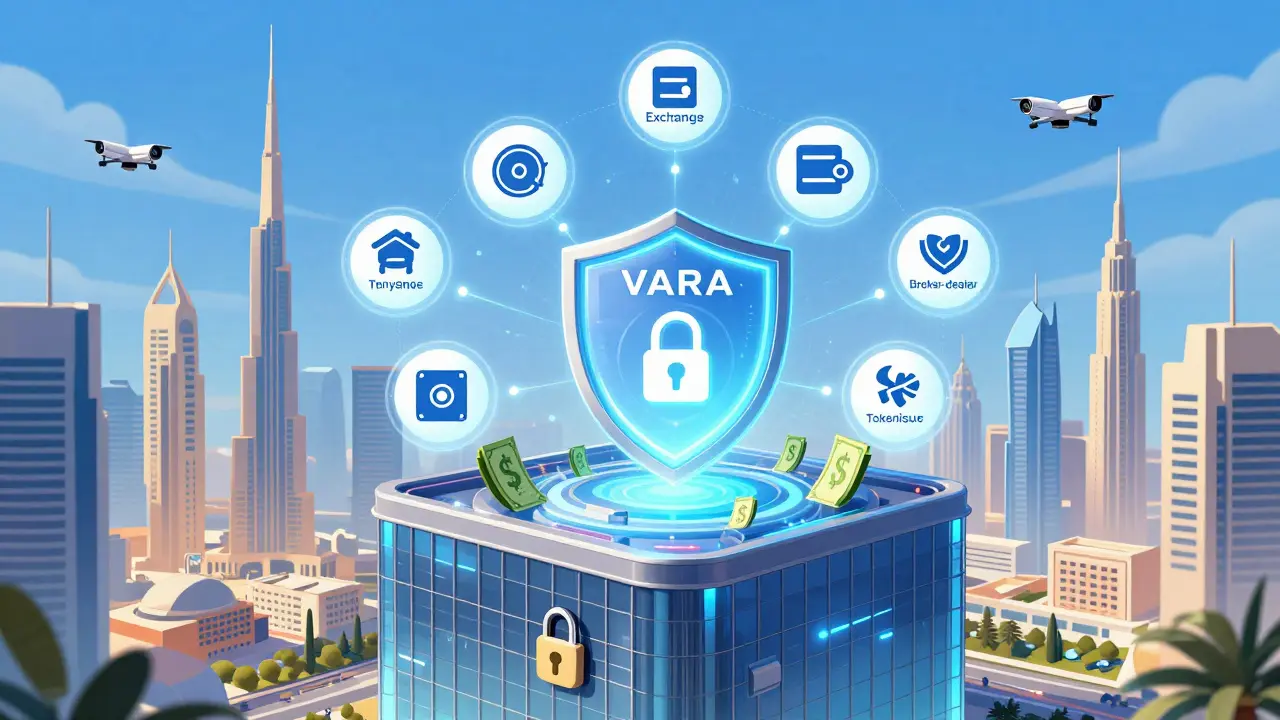
Getting a VARA crypto license in Dubai isn't just about filling out forms. If you're trying to operate a virtual asset business here in 2026, you're stepping into one of the world's most detailed and strict regulatory environments. The VARA (Virtual Assets Regulatory Authority) doesn't just want to know what you do - it wants to see every system, every person, every dollar, and every line of code that keeps your business running. And it’s not optional. If you’re offering crypto services in Dubai - even if you’re based overseas - you need this license, or you risk being shut down.
What Services Need a VARA License?
VARA doesn’t just regulate Bitcoin exchanges. Its rules cover six specific types of virtual asset services. If your business does any of these, you’re under VARA’s watch:
- Exchange services - platforms where users trade crypto for crypto or crypto for fiat like USD or AED.
- Broker-dealer services - acting as an intermediary to buy or sell crypto on behalf of clients.
- Custody services - holding crypto assets for clients. This includes hot and cold wallets, but requires insurance and advanced security.
- Transfer services - moving crypto between wallets or accounts on behalf of users.
- Wallet provision services - offering digital wallets to users, even if you don’t hold the keys.
- Token issuance - creating and launching new tokens. This splits into two categories: Category 1 (full VARA approval needed per token) and Category 2 (must go through a licensed intermediary).
Even if you think you’re just a small startup, if you’re touching any of these services, you’re not exempt. VARA doesn’t care if you’re a solo founder or a team of 50 - if you’re serving users in Dubai, you need to be licensed.
How Much Capital Do You Need?
Capital isn’t just a number on paper. VARA requires real, verified, paid-up capital that you can prove is locked in a Dubai bank account. The amount depends entirely on what services you want to offer:
- Basic services like wallet provision or transfer: AED 100,000 (about $27,000)
- Broker-dealer services: AED 1 million ($272,000)
- Custody services: AED 4 million ($1.1 million)
- Exchange operations: AED 5 million ($1.36 million)
Here’s the catch: if you apply for multiple services, you don’t just pick the highest one. You add them up. So if you want to run an exchange and custody and broker-dealer services, your total capital requirement jumps to AED 10 million - roughly $2.7 million. That’s not a typo. This isn’t a suggestion. This is a hard barrier to entry.
Costs Beyond Capital
Capital is just the start. There are fees you can’t avoid:
- Application fee: AED 40,000 to AED 100,000 - depends on how many services you’re applying for.
- Annual supervision fee: Between AED 80,000 and AED 200,000. This pays for VARA’s ongoing audits, inspections, and monitoring.
- Legal and compliance costs: You’ll need lawyers, auditors, and compliance officers familiar with VARA. Expect at least AED 200,000-500,000 in the first year just for setup.
Many companies think they can handle this in-house. They can’t. VARA’s review process is brutal. If your documentation is sloppy, your business plan vague, or your KYC system outdated, you’ll get rejected - and you won’t get your application fee back.
Operational Rules You Can’t Skip
VARA doesn’t just want to see your money. It wants to see your systems.
- You must be incorporated as a legal entity in Dubai - no offshore shells allowed.
- All board members, directors, and compliance officers must pass a fit-and-proper test. That means clean criminal records, verified financial history, and no ties to sanctioned entities.
- Your business plan must include detailed risk assessments, target markets, and financial projections for at least three years.
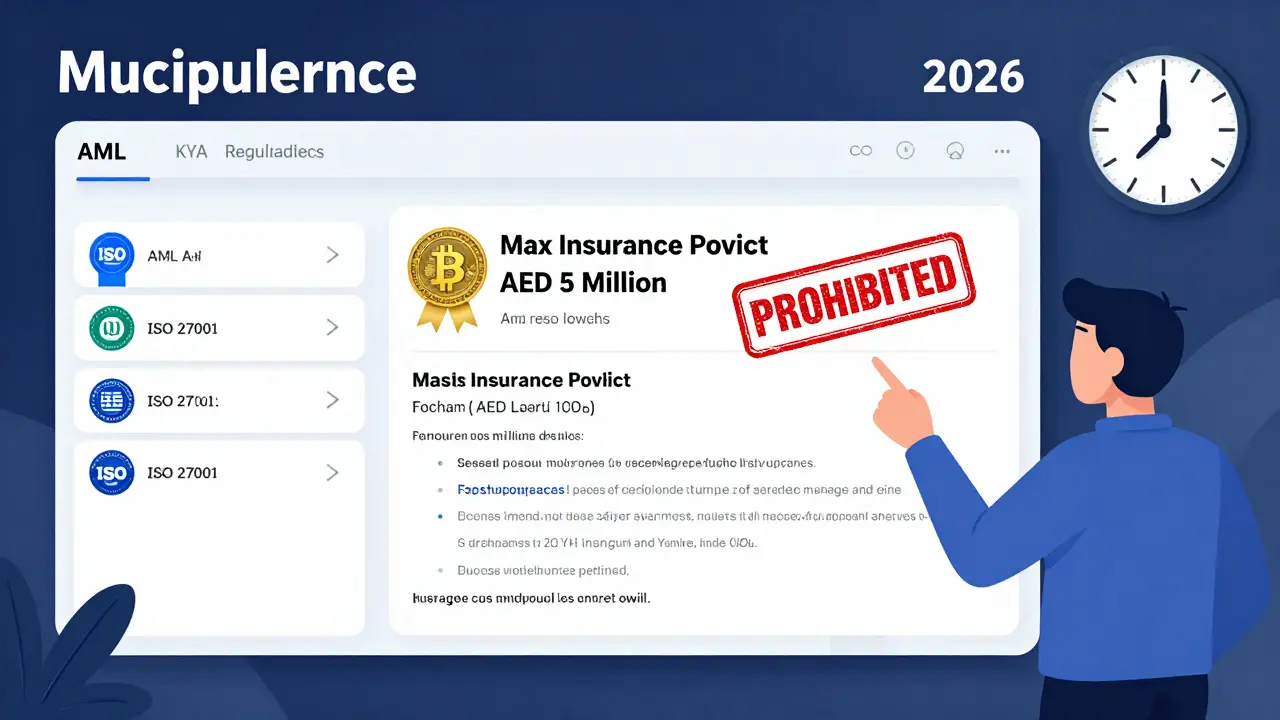
- You need cybersecurity systems that meet international standards - think ISO 27001 or equivalent. This includes penetration testing, encryption, and multi-factor authentication for all staff.
- You must carry insurance covering cyber theft, fraud, and loss of client assets. Minimum coverage is AED 5 million.
- All transactions, customer communications, and compliance logs must be stored for at least five years in a tamper-proof system.
There’s no room for guesswork. VARA doesn’t accept “we’re working on it.” If you can’t prove you have these systems in place before applying, your application won’t move forward.
Strict AML/CFT Rules - No Exceptions
Anti-money laundering (AML) and counter-terrorism financing (CFT) aren’t optional add-ons - they’re the core of VARA’s entire framework.
- Every customer must go through automated KYC - ID verification, proof of address, and source of funds checks.
- Beneficial ownership must be fully disclosed. If a company owns 10% or more of your business, you must identify the real people behind it.
- Transaction monitoring must be real-time. Any unusual activity - like sudden large transfers or frequent small deposits - must trigger an alert and be reported.
- You’re required to file Suspicious Activity Reports (SARs) with VARA. Failure to report can lead to fines, license suspension, or criminal charges.
- Staff must undergo quarterly AML training. Records of training must be kept and submitted during audits.
VARA uses AI-powered tools to scan transaction patterns. If your system can’t flag anomalies, you won’t pass.
Prohibited Activities - What You Can’t Do
VARA has drawn clear red lines. Crossing them means immediate license revocation:
- Privacy coins are banned - Monero (XMR), Zcash (ZEC), and similar anonymous tokens are completely prohibited. No exceptions.
- Marketing must be approved - You can’t run ads, social media campaigns, or influencer promotions without VARA’s written permission. Even minor changes to your website copy require re-approval.
- No unlicensed token sales - Even if you’re based outside Dubai, if your token is accessible to Dubai residents, you need VARA approval.
- No unregulated DeFi protocols - If your platform interacts with decentralized protocols like Uniswap or Aave, you must prove you’ve mapped every smart contract and can freeze or block malicious activity.
One company lost its license in late 2025 because it allowed users to connect their MetaMask wallets to its platform. VARA ruled that this gave users access to unlicensed DeFi services - and therefore, the company was liable.
How VARA Compares to Other UAE Regulators
Dubai isn’t the only place in the UAE with crypto rules. But VARA is the most comprehensive.
- DFSA (DIFC) - Regulates financial services in the Dubai International Financial Centre. More focused on institutional investors and traditional finance. Less clear on DeFi and NFTs.
- FSRA (ADGM) - Abu Dhabi’s regulator. Offers lighter capital requirements but less global recognition.
- SCA and Central Bank - Federal regulators. Apply to companies operating outside free zones. Their rules are less detailed and harder to navigate.
If you’re building a crypto business aimed at global users and want maximum credibility, VARA is the gold standard. It’s the only one that covers everything - from NFT marketplaces to tokenized real estate.
What Successful Applicants Do Differently
Companies that get approved fast don’t just have more money. They do three things right:
- They hire VARA-experienced legal counsel - not general crypto lawyers.
- They build compliance systems before applying - not after.
- They engage with VARA early - through pre-application consultations - to understand exactly what’s expected.
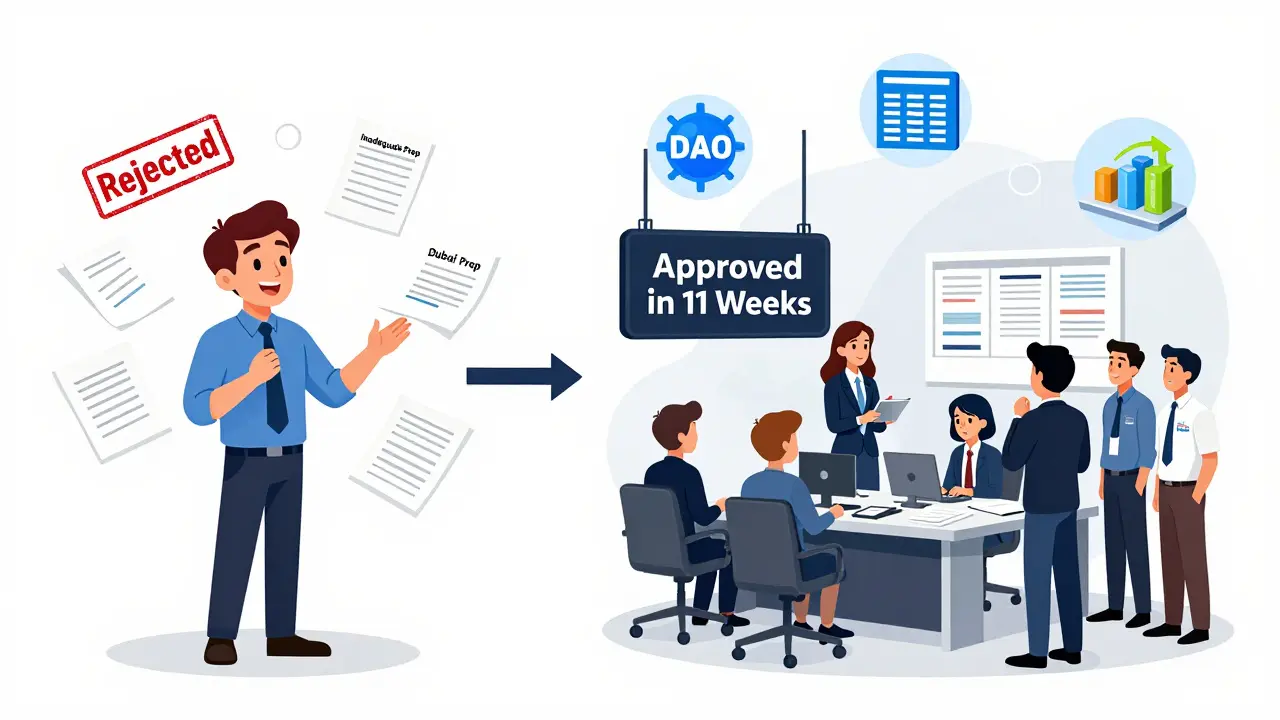
One firm spent eight months preparing before submitting. They had automated KYC, third-party security audits, insurance certificates, and a full audit trail. They got approved in 11 weeks. Another tried to do it alone. They submitted incomplete docs, got rejected, and had to restart - after losing over AED 300,000.
What’s Coming Next in 2026?
VARA isn’t standing still. In early 2026, new guidance was released on:
- DAO governance - if your organization is run by smart contracts and voting tokens, you’ll need to prove how decisions are made and who’s accountable.
- Energy use reporting - mining operations or energy-heavy consensus mechanisms must now disclose carbon footprint and sustainability plans.
- CBDC integration - if your platform plans to accept or trade the digital dirham, you’ll need special authorization.
The message is clear: VARA expects you to evolve with the market. A license today doesn’t mean you’re done. You’ll need to adapt, report, and prove you’re staying compliant - every year.
Can I operate a crypto business in Dubai without a VARA license?
No. If your business provides any virtual asset service to users in Dubai - even if you’re based overseas - you must have a VARA license. Operating without one can lead to fines, asset freezes, and criminal prosecution. VARA actively monitors websites and app stores for unlicensed services and works with international regulators to block access.
How long does it take to get a VARA license?
On average, it takes 4 to 8 months. Simple applications (like wallet services only) can be approved in 3 months if everything is perfect. Complex applications involving custody, exchange, and token issuance often take 6-8 months or longer due to additional scrutiny. Delays usually happen because applicants submit incomplete documentation or fail to meet AML requirements on the first try.
Are privacy coins like Monero allowed under VARA?
No. VARA explicitly bans privacy coins such as Monero (XMR), Zcash (ZEC), and any token designed to obscure transaction history. This is non-negotiable. Even if you’re not actively trading them, allowing users to deposit or withdraw these coins through your platform will result in immediate license suspension.
Do I need to have a physical office in Dubai?
Yes. You must incorporate as a legal entity in Dubai and maintain a physical office address. Virtual offices or PO boxes are not accepted. Your office must be accessible to VARA inspectors and have secure storage for records, hardware, and compliance documentation. Remote teams are allowed, but at least one senior compliance officer must be based locally.
What happens if my VARA license is denied?
You can appeal the decision, but only if you correct the specific issues VARA identified. Common reasons for denial include insufficient capital, incomplete KYC procedures, unverified ownership structures, or lack of cybersecurity proof. You can resubmit after fixing the problems, but you’ll pay the application fee again. There’s no guarantee of approval on the second try.
Can I get a VARA license if I’m not from the UAE?
Yes. VARA welcomes international applicants. Non-UAE residents can own and operate licensed businesses, but key personnel - especially the compliance officer and CEO - must meet VARA’s fit-and-proper criteria. This includes background checks, financial history reviews, and sometimes interviews. You’ll also need a local legal representative to handle correspondence with VARA.
 Finance




Bonnie Jenkins-Hodges
March 8, 2026 AT 21:35Melissa Ritz
March 10, 2026 AT 20:34Cerissa Kimball
March 11, 2026 AT 13:04Basil Bacor
March 12, 2026 AT 23:13Emily Pegg
March 13, 2026 AT 10:17Ethan Grace
March 14, 2026 AT 11:38Jamie Hoyle
March 15, 2026 AT 17:10Jeffrey Dean
March 17, 2026 AT 12:16Brian T
March 18, 2026 AT 20:28Nash Tree Service
March 19, 2026 AT 08:33Jane Darrah
March 20, 2026 AT 03:00Denise Folituu
March 21, 2026 AT 00:35jack carr
March 22, 2026 AT 16:03Eva Gupta
March 24, 2026 AT 11:27Nancy Jewer
March 24, 2026 AT 23:05Ken Kemp
March 25, 2026 AT 10:22Julie Potter
March 25, 2026 AT 18:55