

Quoll Finance: What It Is, Why It's Risky, and What You Need to Know
When you hear about Quoll Finance, a little-known DeFi project with minimal trading volume and no public team. Also known as Quoll Finance token, it appears on some decentralized exchanges but lacks audits, documentation, or clear utility. This isn’t just another obscure crypto—it’s a textbook example of what happens when a project launches with hype but no substance.
Quoll Finance fits into a larger pattern of tokens that pop up on chains like BSC or Polygon, promise high yields, then vanish. It’s similar to CZodiac Farming Token (CZF), a token with a $16 market cap, no team, and zero website, or Launchium (LNCHM), a Solana-based token with no platform or roadmap. These aren’t anomalies—they’re warnings. If a project doesn’t name its team, doesn’t publish a whitepaper, and doesn’t get audited, it’s not a financial tool. It’s a gamble.
Most users who chase Quoll Finance do so because they saw it trending on Twitter or got a push notification about a "new DeFi opportunity." But behind the charts and the hype, there’s no infrastructure. No customer support. No active development. Just a smart contract and a price chart that moves because someone bought a few hundred dollars’ worth. That’s not innovation. That’s speculation dressed up as investment.
Compare this to legitimate DeFi projects. They have GitHub activity, community forums, and real use cases—like tokenizing real estate or improving supply chain traceability. Quoll Finance has none of that. It doesn’t solve a problem. It doesn’t offer a service. It just exists. And when the pumps stop, the liquidity dries up, and the price crashes to near zero—just like ELMON, SWIM, and CRX did before it.
You’ll find posts here about exchanges that shut down, tokens that vanished, and airdrops that turned into traps. Quoll Finance belongs in that same category. It’s not a hidden gem. It’s a red flag wrapped in a whitepaper template. If you’re thinking about jumping in, ask yourself: would you invest in a business that won’t tell you who runs it? In crypto, the answer is always no.
Below, you’ll see real stories of projects that looked promising but collapsed—what went wrong, who lost money, and how to spot the next one before it’s too late. This isn’t about chasing returns. It’s about protecting your capital from the noise.
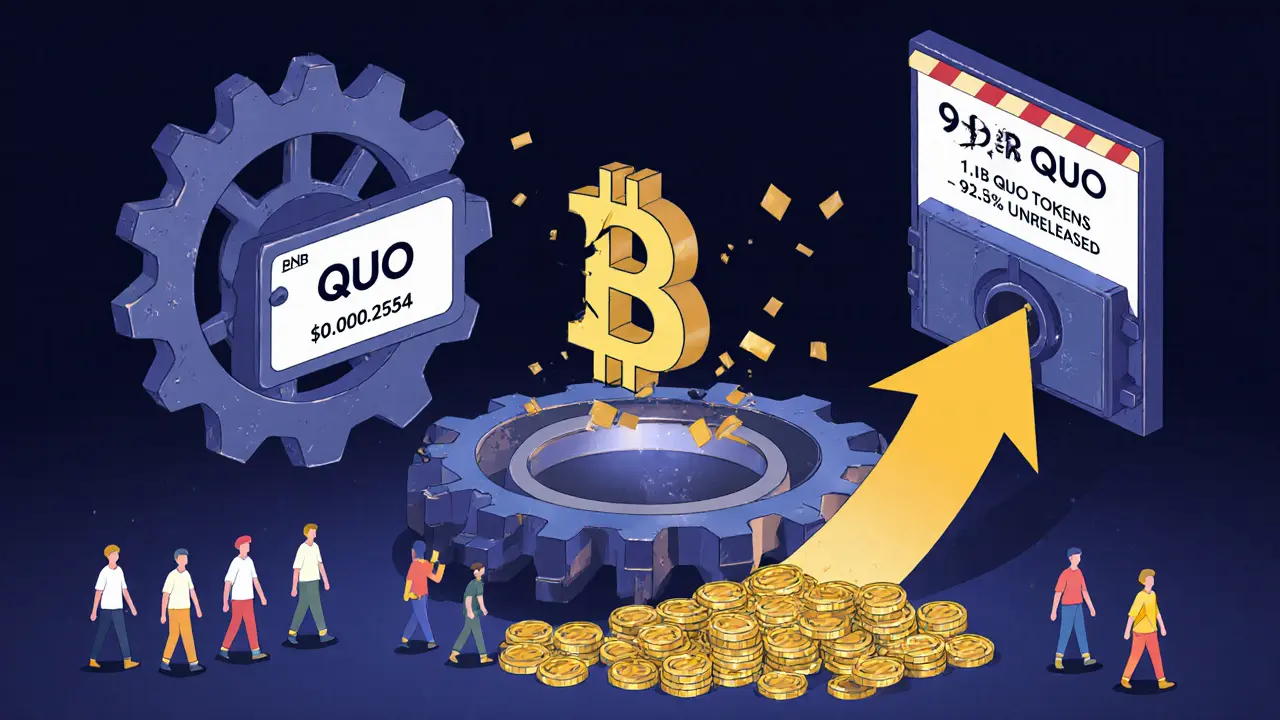
Quoll Finance (QUO) was a niche yield booster on BNB Chain that promised higher rewards from Wombat Exchange. Today, it's inactive, with near-zero liquidity, no development, and a 99% price drop. Here's what went wrong.
Categories
 Finance
Archives
Recent-posts

In‑Depth LYOTRADE Crypto Exchange Review: Risks, Performance, and Alternatives
Jul, 4 2025

Bitfinex Crypto Exchange Review 2025: Pros, Cons, and Who It’s Really For
Dec, 5 2025
ETHPAD's GRAND Airdrop: What We Know and How to Participate
Feb, 8 2026

Bolivia’s Crypto Ban: From Total Prohibition to Rapid Adoption
Nov, 28 2024
India’s 30% Crypto Tax Explained: A Bitcoin Trader’s Guide
Oct, 10 2025