

Blockchain Limitations: What Can't Blockchain Do?
When people talk about blockchain, a distributed digital ledger that records transactions across many computers. Also known as distributed ledger technology, it's the backbone of Bitcoin, Ethereum, and most crypto projects. But here’s the truth: blockchain isn’t perfect. It’s not faster, cheaper, or greener than traditional systems in every case—and that’s okay, as long as you know where it falls short.
One big problem is blockchain scalability, the ability to handle more transactions without slowing down or getting expensive. Bitcoin can only process about 7 transactions per second. Ethereum used to do 15. Compare that to Visa, which handles 24,000 per second. That’s not a small gap—it’s a canyon. Even newer chains like Solana or Polygon struggle to keep up when everyone’s trading at once. When the mempool fills up, your transaction sits there for hours, and fees spike. This isn’t theoretical. It happens every time a popular NFT drops or a new token launches.
Then there’s blockchain energy use, the massive amount of electricity needed to secure some networks through proof-of-work mining. Bitcoin’s annual power consumption is higher than entire countries like Argentina or the Netherlands. While Ethereum switched to proof-of-stake and cut its energy use by 99.95%, many smaller chains still rely on energy-heavy methods. If you care about climate impact, not all blockchains are created equal—and most public reports don’t make that clear.
Another hidden limit is blockchain decentralization, how truly distributed and censorship-resistant a network really is. Sure, Bitcoin has thousands of nodes. But over 70% of its hash power comes from just five mining pools. Ethereum’s staking is dominated by a few big players like Coinbase and Lido. If those groups act together, they could influence the chain. Decentralization isn’t binary—it’s a spectrum, and most chains are far from fully decentralized than they claim.
And let’s not forget speed. Blockchains aren’t databases you can update in real time. Every change needs to be confirmed by a network of nodes, which takes time. That’s fine for money transfers, but terrible for apps that need instant feedback—like online games or live trading platforms. Even if you’re using a "fast" chain, the user experience often feels clunky because of delays, failed transactions, or wallet pop-ups.
These aren’t bugs—they’re design trade-offs. Blockchain gives you security, transparency, and trustless operation. But you pay for it in speed, cost, and power. The best projects know this. They use blockchain only where it adds real value—like recording ownership or enabling cross-border payments—and avoid it where it doesn’t.
What you’ll find below are real-world examples of these limits in action: tokens that failed because of scaling, exchanges that collapsed under network congestion, and chains that promised the moon but couldn’t deliver. No hype. Just facts about what blockchain can and can’t do—and why that matters for your investments, trades, and understanding of crypto.
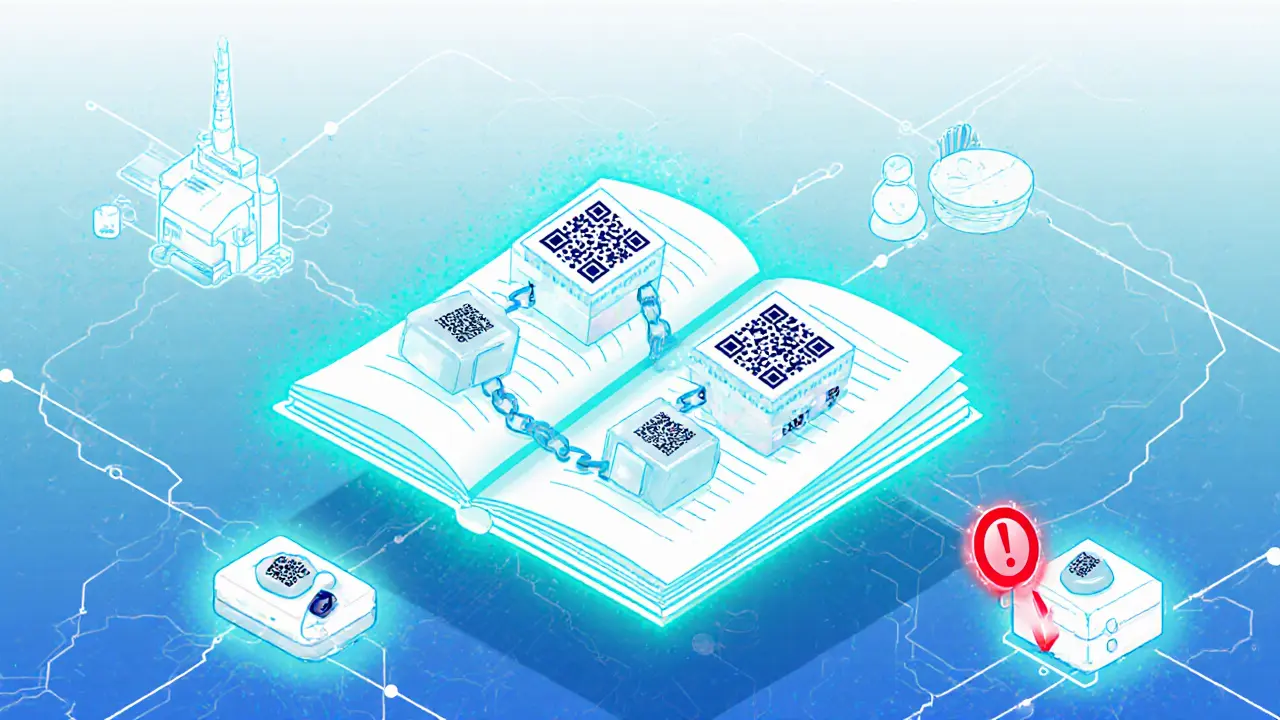
Blockchain offers trust without intermediaries but comes with slow speeds, high costs, and complex implementation. Learn where it works, where it fails, and what real companies are doing with it today.
Categories
 Finance
Archives
Recent-posts
What is CZodiac Farming Token (CZF) crypto coin? The truth behind a nearly worthless token
Nov, 11 2025
MCRT Wizard's Rainfall Airdrop: What You Missed and Why It Mattered
Dec, 10 2025
Tauros Crypto Exchange Review - Institutional Custody Platform Explained
May, 25 2025
Canada’s First Bitcoin ETF: How Purpose BTCC Changed the Game
Dec, 24 2024
CBX Crypto Exchange Review: Is It Safe or a Scam?
Nov, 14 2025